Adductor Strain (Groin Muscle Injury)Groin (Inner Thigh) Muscle Pull (Adductor Strain)
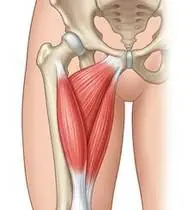
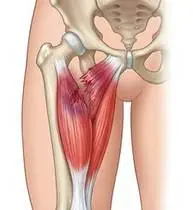
Adductor Strain (Groin Muscle Injury) — Overview
Adductor strain (groin pull / Adductor-Related Groin Pain per the Doha Agreement) accounts for >60% of athletic groin injuries, predominantly involving the M. adductor longus at its fibrocartilaginous enthesis on the anterior pubic body or its proximal myotendinous junction. It occurs during rapid change of direction (cutting), side-stepping, kicking (soccer inside-foot pass), or skating push-off when the hip is simultaneously abducted and externally rotated in extension while the adductors fire eccentrically.
An adductor strain (groin pull / inner thigh muscle tear) is an overstretching or tearing of the inner thigh muscles (especially the adductor longus) where they attach to the pubic bone in the groin—most commonly happening during sudden side-stepping, cutting, or kicking in soccer and court sports.
Primary Causes & Biomechanics
Key Points You Should Know
- •Eccentric overload of the adductor longus during wide hip abduction + extension + external rotation (kicking, cutting, ice-hockey stride, or martial arts)
- •Hip Adductor-to-Abductor Strength Ratio <80%: athletes whose adductor squeeze strength is <80% of their abductor strength have a 4x higher risk of groin injury!
- •Lumbopelvic core instability and loss of force transmission across the pubic symphysis aponeurotic plate
- •Why Stretching a Sore Groin Often Makes It Worse: In most groin injuries, the tendon is irritated right where it attaches to the pubic bone; pulling your legs into a wide butterfly/split stretch actually pinches and pulls on that sore spot! Gentle pillow squeezes work much better than stretching.
- •The Pillow-Squeeze Traffic Light: Squeezing a pillow between your knees for 5 seconds should feel comfortable (under 2/10 discomfort) before progressing to harder running.
- •Inner Thigh + Outer Hip + Core Together: The groin only heals for good when your inner thighs, outer hips, and lower tummy work together as one team.
Assessment Methods
1. Goniometric ROM & Postural / Kinematic Analysis
Passive pain-free hip abduction ROM and Bent-Knee Fall-Out (BKFO) distance.
2. Special Clinical Provocation & Neurological/Functional Tests
Five-Second Squeeze Test at 0°, 45°, and 90° hip flexion (0–2/10 pain = Green safe to train; 3–5/10 = Yellow modify; ≥6/10 = Red stop!), pinpoint palpation of the adductor longus origin on the pubic bone, and resisted hip adduction.
3. Standardized Clinical Outcome Scales & Imaging Criteria
HAGOS (Copenhagen Hip and Groin Outcome Score), handheld dynamometer Adductor/Abductor ratio (target ≥0.90–1.0), and pelvic MRI.
1. Range of Motion & Posture Check
Your physiotherapist gently evaluates how comfortably and smoothly your hip adductor complex (primarily M. adductor longus enthesis on the anterior pubis and proximal myotendinous junction) moves and checks your overall posture.
2. Muscle Strength & Functional Movement Check
Your muscle balance, walking or reaching comfort, and specific gentle movement tests are evaluated without triggering sharp pain.
3. Typical Symptoms & Daily Impact Review
Sharp or aching pain in the inner groin crease and upper medial thigh, pinpointed right where the thick adductor longus tendon attaches to the pubic bone.
Treatment Options & Phase-Based Protocol
✨ Enriched GIF Exercise & Precaution GuidePhase 1: Acute Symptom Modulation, Tissue Protection & Early Activation
- •Phase 1 Clinical Focus & Tissue Protection: Pain Modulation & Isometric Squeeze Phase (Weeks 1–2): Avoid passive groin stretching (which compresses/irritates the pubic enthesis!); perform pain-free hook-lying isometric adductor pillow squeezes (at 45° and 0° hip flexion), posterior pelvic tilts, and unloaded supine heel slides.
- •Pain, Edema & Neuromuscular Modulation: Targeted physical modalities, relative load management, and early protected mobility of the hip adductor complex (primarily M. adductor longus enthesis on the anterior pubis and proximal myotendinous junction) without provoking mechanical or inflammatory irritation.
- •Proximal & Distal Kinetic Chain Maintenance: Maintain active mobility and circulation in adjacent joints while protecting the primary healing structures in Adductor Strain.
Phase 2: Progressive Mobility, Motor Control & Targeted Strengthening
- •Phase 2 Progressive Mobilization & Motor Control: Holmich Protocol & Lumbopelvic Synergy Phase (Weeks 2–6): Supine pelvic bridging (with a light pillow squeeze between the knees!), side-lying hip abduction/adduction, quadruped Bird-Dog, and wall mini-squats with isometric knee squeeze.
- •Biomechanical Alignment & Co-Contraction: Restore balanced agonist-antagonist force couples, joint centration, and multi-planar neuromuscular control across the hip adductor complex (primarily M. adductor longus enthesis on the anterior pubis and proximal myotendinous junction).
- •Myofascial Extensibility & Endurance: Address secondary compensatory tightness and build local muscular endurance within safe, symptom-free biomechanical parameters.
Phase 3: Functional Integration, Proprioception & Long-Term Prevention
- •Phase 3 Functional Integration & Long-Term Prevention: Eccentric Copenhagen Adduction & Cutting Return Phase (Week 6–10+): Short-lever -> Long-lever Copenhagen Adduction Exercise (proven to reduce groin injury risk by 41%!), lateral slide/skater drills, and high-speed cutting clearance.
- •Proprioceptive Balance & Dynamic Loading: Progress to task-specific closed-chain, balance, and functional movement patterns tailored to daily life, occupational, or athletic demands.
- •Self-Management & Relapse Prophylaxis: Establish lifelong ergonomic habits, home exercise maintenance, and early warning-sign awareness to prevent recurrence.
Step 1: Calming Pain, Protecting the Area & Gentle Starter Motion
- •Why Stretching a Sore Groin Often Makes It Worse: In most groin injuries, the tendon is irritated right where it attaches to the pubic bone; pulling your legs into a wide butterfly/split stretch actually pinches and pulls on that sore spot! Gentle pillow squeezes work much better than stretching.
- •Calm Protection & Gentle Start: During the initial stage of Groin (Inner Thigh) Muscle Pull, avoid painful overloading and perform the gentle, pain-free starter movements shown below to support circulation and comfort.
- •Respecting Your Body's Signals: Every movement should stay within a comfortable, non-painful zone—never force through sharp or radiating pain.
Step 2: Restoring Flexibility & Building Supporting Muscle Strength
- •The Pillow-Squeeze Traffic Light: Squeezing a pillow between your knees for 5 seconds should feel comfortable (under 2/10 discomfort) before progressing to harder running.
- •Step-by-Step Flexibility & Support: As acute sensitivity settles, gradually build mobility and strengthen the supporting muscles around the joint at a steady, controlled pace.
- •Posture & Breathing Coordination: Keep your posture upright and breathe smoothly (never hold your breath!) during every repetition.
Step 3: Safe Daily Habits, Stamina & Preventing Recurrence
- •Inner Thigh + Outer Hip + Core Together: The groin only heals for good when your inner thighs, outer hips, and lower tummy work together as one team.
- •Confident Return to Daily Life: Integrate your stronger muscles and improved balance into walking, stairs, work, and recreational activities.
- •Preventing Future Flare-Ups: Continue your core protective habits and key maintenance exercises even after symptoms resolve.
Animated (GIF) Therapeutic Exercise Guide
Animated clinical exercise protocol with biomechanical angles, target muscle groups, and dosage parameters (Click image to enlarge)
Step-by-step animated exercise demonstrations you can safely perform at home (Click image to enlarge)
 🔍 Enlarge
1. Supine Active-Assisted Heel Slide & Synovial Diffusion Mobilization
1. Supine Heel Slide (Gentle Knee & Hip Bending)
Controlled flexion and extension of the lower extremity by sliding the heel along the support surface without axial weight-bearing. Stimulates synovial fluid diffusion across avascular cartilage and prevents capsular adhesions. Specifically indicated in Adductor Strain rehabilitation to optimize hip adductor complex (primarily M. adductor longus enthesis on the anterior pubis and proximal myotendinous junction) biomechanics and neuromuscular control.
While lying on your back, slowly slide your heel along the bed sheet toward your hip within a comfortable, pain-free angle, hold for 3 seconds, and gently slide it back out straight. Perform smoothly within a comfortable, pain-free range to support your Groin (Inner Thigh) Muscle Pull recovery.
 🔍 Enlarge
2. Hook-Lying Isometric Hip Adductor Squeeze (Lumbopelvic & Pubic Force Closure)
2. Supine Between-the-Knees Pillow Squeeze
Submaximal pain-free isometric adduction against a pillow or soft ball placed between the knees in hook-lying. Restores force closure across the pubic symphysis and sacroiliac joints while reconditioning the adductor longus tendon. Specifically indicated in Adductor Strain rehabilitation to optimize hip adductor complex (primarily M. adductor longus enthesis on the anterior pubis and proximal myotendinous junction) biomechanics and neuromuscular control.
Lie on your back with your knees bent and place a folded pillow or soft ball between your knees. Gently squeeze the pillow while exhaling, hold for 5 seconds without triggering groin pain, and slowly relax. Perform smoothly within a comfortable, pain-free range to support your Groin (Inner Thigh) Muscle Pull recovery.
 🔍 Enlarge
3. Side-Lying Hip Abduction (Gluteus Medius & Frontal Plane Control)
3. Side-Lying Leg Lift (Outer Hip Strengthening)
Isolated strengthening of the gluteus medius in slight hip extension and neutral rotation. Prevents contralateral pelvic drop (Trendelenburg) and reduces dynamic knee valgus and medial compartment adduction moments. Specifically indicated in Adductor Strain rehabilitation to optimize hip adductor complex (primarily M. adductor longus enthesis on the anterior pubis and proximal myotendinous junction) biomechanics and neuromuscular control.
Lie on your side with your bottom leg slightly bent for balance. Keep your top leg straight and slightly back, lift it up toward the ceiling without rolling your pelvis backward, hold for 3 seconds, and lower slowly. Perform smoothly within a comfortable, pain-free range to support your Groin (Inner Thigh) Muscle Pull recovery.
 🔍 Enlarge
4. Protected Closed-Kinetic-Chain Wall Mini-Squat (0°–40° Safe Arc)
4. Wall-Supported Safe Mini-Squat
Closed-kinetic-chain bilateral knee flexion in the safe 0°–40° arc with the back supported against a wall. Promotes quadriceps-hamstring-gluteal co-contraction and joint proprioception without excessive patellofemoral compression. Specifically indicated in Adductor Strain rehabilitation to optimize hip adductor complex (primarily M. adductor longus enthesis on the anterior pubis and proximal myotendinous junction) biomechanics and neuromuscular control.
Lean your back flat against a wall with your feet shoulder-width apart. Slowly bend your knees slightly (30–40 degrees, keeping knees behind toes), hold for 5 seconds, and push back up. Perform smoothly within a comfortable, pain-free range to support your Groin (Inner Thigh) Muscle Pull recovery.
 🔍 Enlarge
5. Supine Posterior Pelvic Tilt & Transversus Abdominis Activation (Abdominal Hollowing)
5. Supine Lower Back Flatten (Pelvic Tilt & Deep Core)
In hook-lying, gently drawing the umbilicus inward-upward (transversus abdominis) while tilting the pelvis posteriorly to flatten excessive lumbar lordosis against the mat. Decompresses posterior facet joints and narrows the intervertebral shear vector. Specifically indicated in Adductor Strain rehabilitation to optimize hip adductor complex (primarily M. adductor longus enthesis on the anterior pubis and proximal myotendinous junction) biomechanics and neuromuscular control.
Lie on your back with your knees bent. Without holding your breath, gently draw your belly button inward and press the small of your back flat against the bed, hold for 5 seconds, and relax. Perform smoothly within a comfortable, pain-free range to support your Groin (Inner Thigh) Muscle Pull recovery.
 🔍 Enlarge
6. Supine Lumbopelvic Bridging (Gluteus Maximus & Posterior Chain Co-Contraction)
6. Supine Hip Bridge (Controlled Pelvic Lift)
From hook-lying with transversus abdominis pre-activation, elevating the pelvis until hips, pelvis, and shoulders form a neutral diagonal line. Strengthens the gluteus maximus, hamstrings, and erector spinae synergy without lumbar hyperlordosis. Specifically indicated in Adductor Strain rehabilitation to optimize hip adductor complex (primarily M. adductor longus enthesis on the anterior pubis and proximal myotendinous junction) biomechanics and neuromuscular control.
Lie on your back with your knees bent and feet flat hip-width apart. Gently tighten your tummy and glutes, lift your hips until your body forms a straight line from shoulders to knees, hold for 5 seconds, and lower slowly. Perform smoothly within a comfortable, pain-free range to support your Groin (Inner Thigh) Muscle Pull recovery.
Movements to Avoid & Strict Precautions
1. Aggressive Passive Groin / Butterfly / Split Stretching (Pulls on the Inflamed Pubic Insertion!)
1. Doing wide butterfly stretches or side lunges to 'stretch out' a sore groin
2. Cross-Body Soccer Kicking, Wide Side-Stepping, or Sudden Cutting During Acute Pain
2. Kicking balls across your body or doing sharp side-cuts while squeezing still hurts
3. Doing Heavy Sit-Ups Alone Without Balancing Inner Thigh Strength
3. Doing hundreds of sit-ups without training your inner thighs and hips
4. Returning to Match Play While the 5-Second Squeeze Test Still Causes >3/10 Pain
4. Returning to matches while squeezing your knees together still causes sharp groin pain
Adductor Strain (Groin Muscle Injury) — Video Guide
Click directly on any video to open and watch in a window, or review details via 📋 Summary & Options.
Condition Overview Video (1 Video)
Summary of pathophysiology, biomechanics, and clinical presentation
What the condition is, why it develops, and its basic mechanism

What Is Adductor-Related Groin Pain and Inner Thigh Strain? Treatment Principles
Adductor strain (groin pull / Adductor-Related Groin Pain per the Doha Agreement) accounts for >60% of athletic groin injuries, predominantly involving the M. adductor longus at its fibrocartilaginous enthesis on the anterior pubic body or its proximal myotendinous junction. It occurs during rapid change of direction (cutting), side-stepping, kicking (soccer inside-foot pass), or skating push-off when the hip is simultaneously abducted and externally rotated in extension while the adductors fire eccentrically.
An adductor strain (groin pull / inner thigh muscle tear) is an overstretching or tearing of the inner thigh muscles (especially the adductor longus) where they attach to the pubic bone in the groin—most commonly happening during sudden side-stepping, cutting, or kicking in soccer and court sports.
Treatment and Exercise Videos
Phase-based physiotherapy protocols, mobilization, and therapeutic exercises
Step-by-step recovery and safe home exercise applications

Adductor (Inner Thigh) Muscle Group Stretching and Rehabilitation Exercises
Phase 1: Acute Symptom Modulation, Tissue Protection & Early Activation: Phase 1 Clinical Focus & Tissue Protection: Pain Modulation & Isometric Squeeze Phase (Weeks 1–2): Avoid passive groin stretching (which compresses/irritates the pubic enthesis!); perform pain-free hook-lying isometric adductor pillow squeezes (at 45° and 0° hip flexion), posterior pelvic tilts, and unloaded supine heel slides.
Step 1: Calming Pain, Protecting the Area & Gentle Starter Motion: Why Stretching a Sore Groin Often Makes It Worse: In most groin injuries, the tendon is irritated right where it attaches to the pubic bone; pulling your legs into a wide butterfly/split stretch actually pinches and pulls on that sore spot! Gentle pillow squeezes work much better than stretching.

Clinical Tests and Therapeutic Exercises in Hip and Groin Pain
Phase 2: Progressive Mobility, Motor Control & Targeted Strengthening: Phase 2 Progressive Mobilization & Motor Control: Holmich Protocol & Lumbopelvic Synergy Phase (Weeks 2–6): Supine pelvic bridging (with a light pillow squeeze between the knees!), side-lying hip abduction/adduction, quadruped Bird-Dog, and wall mini-squats with isometric knee squeeze.
Step 2: Restoring Flexibility & Building Supporting Muscle Strength: The Pillow-Squeeze Traffic Light: Squeezing a pillow between your knees for 5 seconds should feel comfortable (under 2/10 discomfort) before progressing to harder running.
Clinical Assessment, Goniometry & Special Test Videos
Displayed only in Healthcare Professional mode (hidden in Patient mode)

Hip Joint Goniometric Measurement (Flexion, Extension, Abduction, Rotations)
Goniometric ROM & Postural / Kinematic Analysis: Passive pain-free hip abduction ROM and Bent-Knee Fall-Out (BKFO) distance.

FADIR Special Test — Femoroacetabular Impingement and Labral Pathology Exam
Special Clinical Provocation & Neurological/Functional Tests: Five-Second Squeeze Test at 0°, 45°, and 90° hip flexion (0–2/10 pain = Green safe to train; 3–5/10 = Yellow modify; ≥6/10 = Red stop!), pinpoint palpation of the adductor longus origin on the pubic bone, and resisted hip adduction.