Obstetric (Congenital) Brachial Plexus PalsyBirth-Related Arm Nerve Network Injury (Obstetric Brachial Plexus Palsy)
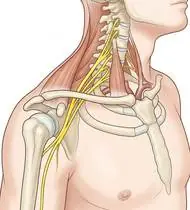
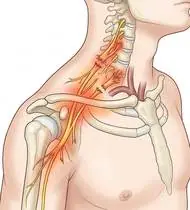
Obstetric (Congenital) Brachial Plexus Palsy — Overview
Obstetric Brachial Plexus Palsy (OBPP / Birth Brachial Plexus Injury) is a traction injury of the C5–T1 cervical nerve roots/trunks sustained during delivery when lateral traction on the fetal head widens the head-shoulder angle (most commonly associated with shoulder dystocia, macrosomia >4,000 g, breech delivery, or instrumental delivery). Classified by Narakas into 4 Groups: Group I (C5–C6 classical Erb's palsy — 50% of cases, best spontaneous recovery ~80%), Group II (C5–C6–C7 extended Erb's with wrist drop), Group III (C5–T1 total flaccid palsy), and Group IV (C5–T1 total palsy + Horner's syndrome — worst prognosis, pre-ganglionic avulsion). THE GOLDEN CLINICAL RULE: Even while C5–C6 external rotators (infraspinatus) are recovering, unopposed strong internal rotators (subscapularis/pectoralis) rapidly cause Posterior Glenohumeral Dysplasia/Subluxation by 3–6 months of age if passive external rotation stretching is neglected!
Obstetric brachial plexus palsy (birth-related arm nerve injury / OBPP) occurs during a difficult delivery when the baby's shoulder briefly catches (shoulder dystocia), stretching the bundle of nerves running from the neck to the arm. Because 80–90% of upper-plexus babies recover strong movement when guided properly, doing gentle 2-minute stretches at every diaper change and helping your baby see, touch, and use their arm in play makes all the difference!
Primary Causes & Biomechanics
Key Points You Should Know
- •Perinatal traction across the C5–T1 roots during shoulder dystocia causing neurapraxia, axonotmesis, or root avulsion
- •Narakas & Gilbert 3-Month Biceps Rule: Absence of active antigravity biceps elbow flexion (bringing hand to mouth) by 3 months of age (or Cookie Test failure at 9 months) indicates severe axonal disruption requiring microsurgical nerve grafting/transfer evaluation!
- •Rapid Internal Rotation Contracture & Glenoid Retroversion: Unopposed subscapularis/pectoralis major pulls the humeral head into internal rotation, flattening and retroverting the cartilaginous infant glenoid within months!
- •The Diaper-Change Routine (4–5 Times Every Day): Tying your baby's gentle arm exercises to every diaper change makes it an automatic, stress-free habit! Always hold the baby's shoulder blade steady with one hand while gently turning their bent arm outward and turning their palm upward.
- •Never Pick the Baby Up Under the Armpits! Lifting an infant with a brachial plexus injury by hooking your hands under their armpits stretches the healing nerves and unstable shoulder joint—always scoop under the baby's bottom and support behind their back and head!
- •Help the Brain 'Remember' the Arm: Gently stroke the arm with soft cloths, kiss the fingers, and guide the baby's hand to touch their own mouth, cheeks, and bottle so the developing brain keeps the arm connected.
Assessment Methods
1. Goniometric ROM & Postural / Kinematic Analysis
Active Movement Scale (AMS, 0–7 grading in gravity-eliminated and antigravity planes for infants!), Mallet Classification (Grades I–V for children >2–3 years evaluating global abduction, external rotation, hand-to-neck, hand-to-spine, and hand-to-mouth), and passive glenohumeral external rotation goniometry (with the scapula stabilized!).
2. Special Clinical Provocation & Neurological/Functional Tests
Moro Reflex Asymmetry in the newborn, Towel / Cookie Test at 9 months (can the infant bring a cookie to the mouth with the elbow held at the side without flexing the neck >45° [Trumpet sign]?), and Horner's Syndrome check.
3. Standardized Clinical Outcome Scales & Imaging Criteria
Active Movement Scale (AMS), Mallet Score, Toronto Test Score, and Pediatric Shoulder Ultrasound / MRI (evaluating posterior humeral head subluxation).
1. Range of Motion & Posture Check
Your physiotherapist gently evaluates how comfortably and smoothly your neonatal C5–T1 brachial plexus nerve roots and trunks (Obstetric Brachial Plexus Palsy — OBPP) moves and checks your overall posture.
2. Muscle Strength & Functional Movement Check
Your muscle balance, walking or reaching comfort, and specific gentle movement tests are evaluated without triggering sharp pain.
3. Typical Symptoms & Daily Impact Review
Asymmetric Arm Movement at Birth (Unilateral Moro Reflex): The newborn moves one arm freely while the affected arm lies quiet alongside the body in internal rotation (shoulder turned in, elbow straight, palm facing backward — 'Waiter's Tip' posture).
Treatment Options & Phase-Based Protocol
✨ Enriched GIF Exercise & Precaution GuidePhase 1: Acute Symptom Modulation, Tissue Protection & Early Activation
- •Phase 1 Clinical Focus & Tissue Protection: Phase 1 — First 7–10 Days Post-Birth (Clavicle Check & Gentle Positioning): First rule out a concomitant newborn clavicle or humerus fracture on X-ray! Position the arm gently across the chest for 7–10 days (letting perineural birth edema subside), then start gentle passive ROM at EVERY diaper change (4–5x/day)!
- •Pain, Edema & Neuromuscular Modulation: Targeted physical modalities, relative load management, and early protected mobility of the neonatal C5–T1 brachial plexus nerve roots and trunks (Obstetric Brachial Plexus Palsy — OBPP) without provoking mechanical or inflammatory irritation.
- •Proximal & Distal Kinetic Chain Maintenance: Maintain active mobility and circulation in adjacent joints while protecting the primary healing structures in Obstetric Brachial Plexus Palsy.
Phase 2: Progressive Mobility, Motor Control & Targeted Strengthening
- •Phase 2 Progressive Mobilization & Motor Control: Phase 2 — Diaper-Change Passive External Rotation (Scapula Stabilized!) & Sensory Tactile Phase: Stabilize the baby's shoulder blade with one hand while gently rotating the bent elbow outward (external rotation at 0° adduction) and turning the palm up (supination) to prevent posterior shoulder dislocation! Brush/stroke the arm with soft textures and bring the baby's hand to their mouth and face so the brain maps the arm (preventing Developmental Apraxia!).
- •Biomechanical Alignment & Co-Contraction: Restore balanced agonist-antagonist force couples, joint centration, and multi-planar neuromuscular control across the neonatal C5–T1 brachial plexus nerve roots and trunks (Obstetric Brachial Plexus Palsy — OBPP).
- •Myofascial Extensibility & Endurance: Address secondary compensatory tightness and build local muscular endurance within safe, symptom-free biomechanical parameters.
Phase 3: Functional Integration, Proprioception & Long-Term Prevention
- •Phase 3 Functional Integration & Long-Term Prevention: Phase 3 — Playful Antigravity Facilitation, Tummy Time & Bimanual Phase: Side-lying & inclined reaching for rattle/toys (encouraging thumb-up supination and biceps hand-to-mouth!), supported tummy time weight-bearing, two-handed ball/balloon play, and Constraint / Bimanual play as the child grows.
- •Proprioceptive Balance & Dynamic Loading: Progress to task-specific closed-chain, balance, and functional movement patterns tailored to daily life, occupational, or athletic demands.
- •Self-Management & Relapse Prophylaxis: Establish lifelong ergonomic habits, home exercise maintenance, and early warning-sign awareness to prevent recurrence.
Step 1: Calming Pain, Protecting the Area & Gentle Starter Motion
- •The Diaper-Change Routine (4–5 Times Every Day): Tying your baby's gentle arm exercises to every diaper change makes it an automatic, stress-free habit! Always hold the baby's shoulder blade steady with one hand while gently turning their bent arm outward and turning their palm upward.
- •Calm Protection & Gentle Start: During the initial stage of Birth-Related Arm Nerve Network Injury, avoid painful overloading and perform the gentle, pain-free starter movements shown below to support circulation and comfort.
- •Respecting Your Body's Signals: Every movement should stay within a comfortable, non-painful zone—never force through sharp or radiating pain.
Step 2: Restoring Flexibility & Building Supporting Muscle Strength
- •Never Pick the Baby Up Under the Armpits! Lifting an infant with a brachial plexus injury by hooking your hands under their armpits stretches the healing nerves and unstable shoulder joint—always scoop under the baby's bottom and support behind their back and head!
- •Step-by-Step Flexibility & Support: As acute sensitivity settles, gradually build mobility and strengthen the supporting muscles around the joint at a steady, controlled pace.
- •Posture & Breathing Coordination: Keep your posture upright and breathe smoothly (never hold your breath!) during every repetition.
Step 3: Safe Daily Habits, Stamina & Preventing Recurrence
- •Help the Brain 'Remember' the Arm: Gently stroke the arm with soft cloths, kiss the fingers, and guide the baby's hand to touch their own mouth, cheeks, and bottle so the developing brain keeps the arm connected.
- •Confident Return to Daily Life: Integrate your stronger muscles and improved balance into walking, stairs, work, and recreational activities.
- •Preventing Future Flare-Ups: Continue your core protective habits and key maintenance exercises even after symptoms resolve.
Animated (GIF) Therapeutic Exercise Guide
Animated clinical exercise protocol with biomechanical angles, target muscle groups, and dosage parameters (Click image to enlarge)
Step-by-step animated exercise demonstrations you can safely perform at home (Click image to enlarge)
 🔍 Enlarge
1. Towel-Supported Glenohumeral External Rotation (Infraspinatus & Teres Minor)
1. Outward Forearm Rotation with Rolled Towel Under Elbow
External rotation performed at 90° elbow flexion with a rolled towel placed between the elbow and trunk (20°–30° scaption). Enhances infraspinatus/teres minor recruitment while preventing superior humeral head migration and deltoid shear. Specifically indicated in Obstetric Brachial Plexus Palsy rehabilitation to optimize neonatal C5–T1 brachial plexus nerve roots and trunks (Obstetric Brachial Plexus Palsy — OBPP) biomechanics and neuromuscular control.
Place a small rolled towel between your elbow and your side with your elbow bent at 90 degrees. Keeping your elbow pressed gently against the towel, rotate your forearm outward, hold for 3 seconds, and return slowly. Perform smoothly within a comfortable, pain-free range to support your Birth-Related Arm Nerve Network Injury recovery.
 🔍 Enlarge
2. Supine Wand-Assisted (Cane) Active-Assisted Shoulder Elevation
2. Lying Cane/Stick-Assisted Two-Handed Arm Raise
In supine (scapula stabilized against the plinth and gravity eliminated in the final arc), the unaffected upper extremity guides a wand/stick to elevate the affected shoulder smoothly without deltoid-induced superior humeral shear. Specifically indicated in Obstetric Brachial Plexus Palsy rehabilitation to optimize neonatal C5–T1 brachial plexus nerve roots and trunks (Obstetric Brachial Plexus Palsy — OBPP) biomechanics and neuromuscular control.
Lie on your back holding a light stick or cane with both hands. Use your healthy arm to gently guide both arms up overhead as far as comfortable, hold for 3 seconds, and slowly lower. Perform smoothly within a comfortable, pain-free range to support your Birth-Related Arm Nerve Network Injury recovery.
 🔍 Enlarge
3. Proximal & Distal Radioulnar Joint (PRUJ/DRUJ) Supination and Pronation
3. Elbow-at-Side Palm Up and Palm Down Rotation
Isolated forearm rotation with the elbow flexed at 90° and adducted against the trunk to eliminate compensatory glenohumeral rotation. Restores radial head spinning and distal radioulnar translation. Specifically indicated in Obstetric Brachial Plexus Palsy rehabilitation to optimize neonatal C5–T1 brachial plexus nerve roots and trunks (Obstetric Brachial Plexus Palsy — OBPP) biomechanics and neuromuscular control.
Keep your elbow bent at a right angle and tucked closely against your waist. Slowly turn your palm upward toward the ceiling, hold for 3 seconds, then turn your palm downward toward the floor. Perform smoothly within a comfortable, pain-free range to support your Birth-Related Arm Nerve Network Injury recovery.
 🔍 Enlarge
4. Closed-Chain Wall Ball Stabilization & Serratus Anterior Protraction
4. Wall Ball Circles & Shoulder Blade Control
Rhythmic stabilization and small circular perturbations with the hand pressing a soft ball against the wall at shoulder height. Stimulates glenohumeral joint mechanoreceptors, serratus anterior upward rotation, and rotator cuff co-contraction. Specifically indicated in Obstetric Brachial Plexus Palsy rehabilitation to optimize neonatal C5–T1 brachial plexus nerve roots and trunks (Obstetric Brachial Plexus Palsy — OBPP) biomechanics and neuromuscular control.
Hold a small soft ball against the wall at chest or shoulder height with your elbow nearly straight. Gently press into the ball and trace small, controlled clockwise and counterclockwise circles. Perform smoothly within a comfortable, pain-free range to support your Birth-Related Arm Nerve Network Injury recovery.
 🔍 Enlarge
5. Isolated Humeroulnar Active/Active-Assisted Flexion and Extension ROM
5. Full Elbow Bending and Straightening
Controlled full-arc elbow flexion and extension with the humerus stabilized in neutral alignment. Prevents anterior capsular contracture (extension loss) and restores biceps/triceps reciprocal excursion. Specifically indicated in Obstetric Brachial Plexus Palsy rehabilitation to optimize neonatal C5–T1 brachial plexus nerve roots and trunks (Obstetric Brachial Plexus Palsy — OBPP) biomechanics and neuromuscular control.
Keep your upper arm comfortably close to your body. Slowly bend your elbow to bring your hand toward your shoulder, hold for 3 seconds, then slowly straighten your elbow as far as comfortable. Perform smoothly within a comfortable, pain-free range to support your Birth-Related Arm Nerve Network Injury recovery.
 🔍 Enlarge
6. Six-Pack Differential Flexor Tendon Gliding (FDS & FDP Excursion)
6. Step-by-Step Finger Tendon Gliding (Hook, Straight & Full Fist)
Sequential progression through Straight Hand, Tabletop (intrinsic-plus), Hook Fist (maximum FDS/FDP differential glide), Full Fist, and Straight Fist positions. Prevents peritendinous adhesions within the carpal tunnel and fibro-osseous digital sheaths. Specifically indicated in Obstetric Brachial Plexus Palsy rehabilitation to optimize neonatal C5–T1 brachial plexus nerve roots and trunks (Obstetric Brachial Plexus Palsy — OBPP) biomechanics and neuromuscular control.
Start with your fingers straight, then bend at the knuckles (tabletop), curl just the fingertips (hook fist), make a gentle full fist, and open wide again—holding each position for 2–3 seconds. Perform smoothly within a comfortable, pain-free range to support your Birth-Related Arm Nerve Network Injury recovery.
Movements to Avoid & Strict Precautions
1. Lifting the Baby by the Armpits or Pulling the Baby Up by the Hands/Arms (Re-Injures the Nerve Plexus!)
1. NEVER lift your baby under the armpits or pull them up by their hands (always scoop under their bottom and back!)
2. Rotating the Arm Outward Without Holding the Shoulder Blade Steady (Moves Only the Shoulder Blade while the Joint Stays Tight!)
2. Doing outward rotation stretches without stabilizing the shoulder blade with your other hand
3. Pinning the Baby's Sleeve to the Chest Indefinitely Beyond the First 7–10 Days
3. Keeping the arm pinned or immobilized for weeks (causes rapid shoulder contracture!)
4. Letting the Arm Hang Behind the Baby's Back While Rolling or Sitting
4. Letting the weak arm get trapped underneath the baby's body
Obstetric (Congenital) Brachial Plexus Palsy — Video Guide
Click directly on any video to open and watch in a window, or review details via 📋 Summary & Options.
Condition Overview Video (1 Video)
Summary of pathophysiology, biomechanics, and clinical presentation
What the condition is, why it develops, and its basic mechanism

Obstetric Brachial Plexus and Erb-Duchenne Palsy Clinical Exam and Overview
Obstetric Brachial Plexus Palsy (OBPP / Birth Brachial Plexus Injury) is a traction injury of the C5–T1 cervical nerve roots/trunks sustained during delivery when lateral traction on the fetal head widens the head-shoulder angle (most commonly associated with shoulder dystocia, macrosomia >4,000 g, breech delivery, or instrumental delivery). Classified by Narakas into 4 Groups: Group I (C5–C6 classical Erb's palsy — 50% of cases, best spontaneous recovery ~80%), Group II (C5–C6–C7 extended Erb's with wrist drop), Group III (C5–T1 total flaccid palsy), and Group IV (C5–T1 total palsy + Horner's syndrome — worst prognosis, pre-ganglionic avulsion). THE GOLDEN CLINICAL RULE: Even while C5–C6 external rotators (infraspinatus) are recovering, unopposed strong internal rotators (subscapularis/pectoralis) rapidly cause Posterior Glenohumeral Dysplasia/Subluxation by 3–6 months of age if passive external rotation stretching is neglected!
Obstetric brachial plexus palsy (birth-related arm nerve injury / OBPP) occurs during a difficult delivery when the baby's shoulder briefly catches (shoulder dystocia), stretching the bundle of nerves running from the neck to the arm. Because 80–90% of upper-plexus babies recover strong movement when guided properly, doing gentle 2-minute stretches at every diaper change and helping your baby see, touch, and use their arm in play makes all the difference!
Treatment and Exercise Videos
Phase-based physiotherapy protocols, mobilization, and therapeutic exercises
Step-by-step recovery and safe home exercise applications

Upper Extremity Range of Motion Exercises in Brachial Plexus Injuries
Phase 1: Acute Symptom Modulation, Tissue Protection & Early Activation: Phase 1 Clinical Focus & Tissue Protection: Phase 1 — First 7–10 Days Post-Birth (Clavicle Check & Gentle Positioning): First rule out a concomitant newborn clavicle or humerus fracture on X-ray! Position the arm gently across the chest for 7–10 days (letting perineural birth edema subside), then start gentle passive ROM at EVERY diaper change (4–5x/day)!
Step 1: Calming Pain, Protecting the Area & Gentle Starter Motion: The Diaper-Change Routine (4–5 Times Every Day): Tying your baby's gentle arm exercises to every diaper change makes it an automatic, stress-free habit! Always hold the baby's shoulder blade steady with one hand while gently turning their bent arm outward and turning their palm upward.

Pediatric Brachial Plexus (Erb-Duchenne & Klumpke) Rehabilitation Exercises
Phase 2: Progressive Mobility, Motor Control & Targeted Strengthening: Phase 2 Progressive Mobilization & Motor Control: Phase 2 — Diaper-Change Passive External Rotation (Scapula Stabilized!) & Sensory Tactile Phase: Stabilize the baby's shoulder blade with one hand while gently rotating the bent elbow outward (external rotation at 0° adduction) and turning the palm up (supination) to prevent posterior shoulder dislocation! Brush/stroke the arm with soft textures and bring the baby's hand to their mouth and face so the brain maps the arm (preventing Developmental Apraxia!).
Step 2: Restoring Flexibility & Building Supporting Muscle Strength: Never Pick the Baby Up Under the Armpits! Lifting an infant with a brachial plexus injury by hooking your hands under their armpits stretches the healing nerves and unstable shoulder joint—always scoop under the baby's bottom and support behind their back and head!
Clinical Assessment, Goniometry & Special Test Videos
Displayed only in Healthcare Professional mode (hidden in Patient mode)

Obstetric Brachial Plexus and Erb-Duchenne Palsy Clinical Exam and Overview
Goniometric ROM & Postural / Kinematic Analysis: Active Movement Scale (AMS, 0–7 grading in gravity-eliminated and antigravity planes for infants!), Mallet Classification (Grades I–V for children >2–3 years evaluating global abduction, external rotation, hand-to-neck, hand-to-spine, and hand-to-mouth), and passive glenohumeral external rotation goniometry (with the scapula stabilized!).
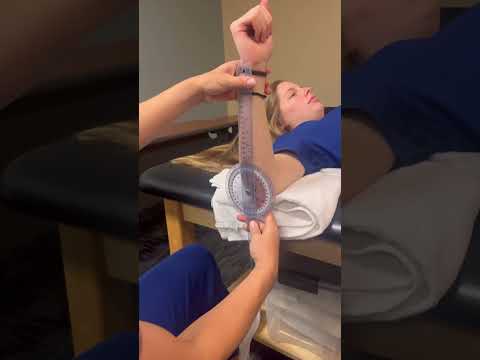
Shoulder Joint Goniometric Measurement (Flexion, Abduction, Internal & External Rotation)
Special Clinical Provocation & Neurological/Functional Tests: Moro Reflex Asymmetry in the newborn, Towel / Cookie Test at 9 months (can the infant bring a cookie to the mouth with the elbow held at the side without flexing the neck >45° [Trumpet sign]?), and Horner's Syndrome check.