Sports Hernia (Athletic Pubalgia)Sports Groin Hernia (Athletic Pubalgia (Sports Hernia))
Sports Hernia (Athletic Pubalgia) — Overview
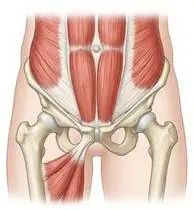
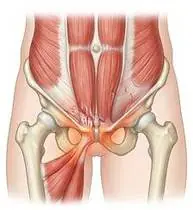
Sports hernia (Athletic Pubalgia / Core Muscle Injury / Inguinal-Related & Pubic-Related Groin Pain) is a chronic biomechanical disruption of the pubic aponeurotic plate and attenuation/micro-tearing of the posterior inguinal canal wall (transversalis fascia and conjoint tendon)—WITHOUT a clinically palpable classical hernia sac! Anatomically, the distal rectus abdominis (pulling superiorly) and proximal adductor longus (pulling inferiorly-laterally) merge into a single shared aponeurosis over the anterior pubis; an imbalance between strong adductors/hip flexors and a weak deep abdominal wall creates chronic shearing across the pubic symphysis (Osteitis Pubis) and posterior inguinal wall.
A sports hernia (athletic pubalgia / core muscle injury) is NOT a typical bulging hernia—it is a microscopic tear or weakening where your lower abdominal muscles and inner thigh tendons meet over the front of your pelvic bone (pubis), caused by repetitive twisting, kicking, and sprinting.
Primary Causes & Biomechanics
Key Points You Should Know
- •Antagonistic shear vector across the pubic symphysis between the rectus abdominis/internal oblique superiorly and adductor longus inferiorly during twisting, cutting, and single-leg kicking
- •Hip internal rotation deficit (FAI coexistence in up to 40–50% of athletes!): when the hip joint lacks rotation, rotational torque is transferred directly into the pubic symphysis and inguinal ring!
- •Weakness of the transversus abdominis and internal oblique protecting the posterior inguinal wall
- •Why Doctors Often Find 'No Bulge': In a sports hernia, the back wall of the groin canal is stretched thin and the tendon junction is frayed, so it hurts deeply during sports even though no lump pops out when you cough!
- •The Tug-of-War Over the Pubic Bone: Your lower abs pull upward while your inner thigh pulls downward on the exact same bone spot. Training both together (like squeezing a pillow between your knees while doing a glute bridge) restores balance.
- •Stop Classic Sit-Ups! Traditional sit-ups yank upward on the torn pubic tendon attachment—train your deep core with flat-back bridges and Bird-Dog exercises instead.
Assessment Methods
1. Goniometric ROM & Postural / Kinematic Analysis
Hip internal/external rotation ROM (screening for concomitant FAI!), and Thomas test.
2. Special Clinical Provocation & Neurological/Functional Tests
Resisted Sit-Up / Trunk Flexion + Ipsilateral Adductor Squeeze Test (+ deep inguinal/pubic pain), tenderness over the superficial inguinal ring / pubic tubercle / conjoint tendon (increased with Valsalva/cough, but NO palpable hernia bulge), and Pubic Symphysis Gap Tenderness.
3. Standardized Clinical Outcome Scales & Imaging Criteria
HAGOS, Doha Groin Classification (Inguinal, Adductor, Iliopsoas, Pubic, Hip), and dedicated Athletic Pubalgia MRI protocol (evaluating rectus-adductor aponeurotic cleft sign and pubic bone marrow edema).
1. Range of Motion & Posture Check
Your physiotherapist gently evaluates how comfortably and smoothly your posterior wall of the inguinal canal (transversalis fascia), conjoint tendon, and pubic symphysis aponeurotic plate (rectus abdominis + adductor longus) moves and checks your overall posture.
2. Muscle Strength & Functional Movement Check
Your muscle balance, walking or reaching comfort, and specific gentle movement tests are evaluated without triggering sharp pain.
3. Typical Symptoms & Daily Impact Review
Deep, unilateral (or bilateral) aching or burning pain in the lower abdomen, inguinal crease (groin), and pubic tubercle that radiates into the inner thigh, perineum, or scrotum/labia during sprinting, cutting, kicking, coughing, sneezing, or getting out of bed.
Treatment Options & Phase-Based Protocol
✨ Enriched GIF Exercise & Precaution GuidePhase 1: Acute Symptom Modulation, Tissue Protection & Early Activation
- •Phase 1 Clinical Focus & Tissue Protection: Shear Unloading & Deep Core-Adductor Co-Activation Phase (Weeks 1–3): Pause kicking/sprinting/sit-ups; perform transversus abdominis drawing-in + posterior pelvic tilts, submaximal hook-lying isometric adductor pillow squeezes, and unloaded supine heel slides.
- •Pain, Edema & Neuromuscular Modulation: Targeted physical modalities, relative load management, and early protected mobility of the posterior wall of the inguinal canal (transversalis fascia), conjoint tendon, and pubic symphysis aponeurotic plate (rectus abdominis + adductor longus) without provoking mechanical or inflammatory irritation.
- •Proximal & Distal Kinetic Chain Maintenance: Maintain active mobility and circulation in adjacent joints while protecting the primary healing structures in Athletic Pubalgia (Sports Hernia).
Phase 2: Progressive Mobility, Motor Control & Targeted Strengthening
- •Phase 2 Progressive Mobilization & Motor Control: Lumbopelvic & Oblique Sling Integration Phase (Weeks 3–8): Supine pelvic bridging with simultaneous adductor ball squeeze (retraining the shared pubic aponeurosis without trunk-flexion shear!), quadruped Bird-Dog, side-lying & standing hip abduction, and diaphragmatic breathing (avoiding Valsalva pressure spikes on the inguinal wall).
- •Biomechanical Alignment & Co-Contraction: Restore balanced agonist-antagonist force couples, joint centration, and multi-planar neuromuscular control across the posterior wall of the inguinal canal (transversalis fascia), conjoint tendon, and pubic symphysis aponeurotic plate (rectus abdominis + adductor longus).
- •Myofascial Extensibility & Endurance: Address secondary compensatory tightness and build local muscular endurance within safe, symptom-free biomechanical parameters.
Phase 3: Functional Integration, Proprioception & Long-Term Prevention
- •Phase 3 Functional Integration & Long-Term Prevention: Multi-Planar Core-Hip Transfer & Return to Sport Phase (Week 8–12+): Anti-rotation core stability, Copenhagen adduction & gluteal strengthening, and progressive cutting/kicking once both resisted abdominal curl and adductor squeeze are 100% pain-free.
- •Proprioceptive Balance & Dynamic Loading: Progress to task-specific closed-chain, balance, and functional movement patterns tailored to daily life, occupational, or athletic demands.
- •Self-Management & Relapse Prophylaxis: Establish lifelong ergonomic habits, home exercise maintenance, and early warning-sign awareness to prevent recurrence.
Step 1: Calming Pain, Protecting the Area & Gentle Starter Motion
- •Why Doctors Often Find 'No Bulge': In a sports hernia, the back wall of the groin canal is stretched thin and the tendon junction is frayed, so it hurts deeply during sports even though no lump pops out when you cough!
- •Calm Protection & Gentle Start: During the initial stage of Sports Groin Hernia, avoid painful overloading and perform the gentle, pain-free starter movements shown below to support circulation and comfort.
- •Respecting Your Body's Signals: Every movement should stay within a comfortable, non-painful zone—never force through sharp or radiating pain.
Step 2: Restoring Flexibility & Building Supporting Muscle Strength
- •The Tug-of-War Over the Pubic Bone: Your lower abs pull upward while your inner thigh pulls downward on the exact same bone spot. Training both together (like squeezing a pillow between your knees while doing a glute bridge) restores balance.
- •Step-by-Step Flexibility & Support: As acute sensitivity settles, gradually build mobility and strengthen the supporting muscles around the joint at a steady, controlled pace.
- •Posture & Breathing Coordination: Keep your posture upright and breathe smoothly (never hold your breath!) during every repetition.
Step 3: Safe Daily Habits, Stamina & Preventing Recurrence
- •Stop Classic Sit-Ups! Traditional sit-ups yank upward on the torn pubic tendon attachment—train your deep core with flat-back bridges and Bird-Dog exercises instead.
- •Confident Return to Daily Life: Integrate your stronger muscles and improved balance into walking, stairs, work, and recreational activities.
- •Preventing Future Flare-Ups: Continue your core protective habits and key maintenance exercises even after symptoms resolve.
Animated (GIF) Therapeutic Exercise Guide
Animated clinical exercise protocol with biomechanical angles, target muscle groups, and dosage parameters (Click image to enlarge)
Step-by-step animated exercise demonstrations you can safely perform at home (Click image to enlarge)
 🔍 Enlarge
1. Supine Posterior Pelvic Tilt & Transversus Abdominis Activation (Abdominal Hollowing)
1. Supine Lower Back Flatten (Pelvic Tilt & Deep Core)
In hook-lying, gently drawing the umbilicus inward-upward (transversus abdominis) while tilting the pelvis posteriorly to flatten excessive lumbar lordosis against the mat. Decompresses posterior facet joints and narrows the intervertebral shear vector. Specifically indicated in Athletic Pubalgia (Sports Hernia) rehabilitation to optimize posterior wall of the inguinal canal (transversalis fascia), conjoint tendon, and pubic symphysis aponeurotic plate (rectus abdominis + adductor longus) biomechanics and neuromuscular control.
Lie on your back with your knees bent. Without holding your breath, gently draw your belly button inward and press the small of your back flat against the bed, hold for 5 seconds, and relax. Perform smoothly within a comfortable, pain-free range to support your Sports Groin Hernia recovery.
 🔍 Enlarge
2. Hook-Lying Isometric Hip Adductor Squeeze (Lumbopelvic & Pubic Force Closure)
2. Supine Between-the-Knees Pillow Squeeze
Submaximal pain-free isometric adduction against a pillow or soft ball placed between the knees in hook-lying. Restores force closure across the pubic symphysis and sacroiliac joints while reconditioning the adductor longus tendon. Specifically indicated in Athletic Pubalgia (Sports Hernia) rehabilitation to optimize posterior wall of the inguinal canal (transversalis fascia), conjoint tendon, and pubic symphysis aponeurotic plate (rectus abdominis + adductor longus) biomechanics and neuromuscular control.
Lie on your back with your knees bent and place a folded pillow or soft ball between your knees. Gently squeeze the pillow while exhaling, hold for 5 seconds without triggering groin pain, and slowly relax. Perform smoothly within a comfortable, pain-free range to support your Sports Groin Hernia recovery.
 🔍 Enlarge
3. Quadruped Contralateral Arm-Leg Reach ('Bird-Dog' Multifidus & Deep Core)
3. All-Fours Opposite Arm & Leg Reach (Bird-Dog)
In quadruped with a neutral lumbopelvic spine and abdominal drawing-in (transversus abdominis), extending opposite upper and lower extremities horizontally without pelvic rotation or lumbar hyperextension. Minimizes spinal compressive load while maximizing multifidus recruitment. Specifically indicated in Athletic Pubalgia (Sports Hernia) rehabilitation to optimize posterior wall of the inguinal canal (transversalis fascia), conjoint tendon, and pubic symphysis aponeurotic plate (rectus abdominis + adductor longus) biomechanics and neuromuscular control.
On your hands and knees, keep your back flat like a tabletop and gently tighten your tummy. Slowly reach one arm forward and the opposite leg straight back withoutarching your lower back, hold for 5 seconds, and switch sides. Perform smoothly within a comfortable, pain-free range to support your Sports Groin Hernia recovery.
 🔍 Enlarge
4. Supported Standing Hip Abduction & Closed-Chain Stance Stabilization
4. Counter-Supported Standing Side Leg Lift
Standing upright with light hand support, abducting the lower limb in the frontal plane while the stance-leg gluteus medius contracts isometrically to keep the pelvis level. Builds functional gait stability. Specifically indicated in Athletic Pubalgia (Sports Hernia) rehabilitation to optimize posterior wall of the inguinal canal (transversalis fascia), conjoint tendon, and pubic symphysis aponeurotic plate (rectus abdominis + adductor longus) biomechanics and neuromuscular control.
Hold lightly onto a sturdy counter or chair back and stand tall. Without leaning your trunk sideways, lift your leg out to the side, pause for 2–3 seconds, and slowly return. Perform smoothly within a comfortable, pain-free range to support your Sports Groin Hernia recovery.
 🔍 Enlarge
5. Supine Lumbopelvic Bridging (Gluteus Maximus & Posterior Chain Co-Contraction)
5. Supine Hip Bridge (Controlled Pelvic Lift)
From hook-lying with transversus abdominis pre-activation, elevating the pelvis until hips, pelvis, and shoulders form a neutral diagonal line. Strengthens the gluteus maximus, hamstrings, and erector spinae synergy without lumbar hyperlordosis. Specifically indicated in Athletic Pubalgia (Sports Hernia) rehabilitation to optimize posterior wall of the inguinal canal (transversalis fascia), conjoint tendon, and pubic symphysis aponeurotic plate (rectus abdominis + adductor longus) biomechanics and neuromuscular control.
Lie on your back with your knees bent and feet flat hip-width apart. Gently tighten your tummy and glutes, lift your hips until your body forms a straight line from shoulders to knees, hold for 5 seconds, and lower slowly. Perform smoothly within a comfortable, pain-free range to support your Sports Groin Hernia recovery.
 🔍 Enlarge
6. Protected Closed-Kinetic-Chain Wall Mini-Squat (0°–40° Safe Arc)
6. Wall-Supported Safe Mini-Squat
Closed-kinetic-chain bilateral knee flexion in the safe 0°–40° arc with the back supported against a wall. Promotes quadriceps-hamstring-gluteal co-contraction and joint proprioception without excessive patellofemoral compression. Specifically indicated in Athletic Pubalgia (Sports Hernia) rehabilitation to optimize posterior wall of the inguinal canal (transversalis fascia), conjoint tendon, and pubic symphysis aponeurotic plate (rectus abdominis + adductor longus) biomechanics and neuromuscular control.
Lean your back flat against a wall with your feet shoulder-width apart. Slowly bend your knees slightly (30–40 degrees, keeping knees behind toes), hold for 5 seconds, and push back up. Perform smoothly within a comfortable, pain-free range to support your Sports Groin Hernia recovery.
Movements to Avoid & Strict Precautions
1. Traditional Sit-Ups, V-Ups, Hanging Leg Raises, or Ab-Wheel Rollouts (Yanks Directly on the Torn Aponeurosis!)
1. Doing sit-ups, crunches, hanging leg raises, or V-ups (pulls directly on the torn groin-ab attachment!)
2. Holding Your Breath (Valsalva Maneuver) While Lifting Weights (Spikes Inguinal Canal Pressure!)
2. Holding your breath and straining while lifting weights (always exhale smoothly through the effort)
3. Long Passes, Cross-Body Kicking, or Wide Lunges During the Early/Mid Phases
3. Kicking long balls, sprinting, or doing wide split lunges while the pubic area is still tender
4. Ignoring Restricted Hip Rotation (FAI)
4. Forcing twisted movements through a stiff hip joint
Sports Hernia (Athletic Pubalgia) — Video Guide
Click directly on any video to open and watch in a window, or review details via 📋 Summary & Options.
Condition Overview Video (1 Video)
Summary of pathophysiology, biomechanics, and clinical presentation
What the condition is, why it develops, and its basic mechanism

What Is a Sports Hernia (Athletic Pubalgia)? How It Differs from Inguinal Hernia
Sports hernia (Athletic Pubalgia / Core Muscle Injury / Inguinal-Related & Pubic-Related Groin Pain) is a chronic biomechanical disruption of the pubic aponeurotic plate and attenuation/micro-tearing of the posterior inguinal canal wall (transversalis fascia and conjoint tendon)—WITHOUT a clinically palpable classical hernia sac! Anatomically, the distal rectus abdominis (pulling superiorly) and proximal adductor longus (pulling inferiorly-laterally) merge into a single shared aponeurosis over the anterior pubis; an imbalance between strong adductors/hip flexors and a weak deep abdominal wall creates chronic shearing across the pubic symphysis (Osteitis Pubis) and posterior inguinal wall.
A sports hernia (athletic pubalgia / core muscle injury) is NOT a typical bulging hernia—it is a microscopic tear or weakening where your lower abdominal muscles and inner thigh tendons meet over the front of your pelvic bone (pubis), caused by repetitive twisting, kicking, and sprinting.
Treatment and Exercise Videos
Phase-based physiotherapy protocols, mobilization, and therapeutic exercises
Step-by-step recovery and safe home exercise applications

Physiotherapy Approaches for Groin Pain and Athletic Pubalgia in Athletes
Phase 1: Acute Symptom Modulation, Tissue Protection & Early Activation: Phase 1 Clinical Focus & Tissue Protection: Shear Unloading & Deep Core-Adductor Co-Activation Phase (Weeks 1–3): Pause kicking/sprinting/sit-ups; perform transversus abdominis drawing-in + posterior pelvic tilts, submaximal hook-lying isometric adductor pillow squeezes, and unloaded supine heel slides.
Step 1: Calming Pain, Protecting the Area & Gentle Starter Motion: Why Doctors Often Find 'No Bulge': In a sports hernia, the back wall of the groin canal is stretched thin and the tendon junction is frayed, so it hurts deeply during sports even though no lump pops out when you cough!

Clinical Tests and Therapeutic Exercises in Hip and Groin Pain
Phase 2: Progressive Mobility, Motor Control & Targeted Strengthening: Phase 2 Progressive Mobilization & Motor Control: Lumbopelvic & Oblique Sling Integration Phase (Weeks 3–8): Supine pelvic bridging with simultaneous adductor ball squeeze (retraining the shared pubic aponeurosis without trunk-flexion shear!), quadruped Bird-Dog, side-lying & standing hip abduction, and diaphragmatic breathing (avoiding Valsalva pressure spikes on the inguinal wall).
Step 2: Restoring Flexibility & Building Supporting Muscle Strength: The Tug-of-War Over the Pubic Bone: Your lower abs pull upward while your inner thigh pulls downward on the exact same bone spot. Training both together (like squeezing a pillow between your knees while doing a glute bridge) restores balance.
Clinical Assessment, Goniometry & Special Test Videos
Displayed only in Healthcare Professional mode (hidden in Patient mode)

Hip Joint Goniometric Measurement (Flexion, Extension, Abduction, Rotations)
Goniometric ROM & Postural / Kinematic Analysis: Hip internal/external rotation ROM (screening for concomitant FAI!), and Thomas test.

Hip Impingement (FADIR / FAI) Clinical Provocation Test
Special Clinical Provocation & Neurological/Functional Tests: Resisted Sit-Up / Trunk Flexion + Ipsilateral Adductor Squeeze Test (+ deep inguinal/pubic pain), tenderness over the superficial inguinal ring / pubic tubercle / conjoint tendon (increased with Valsalva/cough, but NO palpable hernia bulge), and Pubic Symphysis Gap Tenderness.