Soleus Strain (Deep Calf Muscle Injury)Deep Lower Calf Muscle Strain (Soleus Strain)
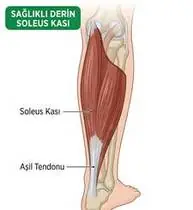
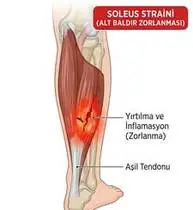
Soleus Strain (Deep Calf Muscle Injury) — Overview
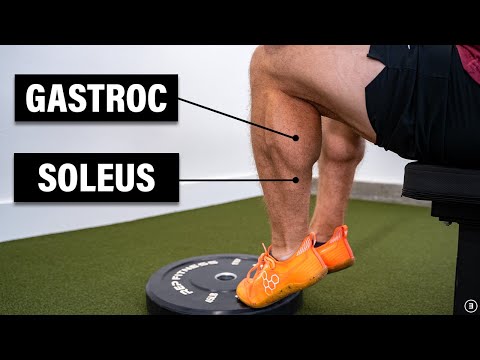
Soleus strain is a subacute or acute injury of the deep monoarticular calf muscle (composed of ~80–90% slow-twitch Type I endurance fibers) that originates from the posterior tibia/fibula below the knee and inserts via the Achilles tendon. Unlike gastrocnemius tears (which occur with an extended knee), soleus strains occur when the ankle is dorsiflexed while the KNEE IS FLEXED (uphill running, steady-state marathon/distance running, or bent-knee deceleration).
A soleus strain (deep lower calf muscle strain) is an injury to the deep marathon-endurance calf muscle that sits *underneath* your outer calf muscle. Because the soleus only crosses the ankle (and not the knee), it gets strained and tested when your knee is bent!
Primary Causes & Biomechanics
Key Points You Should Know
- •Repetitive fatigue loading during bent-knee ankle dorsiflexion and propulsion in distance runners, soccer/basketball players, and older athletes
- •Complex multipennate anatomy with three intramuscular aponeurotic structures (medial, lateral, and central tendon—central tendon tears require longest recovery!)
- •Frequently misdiagnosed as simple calf tightness or Achilles tendinopathy because there is rarely a dramatic 'pop'
- •How to Tell Soleus Apart From Upper Calf ('Tennis Leg'): If stretching your calf or rising onto your toes hurts more when your knee is slightly bent (or when running uphill), the deep soleus is the culprit!
- •Why It Sneaks Up Slowly: Unlike a sudden 'pop' in the upper calf, a soleus strain often starts as a deep, tight cramping ache in the lower half of the calf that worsens as you run.
- •Bent-Knee Strengthening Is Key: Straight-leg calf raises mostly work the outer calf; to heal the soleus, you must also do heel raises with your knees slightly bent (or seated with weight on your knees).
Assessment Methods
1. Goniometric ROM & Postural / Kinematic Analysis
Ankle dorsiflexion ROM tested with the KNEE FLEXED AT 90° (Weight-Bearing Knee-to-Wall Lunge Test)—which selectively stretches the soleus while slackening the gastrocnemius!
2. Special Clinical Provocation & Neurological/Functional Tests
Deep posteromedial or posterolateral lower-calf tenderness (deep to the gastrocnemius edges), and pain reproduced by a single-leg heel raise performed with the KNEE BENT AT 30°–45°.
3. Standardized Clinical Outcome Scales & Imaging Criteria
Calf MRI / ultrasound (identifying central vs. myofascial aponeurotic tear), Knee-to-Wall Lunge symmetry (cm), and bent-knee heel-raise endurance.
1. Range of Motion & Posture Check
Your physiotherapist gently evaluates how comfortably and smoothly your deep monoarticular soleus muscle and its complex multipennate myofascial/aponeurotic junctions moves and checks your overall posture.
2. Muscle Strength & Functional Movement Check
Your muscle balance, walking or reaching comfort, and specific gentle movement tests are evaluated without triggering sharp pain.
3. Typical Symptoms & Daily Impact Review
Subacute progressive deep tightness, cramping, or aching in the middle-to-lower calf (just above the Achilles tendon) that worsens during distance running, uphill running, or prolonged walking.
Treatment Options & Phase-Based Protocol
✨ Enriched GIF Exercise & Precaution GuidePhase 1: Acute Symptom Modulation, Tissue Protection & Early Activation
- •Phase 1 Clinical Focus & Tissue Protection: Load Modification & Unloaded Circulation Phase (Weeks 1–2): Temporarily pause uphill/speed running, use a small heel lift if walking is painful, and perform pain-free ankle pumps, Short-Foot arch exercises, and proximal hip/knee exercises (pelvic bridges, side hip abduction).
- •Pain, Edema & Neuromuscular Modulation: Targeted physical modalities, relative load management, and early protected mobility of the deep monoarticular soleus muscle and its complex multipennate myofascial/aponeurotic junctions without provoking mechanical or inflammatory irritation.
- •Proximal & Distal Kinetic Chain Maintenance: Maintain active mobility and circulation in adjacent joints while protecting the primary healing structures in Soleus Strain.
Phase 2: Progressive Mobility, Motor Control & Targeted Strengthening
- •Phase 2 Progressive Mobilization & Motor Control: Bent-Knee Flexibility & Heavy Slow Resistance Phase (Weeks 2–5): Gentle towel calf stretches & bent-knee wall stretches, seated bent-knee calf raises, and standing heel raises with knees slightly flexed (targeting the soleus!).
- •Biomechanical Alignment & Co-Contraction: Restore balanced agonist-antagonist force couples, joint centration, and multi-planar neuromuscular control across the deep monoarticular soleus muscle and its complex multipennate myofascial/aponeurotic junctions.
- •Myofascial Extensibility & Endurance: Address secondary compensatory tightness and build local muscular endurance within safe, symptom-free biomechanical parameters.
Phase 3: Functional Integration, Proprioception & Long-Term Prevention
- •Phase 3 Functional Integration & Long-Term Prevention: Endurance Capacity & Running Return Phase (Week 5–8+): High-repetition single-leg bent-knee and straight-knee calf endurance (25–30 reps), single-leg balance, and graduated level-ground -> uphill running progression.
- •Proprioceptive Balance & Dynamic Loading: Progress to task-specific closed-chain, balance, and functional movement patterns tailored to daily life, occupational, or athletic demands.
- •Self-Management & Relapse Prophylaxis: Establish lifelong ergonomic habits, home exercise maintenance, and early warning-sign awareness to prevent recurrence.
Step 1: Calming Pain, Protecting the Area & Gentle Starter Motion
- •How to Tell Soleus Apart From Upper Calf ('Tennis Leg'): If stretching your calf or rising onto your toes hurts more when your knee is slightly bent (or when running uphill), the deep soleus is the culprit!
- •Calm Protection & Gentle Start: During the initial stage of Deep Lower Calf Muscle Strain, avoid painful overloading and perform the gentle, pain-free starter movements shown below to support circulation and comfort.
- •Respecting Your Body's Signals: Every movement should stay within a comfortable, non-painful zone—never force through sharp or radiating pain.
Step 2: Restoring Flexibility & Building Supporting Muscle Strength
- •Why It Sneaks Up Slowly: Unlike a sudden 'pop' in the upper calf, a soleus strain often starts as a deep, tight cramping ache in the lower half of the calf that worsens as you run.
- •Step-by-Step Flexibility & Support: As acute sensitivity settles, gradually build mobility and strengthen the supporting muscles around the joint at a steady, controlled pace.
- •Posture & Breathing Coordination: Keep your posture upright and breathe smoothly (never hold your breath!) during every repetition.
Step 3: Safe Daily Habits, Stamina & Preventing Recurrence
- •Bent-Knee Strengthening Is Key: Straight-leg calf raises mostly work the outer calf; to heal the soleus, you must also do heel raises with your knees slightly bent (or seated with weight on your knees).
- •Confident Return to Daily Life: Integrate your stronger muscles and improved balance into walking, stairs, work, and recreational activities.
- •Preventing Future Flare-Ups: Continue your core protective habits and key maintenance exercises even after symptoms resolve.
Animated (GIF) Therapeutic Exercise Guide
Animated clinical exercise protocol with biomechanical angles, target muscle groups, and dosage parameters (Click image to enlarge)
Step-by-step animated exercise demonstrations you can safely perform at home (Click image to enlarge)
 🔍 Enlarge
1. Rhythmic Active Ankle Dorsiflexion & Plantarflexion Pumping (Venous/Edema Pump)
1. Ankle Toe-Pulls and Pointing (Circulation & Swelling Pump)
Rhythmic alternating contraction of the tibialis anterior and gastrocnemius-soleus complex. Activates the deep venous calf pump to prevent deep vein thrombosis (DVT), clears distal edema, and maintains talocrural mobility. Specifically indicated in Soleus Strain rehabilitation to optimize deep monoarticular soleus muscle and its complex multipennate myofascial/aponeurotic junctions biomechanics and neuromuscular control.
While lying down or sitting with your legs supported, pull your toes and feet firmly upward toward your shins, hold for 3 seconds, then point them downward like pressing a gas pedal. Perform smoothly within a comfortable, pain-free range to support your Deep Lower Calf Muscle Strain recovery.
 🔍 Enlarge
2. Long-Sitting Towel-Assisted Gastrocnemius-Soleus & Plantar Fascia Stretch
2. Seated Towel Calf & Foot Arch Stretch
Long-sitting with a towel looped around the metatarsal heads, applying a slow, sustained passive pull into ankle dorsiflexion. Restores gastrocnemius-soleus-Achilles length and reduces plantar fascial and equine tension. Specifically indicated in Soleus Strain rehabilitation to optimize deep monoarticular soleus muscle and its complex multipennate myofascial/aponeurotic junctions biomechanics and neuromuscular control.
Sit with your leg extended and loop a towel around the ball of your foot. Gently pull both ends of the towel toward you until you feel a comfortable stretch in your calf and sole, holding for 20–30 seconds. Perform smoothly within a comfortable, pain-free range to support your Deep Lower Calf Muscle Strain recovery.
 🔍 Enlarge
3. Intrinsic Foot Core ('Short Foot') & Medial Longitudinal Arch Activation
3. Seated Arch Doming (Short Foot) & Towel Scrunch
Drawing the first metatarsal head toward the calcaneus to elevate the medial longitudinal arch without curling the toes (or performing controlled towel curls). Strengthens the intrinsic plantar muscles supporting the subtalar and midtarsal joints. Specifically indicated in Soleus Strain rehabilitation to optimize deep monoarticular soleus muscle and its complex multipennate myofascial/aponeurotic junctions biomechanics and neuromuscular control.
While seated with your foot flat on the floor (or on a small towel), gently draw the ball of your foot toward your heel to lift your inner arch without curling your toes, hold for 5 seconds, and relax. Perform smoothly within a comfortable, pain-free range to support your Deep Lower Calf Muscle Strain recovery.
 🔍 Enlarge
4. Closed-Chain Bilateral/Eccentric Heel Raise (Triceps Surae & Achilles Loading)
4. Supported Standing Heel Raise & Slow Lowering
Controlled concentric heel elevation followed by slow (3–4 second) eccentric lowering into neutral dorsiflexion. Stimulates Type I collagen alignment in the Achilles/plantar aponeurosis and builds ankle plantarflexor propulsion. Specifically indicated in Soleus Strain rehabilitation to optimize deep monoarticular soleus muscle and its complex multipennate myofascial/aponeurotic junctions biomechanics and neuromuscular control.
Hold lightly onto a wall or chair back. Rise up onto the balls of both feet, pause at the top, and slowly lower your heels back down to the floor over 3–4 seconds. Perform smoothly within a comfortable, pain-free range to support your Deep Lower Calf Muscle Strain recovery.
 🔍 Enlarge
5. Supine Lumbopelvic Bridging (Gluteus Maximus & Posterior Chain Co-Contraction)
5. Supine Hip Bridge (Controlled Pelvic Lift)
From hook-lying with transversus abdominis pre-activation, elevating the pelvis until hips, pelvis, and shoulders form a neutral diagonal line. Strengthens the gluteus maximus, hamstrings, and erector spinae synergy without lumbar hyperlordosis. Specifically indicated in Soleus Strain rehabilitation to optimize deep monoarticular soleus muscle and its complex multipennate myofascial/aponeurotic junctions biomechanics and neuromuscular control.
Lie on your back with your knees bent and feet flat hip-width apart. Gently tighten your tummy and glutes, lift your hips until your body forms a straight line from shoulders to knees, hold for 5 seconds, and lower slowly. Perform smoothly within a comfortable, pain-free range to support your Deep Lower Calf Muscle Strain recovery.
 🔍 Enlarge
6. Single-Leg / Semi-Tandem Proprioceptive & Weight-Shift Balance Training
6. Supported Weight-Shifting & Tandem Balance Practice
Controlled mediolateral/anteroposterior weight shifting and tandem or single-leg stance near a stable support. Enhances mechanoreceptor feedback, ankle/hip postural reflexes, and dynamic gait stability. Specifically indicated in Soleus Strain rehabilitation to optimize deep monoarticular soleus muscle and its complex multipennate myofascial/aponeurotic junctions biomechanics and neuromuscular control.
Stand near a counter or sturdy chair for safety. Place one foot slightly in front of the other (or shift your weight smoothly from side to side) and hold your balance upright for 20–30 seconds. Perform smoothly within a comfortable, pain-free range to support your Deep Lower Calf Muscle Strain recovery.
Movements to Avoid & Strict Precautions
1. Uphill Running, Sand Running, or Forefoot Sprint Drills During Early Recovery
1. Running uphill, running on soft sand, or sprinting on your toes while the deep calf is healing
2. Doing Only Straight-Knee Calf Raises (Misses the Deep Soleus Muscle Completely!)
2. Only exercising with a straight knee and neglecting bent-knee calf strengthening
3. Running Through 'Calf Tightness' That Worsens Every Kilometer
3. Trying to 'run off' a deep calf cramp that gets tighter as you run
4. Switching Suddenly to Minimalist / Zero-Drop Running Shoes
4. Switching abruptly to flat, zero-drop running shoes (puts massive stretch on the soleus!)
Soleus Strain (Deep Calf Muscle Injury) — Video Guide
Click directly on any video to open and watch in a window, or review details via 📋 Summary & Options.
Condition Overview Video (1 Video)
Summary of pathophysiology, biomechanics, and clinical presentation
What the condition is, why it develops, and its basic mechanism
Calf Muscle Tear (Gastroknemius Strain / Tennis Leg): Symptoms and Recovery
Soleus strain is a subacute or acute injury of the deep monoarticular calf muscle (composed of ~80–90% slow-twitch Type I endurance fibers) that originates from the posterior tibia/fibula below the knee and inserts via the Achilles tendon. Unlike gastrocnemius tears (which occur with an extended knee), soleus strains occur when the ankle is dorsiflexed while the KNEE IS FLEXED (uphill running, steady-state marathon/distance running, or bent-knee deceleration).
A soleus strain (deep lower calf muscle strain) is an injury to the deep marathon-endurance calf muscle that sits *underneath* your outer calf muscle. Because the soleus only crosses the ankle (and not the knee), it gets strained and tested when your knee is bent!
Treatment and Exercise Videos
Phase-based physiotherapy protocols, mobilization, and therapeutic exercises
Step-by-step recovery and safe home exercise applications

Soleus and Gastrocnemius (Seated & Standing Calf) Specific Loading Exercises
Phase 1: Acute Symptom Modulation, Tissue Protection & Early Activation: Phase 1 Clinical Focus & Tissue Protection: Load Modification & Unloaded Circulation Phase (Weeks 1–2): Temporarily pause uphill/speed running, use a small heel lift if walking is painful, and perform pain-free ankle pumps, Short-Foot arch exercises, and proximal hip/knee exercises (pelvic bridges, side hip abduction).
Step 1: Calming Pain, Protecting the Area & Gentle Starter Motion: How to Tell Soleus Apart From Upper Calf ('Tennis Leg'): If stretching your calf or rising onto your toes hurts more when your knee is slightly bent (or when running uphill), the deep soleus is the culprit!

Achilles Tendon Rehabilitation and Progressive Loading Exercises
Phase 2: Progressive Mobility, Motor Control & Targeted Strengthening: Phase 2 Progressive Mobilization & Motor Control: Bent-Knee Flexibility & Heavy Slow Resistance Phase (Weeks 2–5): Gentle towel calf stretches & bent-knee wall stretches, seated bent-knee calf raises, and standing heel raises with knees slightly flexed (targeting the soleus!).
Step 2: Restoring Flexibility & Building Supporting Muscle Strength: Why It Sneaks Up Slowly: Unlike a sudden 'pop' in the upper calf, a soleus strain often starts as a deep, tight cramping ache in the lower half of the calf that worsens as you run.
Clinical Assessment, Goniometry & Special Test Videos
Displayed only in Healthcare Professional mode (hidden in Patient mode)

Ankle and Foot Goniometric Measurement (Dorsiflexion, Plantarflexion, Inversion/Eversion)
Goniometric ROM & Postural / Kinematic Analysis: Ankle dorsiflexion ROM tested with the KNEE FLEXED AT 90° (Weight-Bearing Knee-to-Wall Lunge Test)—which selectively stretches the soleus while slackening the gastrocnemius!

Thompson (Simmonds) Calf Squeeze Test — Achilles Tendon Rupture Examination
Special Clinical Provocation & Neurological/Functional Tests: Deep posteromedial or posterolateral lower-calf tenderness (deep to the gastrocnemius edges), and pain reproduced by a single-leg heel raise performed with the KNEE BENT AT 30°–45°.