Hamstring Strain (Posterior Thigh Muscle Tear)Posterior Thigh Muscle Tear (Hamstring Strain)
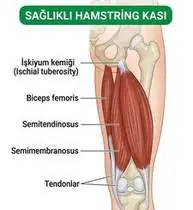
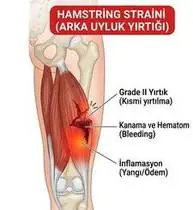
Hamstring Strain (Posterior Thigh Muscle Tear) — Overview
Hamstring strains are the most prevalent non-contact muscle injuries in high-speed running sports, occurring predominantly at the proximal myotendinous junction of the biceps femoris long head during the terminal swing phase of sprinting (when the biarticular hamstrings contract eccentrically to decelerate hip flexion and knee extension simultaneously) or in the semimembranosus tendon during extreme stretching (high kicks/dance).
A hamstring strain (posterior thigh muscle tear) is an overstretching or tearing of the muscle fibers at the back of your thigh—most commonly happening during a sudden sprint or when kicking/stretching with the hip bent and knee straight.
Primary Causes & Biomechanics
Key Points You Should Know
- •Eccentric overload during late swing phase sprinting when the muscle reaches peak biomechanical elongation and force generation
- •Modifiable risk factors: prior hamstring injury (#1 risk factor!), low eccentric knee flexor strength, fatigue, and excessive anterior pelvic tilt (iliopsoas tightness lengthening the origin on the ischial tuberosity)
- •British Athletics Muscle Injury Classification (Grade 0–4 and myofascial 'a', musculotendinous 'b', vs. intratendinous 'c' tears)
- •Why Lengthened-State Eccentric Rehab Cuts Re-Injury by 70%: Hamstrings tear when lengthening under load during sprinting; training them while slowly lengthening (like bridges and Nordic/Askling exercises) rebuilds longer, stronger muscle fibers!
- •Avoid Aggressive Early Stretching: Pulling hard on a fresh hamstring tear in the first week pulls the healing fibers apart!
- •Glute Strength Protects the Hamstrings: When your buttock muscles (gluteus maximus) are strong, your hamstrings don't have to carry the whole load alone.
Assessment Methods
1. Goniometric ROM & Postural / Kinematic Analysis
Active Knee Extension (AKE / 90–90 test) deficit, Passive Straight Leg Raise (PSLR), and Askling H-test (dynamic ballistic flexibility).
2. Special Clinical Provocation & Neurological/Functional Tests
Palpation of the defect/tenderness length and distance from the ischial tuberosity (more proximal = longer RTS!), prone resisted knee flexion at 15° and 90°.
3. Standardized Clinical Outcome Scales & Imaging Criteria
Munich / BAMIC MRI classification, isometric/eccentric Limb Symmetry Index (LSI >90%), and Aspetar Return-to-Sport criteria.
1. Range of Motion & Posture Check
Your physiotherapist gently evaluates how comfortably and smoothly your posterior thigh hamstring complex (biceps femoris long head, semitendinosus, semimembranosus myotendinous junction) moves and checks your overall posture.
2. Muscle Strength & Functional Movement Check
Your muscle balance, walking or reaching comfort, and specific gentle movement tests are evaluated without triggering sharp pain.
3. Typical Symptoms & Daily Impact Review
Sudden sharp snapping or tearing pain in the back of the thigh during sprinting or stretching, followed by focal tenderness, bruising (ecchymosis), and pain on walking or bending forward.
Treatment Options & Phase-Based Protocol
✨ Enriched GIF Exercise & Precaution GuidePhase 1: Acute Symptom Modulation, Tissue Protection & Early Activation
- •Phase 1 Clinical Focus & Tissue Protection: Acute PEACE & LOVE & Pain-Free Activation Phase (Days 1–7): Avoid NSAIDs/aggressive stretching in first 48–72h; perform pain-free ankle pumps, unloaded supine heel slides, isometric gluteal/quadriceps activation, and normal stride-length walking.
- •Pain, Edema & Neuromuscular Modulation: Targeted physical modalities, relative load management, and early protected mobility of the posterior thigh hamstring complex (biceps femoris long head, semitendinosus, semimembranosus myotendinous junction) without provoking mechanical or inflammatory irritation.
- •Proximal & Distal Kinetic Chain Maintenance: Maintain active mobility and circulation in adjacent joints while protecting the primary healing structures in Hamstring Strain.
Phase 2: Progressive Mobility, Motor Control & Targeted Strengthening
- •Phase 2 Progressive Mobilization & Motor Control: Progressive Lengthened-State Eccentric Phase (Askling L-Protocol — Weeks 2–4): Supine bilateral-to-single-leg pelvic bridging, quadruped Bird-Dog (controlling anterior pelvic tilt!), side-lying hip abduction, and eccentric Extender / Diver / Glider exercises.
- •Biomechanical Alignment & Co-Contraction: Restore balanced agonist-antagonist force couples, joint centration, and multi-planar neuromuscular control across the posterior thigh hamstring complex (biceps femoris long head, semitendinosus, semimembranosus myotendinous junction).
- •Myofascial Extensibility & Endurance: Address secondary compensatory tightness and build local muscular endurance within safe, symptom-free biomechanical parameters.
Phase 3: Functional Integration, Proprioception & Long-Term Prevention
- •Phase 3 Functional Integration & Long-Term Prevention: High-Speed Eccentric (Nordic) & Return-to-Sprint Phase (Week 4–8+): Nordic hamstring lowers, progressive high-speed running exposure (>90% max velocity before RTS!), and Askling H-test clearance (zero insecurity on ballistic SLR).
- •Proprioceptive Balance & Dynamic Loading: Progress to task-specific closed-chain, balance, and functional movement patterns tailored to daily life, occupational, or athletic demands.
- •Self-Management & Relapse Prophylaxis: Establish lifelong ergonomic habits, home exercise maintenance, and early warning-sign awareness to prevent recurrence.
Step 1: Calming Pain, Protecting the Area & Gentle Starter Motion
- •Why Lengthened-State Eccentric Rehab Cuts Re-Injury by 70%: Hamstrings tear when lengthening under load during sprinting; training them while slowly lengthening (like bridges and Nordic/Askling exercises) rebuilds longer, stronger muscle fibers!
- •Calm Protection & Gentle Start: During the initial stage of Posterior Thigh Muscle Tear, avoid painful overloading and perform the gentle, pain-free starter movements shown below to support circulation and comfort.
- •Respecting Your Body's Signals: Every movement should stay within a comfortable, non-painful zone—never force through sharp or radiating pain.
Step 2: Restoring Flexibility & Building Supporting Muscle Strength
- •Avoid Aggressive Early Stretching: Pulling hard on a fresh hamstring tear in the first week pulls the healing fibers apart!
- •Step-by-Step Flexibility & Support: As acute sensitivity settles, gradually build mobility and strengthen the supporting muscles around the joint at a steady, controlled pace.
- •Posture & Breathing Coordination: Keep your posture upright and breathe smoothly (never hold your breath!) during every repetition.
Step 3: Safe Daily Habits, Stamina & Preventing Recurrence
- •Glute Strength Protects the Hamstrings: When your buttock muscles (gluteus maximus) are strong, your hamstrings don't have to carry the whole load alone.
- •Confident Return to Daily Life: Integrate your stronger muscles and improved balance into walking, stairs, work, and recreational activities.
- •Preventing Future Flare-Ups: Continue your core protective habits and key maintenance exercises even after symptoms resolve.
Animated (GIF) Therapeutic Exercise Guide
Animated clinical exercise protocol with biomechanical angles, target muscle groups, and dosage parameters (Click image to enlarge)
Step-by-step animated exercise demonstrations you can safely perform at home (Click image to enlarge)
 🔍 Enlarge
1. Supine Active-Assisted Heel Slide & Synovial Diffusion Mobilization
1. Supine Heel Slide (Gentle Knee & Hip Bending)
Controlled flexion and extension of the lower extremity by sliding the heel along the support surface without axial weight-bearing. Stimulates synovial fluid diffusion across avascular cartilage and prevents capsular adhesions. Specifically indicated in Hamstring Strain rehabilitation to optimize posterior thigh hamstring complex (biceps femoris long head, semitendinosus, semimembranosus myotendinous junction) biomechanics and neuromuscular control.
While lying on your back, slowly slide your heel along the bed sheet toward your hip within a comfortable, pain-free angle, hold for 3 seconds, and gently slide it back out straight. Perform smoothly within a comfortable, pain-free range to support your Posterior Thigh Muscle Tear recovery.
 🔍 Enlarge
2. Straight Leg Raise (SLR — Multi-Plane Isometric Knee Lock)
2. Supine Straight Leg Raise
Maintaining the knee locked in full extension (0°) with ankle dorsiflexion while elevating the lower extremity to 45° hip flexion. Strengthens the quadriceps and iliopsoas complex without compressing or shearing the articular surfaces. Specifically indicated in Hamstring Strain rehabilitation to optimize posterior thigh hamstring complex (biceps femoris long head, semitendinosus, semimembranosus myotendinous junction) biomechanics and neuromuscular control.
Bend your healthy knee with the foot flat on the bed. Tighten the thigh muscle of your affected leg to lock the knee straight, lift the leg to the height of the opposite knee, hold for 3 seconds, and lower slowly. Perform smoothly within a comfortable, pain-free range to support your Posterior Thigh Muscle Tear recovery.
 🔍 Enlarge
3. Quadruped Contralateral Arm-Leg Reach ('Bird-Dog' Multifidus & Deep Core)
3. All-Fours Opposite Arm & Leg Reach (Bird-Dog)
In quadruped with a neutral lumbopelvic spine and abdominal drawing-in (transversus abdominis), extending opposite upper and lower extremities horizontally without pelvic rotation or lumbar hyperextension. Minimizes spinal compressive load while maximizing multifidus recruitment. Specifically indicated in Hamstring Strain rehabilitation to optimize posterior thigh hamstring complex (biceps femoris long head, semitendinosus, semimembranosus myotendinous junction) biomechanics and neuromuscular control.
On your hands and knees, keep your back flat like a tabletop and gently tighten your tummy. Slowly reach one arm forward and the opposite leg straight back withoutarching your lower back, hold for 5 seconds, and switch sides. Perform smoothly within a comfortable, pain-free range to support your Posterior Thigh Muscle Tear recovery.
 🔍 Enlarge
4. Functional Closed-Kinetic-Chain Chair Transfer (Sit-to-Stand Biomechanics)
4. Controlled Chair Sit-to-Stand Transfer
Controlled transition from sitting to standing and eccentric lowering back to the chair with symmetrical weight distribution, anterior trunk inclination ('nose over toes'), and neutral frontal knee alignment. Specifically indicated in Hamstring Strain rehabilitation to optimize posterior thigh hamstring complex (biceps femoris long head, semitendinosus, semimembranosus myotendinous junction) biomechanics and neuromuscular control.
Sit near the front of a sturdy chair with your feet hip-width apart. Lean slightly forward and push evenly through both heels to stand up tall, then slowly lower yourself back down over 3 seconds. Perform smoothly within a comfortable, pain-free range to support your Posterior Thigh Muscle Tear recovery.
 🔍 Enlarge
5. Supine Lumbopelvic Bridging (Gluteus Maximus & Posterior Chain Co-Contraction)
5. Supine Hip Bridge (Controlled Pelvic Lift)
From hook-lying with transversus abdominis pre-activation, elevating the pelvis until hips, pelvis, and shoulders form a neutral diagonal line. Strengthens the gluteus maximus, hamstrings, and erector spinae synergy without lumbar hyperlordosis. Specifically indicated in Hamstring Strain rehabilitation to optimize posterior thigh hamstring complex (biceps femoris long head, semitendinosus, semimembranosus myotendinous junction) biomechanics and neuromuscular control.
Lie on your back with your knees bent and feet flat hip-width apart. Gently tighten your tummy and glutes, lift your hips until your body forms a straight line from shoulders to knees, hold for 5 seconds, and lower slowly. Perform smoothly within a comfortable, pain-free range to support your Posterior Thigh Muscle Tear recovery.
 🔍 Enlarge
6. Side-Lying Hip Abduction (Gluteus Medius & Frontal Plane Control)
6. Side-Lying Leg Lift (Outer Hip Strengthening)
Isolated strengthening of the gluteus medius in slight hip extension and neutral rotation. Prevents contralateral pelvic drop (Trendelenburg) and reduces dynamic knee valgus and medial compartment adduction moments. Specifically indicated in Hamstring Strain rehabilitation to optimize posterior thigh hamstring complex (biceps femoris long head, semitendinosus, semimembranosus myotendinous junction) biomechanics and neuromuscular control.
Lie on your side with your bottom leg slightly bent for balance. Keep your top leg straight and slightly back, lift it up toward the ceiling without rolling your pelvis backward, hold for 3 seconds, and lower slowly. Perform smoothly within a comfortable, pain-free range to support your Posterior Thigh Muscle Tear recovery.
Movements to Avoid & Strict Precautions
1. Aggressive Static Hamstring Stretching in the First 7–10 Days (Pulls Healing Fibers Apart!)
1. Forcefully stretching the back of your thigh during the first week after a tear
2. Returning to Full-Speed Sprinting Before Reaching >90% Strength Symmetry
2. Sprinting at 100% speed as soon as walking feels pain-free (causes immediate re-tear!)
3. Applying Deep Heat or Deep Tissue Massage Over an Acute Bleeding Tear (First 72h)
3. Putting hot packs or deep massage over a fresh muscle tear in the first 3 days
4. Running With an Anteriorly Tilted Pelvis (Over-Striding)
4. Over-striding with your foot landing far in front of your hips when running
Hamstring Strain (Posterior Thigh Muscle Tear) — Video Guide
Click directly on any video to open and watch in a window, or review details via 📋 Summary & Options.
Condition Overview Video (1 Video)
Summary of pathophysiology, biomechanics, and clinical presentation
What the condition is, why it develops, and its basic mechanism
What Is a Hamstring Muscle Tear (Posterior Thigh Strain)? How Is It Treated?
Hamstring strains are the most prevalent non-contact muscle injuries in high-speed running sports, occurring predominantly at the proximal myotendinous junction of the biceps femoris long head during the terminal swing phase of sprinting (when the biarticular hamstrings contract eccentrically to decelerate hip flexion and knee extension simultaneously) or in the semimembranosus tendon during extreme stretching (high kicks/dance).
A hamstring strain (posterior thigh muscle tear) is an overstretching or tearing of the muscle fibers at the back of your thigh—most commonly happening during a sudden sprint or when kicking/stretching with the hip bent and knee straight.
Treatment and Exercise Videos
Phase-based physiotherapy protocols, mobilization, and therapeutic exercises
Step-by-step recovery and safe home exercise applications

Progressive Strengthening Exercises Following Hamstring Injuries
Phase 1: Acute Symptom Modulation, Tissue Protection & Early Activation: Phase 1 Clinical Focus & Tissue Protection: Acute PEACE & LOVE & Pain-Free Activation Phase (Days 1–7): Avoid NSAIDs/aggressive stretching in first 48–72h; perform pain-free ankle pumps, unloaded supine heel slides, isometric gluteal/quadriceps activation, and normal stride-length walking.
Step 1: Calming Pain, Protecting the Area & Gentle Starter Motion: Why Lengthened-State Eccentric Rehab Cuts Re-Injury by 70%: Hamstrings tear when lengthening under load during sprinting; training them while slowly lengthening (like bridges and Nordic/Askling exercises) rebuilds longer, stronger muscle fibers!

Nordic Hamstring Eccentric Strengthening and Injury-Prevention Exercises
Phase 2: Progressive Mobility, Motor Control & Targeted Strengthening: Phase 2 Progressive Mobilization & Motor Control: Progressive Lengthened-State Eccentric Phase (Askling L-Protocol — Weeks 2–4): Supine bilateral-to-single-leg pelvic bridging, quadruped Bird-Dog (controlling anterior pelvic tilt!), side-lying hip abduction, and eccentric Extender / Diver / Glider exercises.
Step 2: Restoring Flexibility & Building Supporting Muscle Strength: Avoid Aggressive Early Stretching: Pulling hard on a fresh hamstring tear in the first week pulls the healing fibers apart!
Clinical Assessment, Goniometry & Special Test Videos
Displayed only in Healthcare Professional mode (hidden in Patient mode)
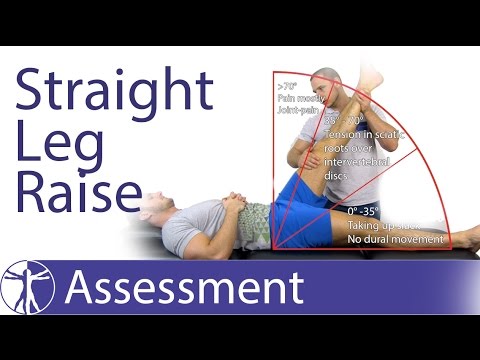
Lasègue (Straight Leg Raise / SLR) Test — Sciatica and Lumbar Radiculopathy Exam
Goniometric ROM & Postural / Kinematic Analysis: Active Knee Extension (AKE / 90–90 test) deficit, Passive Straight Leg Raise (PSLR), and Askling H-test (dynamic ballistic flexibility).

Hip Joint Goniometric Measurement (Flexion, Extension, Abduction, Rotations)
Special Clinical Provocation & Neurological/Functional Tests: Palpation of the defect/tenderness length and distance from the ischial tuberosity (more proximal = longer RTS!), prone resisted knee flexion at 15° and 90°.

Knee Joint Goniometric Measurement (Active & Passive Flexion / Extension ROM)
Standardized Clinical Outcome Scales & Imaging Criteria: Munich / BAMIC MRI classification, isometric/eccentric Limb Symmetry Index (LSI >90%), and Aspetar Return-to-Sport criteria.