Neonatal (Perinatal) StrokeNewborn Stroke / Early Hemiparesis (Neonatal (Perinatal) Stroke)
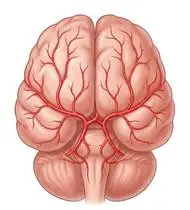
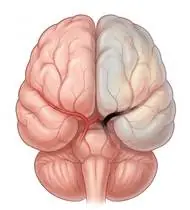
Neonatal (Perinatal) Stroke — Overview
Neonatal (Perinatal Arterial Ischemic) Stroke occurs between 20 weeks of gestation and the 28th postnatal day (~1 in 2,500–4,000 live births), most frequently involving thromboembolic occlusion of the Left Middle Cerebral Artery (MCA)—consequently resulting in Right-Sided Spastic Hemiplegia (affecting the Contralateral Upper Extremity > Lower Extremity). THE DIAGNOSTIC & NEUROPLASTIC PARADOX: Because corticospinal myelination is incomplete at birth, newborns with perinatal stroke often look motorically normal in the nursery (or present only with neonatal seizures), and asymmetric motor signs emerge between 3 and 9 months of age ('Early Handedness'!). CRITICAL PHYSIOTHERAPY WINDOW: During the first 12 to 24 months of life, the undamaged hemisphere attempts to prune away the injured hemisphere's remaining corticospinal fibers via competitive inhibition—intensive Baby-CIMT (Constraint-Induced Movement Therapy) and Bimanual Play during infancy rescue the injured hemisphere's motor map for life!
Neonatal stroke (newborn / perinatal stroke) occurs around the time of birth—most often affecting a blood vessel on the left side of the baby's brain and causing weakness or tightness in the right hand, arm, and leg. Because over 98% of children with perinatal stroke walk independently and a baby's brain is at its absolute peak of rewiring power (neuroplasticity) during the first 2 years of life, early playful hand and leg therapy can transform how the brain connects to the affected side!
Primary Causes & Biomechanics
Key Points You Should Know
- •Perinatal thromboembolism (placental thrombi passing through the patent foramen ovale into the left carotid/MCA, prothrombotic states, chorioamnionitis, or congenital heart disease)
- •Competitive Corticospinal Pruning in Infancy: If the infant only uses the unaffected hand during months 3–12, the healthy hemisphere crowds out the injured hemisphere's surviving projections (Developmental Disregard)
- •Distal > proximal upper limb involvement (thumb-in-palm adduction, forearm pronation, wrist flexion) and ipsilateral equinus toe-walking as the toddler stands
- •The #1 Early Clue: 'Hand Preference' Before 1 Year of Age Is NEVER Normal! Healthy babies use both their left and right hands equally until at least 18–24 months of age! If a 4-to-9-month-old baby always reaches with only one hand while keeping the other hand fisted with the thumb tucked inside, start specialized infant physiotherapy immediately!
- •The Soft-Sock Game (Baby-CIMT) at Home: For 20–30 minutes of happy playtime each day, slip a cozy sock or puppet over your baby's *stronger* hand and offer fun, easy-to-grasp toys to their *weaker* hand—this wakes up the sleeping brain pathways on the injured side!
- •Keeping the Thumb Out of the Palm: Gently stroking the back of the thumb and using a soft fabric thumb-loop helps your baby open their hand wide to grab toys.
Assessment Methods
1. Goniometric ROM & Postural / Kinematic Analysis
HINE (Hammersmith Infant Neurological Examination — score <57 at 3 mos or asymmetry score >5 predicts hemiplegic CP with >90% accuracy!), Prechtl's General Movements Assessment (GMA — absent 'Fidgety Movements' at 9–20 weeks post-term!), and HAI (Hand Assessment for Infants, 3–12 months).
2. Special Clinical Provocation & Neurological/Functional Tests
AHA (Assisting Hand Assessment, 18 mos–12 yrs), Modified Tardieu Scale (thumb-in-palm, pronator teres, gastrocnemius), and ankle/wrist goniometry.
3. Standardized Clinical Outcome Scales & Imaging Criteria
HINE Score, Hand Assessment for Infants (HAI), Assisting Hand Assessment (AHA), and Brain MRI (diffusion-weighted MRI in neonates).
1. Range of Motion & Posture Check
Your physiotherapist gently evaluates how comfortably and smoothly your perinatal cerebral vascular territory (predominantly the Left Middle Cerebral Artery — MCA in 70% of cases) and developing corticospinal tract moves and checks your overall posture.
2. Muscle Strength & Functional Movement Check
Your muscle balance, walking or reaching comfort, and specific gentle movement tests are evaluated without triggering sharp pain.
3. Typical Symptoms & Daily Impact Review
In the Newborn Period (First Days of Life): Often subtle or silent, or presenting with brief focal rhythmic jerking of one arm/leg (neonatal seizures) that resolves within days.
Treatment Options & Phase-Based Protocol
✨ Enriched GIF Exercise & Precaution GuidePhase 1: Acute Symptom Modulation, Tissue Protection & Early Activation
- •Phase 1 Clinical Focus & Tissue Protection: Phase 1 — Early Detection, Midline Sensory-Motor & 'Thumb-Out' Phase (Months 1–6): Side-lying play (affected side UP and DOWN), bringing both hands together to the mouth/face and midline rattle play, and gentle passive/playful opening of the 'thumb-in-palm' posture (wearing a soft neoprene thumb-abduction loop during play so the thumb stays out of the palm!).
- •Pain, Edema & Neuromuscular Modulation: Targeted physical modalities, relative load management, and early protected mobility of the perinatal cerebral vascular territory (predominantly the Left Middle Cerebral Artery — MCA in 70% of cases) and developing corticospinal tract without provoking mechanical or inflammatory irritation.
- •Proximal & Distal Kinetic Chain Maintenance: Maintain active mobility and circulation in adjacent joints while protecting the primary healing structures in Neonatal (Perinatal) Stroke.
Phase 2: Progressive Mobility, Motor Control & Targeted Strengthening
- •Phase 2 Progressive Mobilization & Motor Control: Phase 2 — Baby-CIMT (Soft Mitt on Unaffected Hand) & Intensive Bimanual Play Phase (Months 6–24 — Peak Neuroplastic Window!): 30–45 minutes daily of playful Baby-CIMT (placing a soft fabric mitt or sock on the stronger hand during happy play so the infant reaches, grasps, and turns the palm up [supination] with the affected hand!) immediately followed by two-handed bimanual toy play (holding a bottle, drum, or large ball with both hands)!
- •Biomechanical Alignment & Co-Contraction: Restore balanced agonist-antagonist force couples, joint centration, and multi-planar neuromuscular control across the perinatal cerebral vascular territory (predominantly the Left Middle Cerebral Artery — MCA in 70% of cases) and developing corticospinal tract.
- •Myofascial Extensibility & Endurance: Address secondary compensatory tightness and build local muscular endurance within safe, symptom-free biomechanical parameters.
Phase 3: Functional Integration, Proprioception & Long-Term Prevention
- •Phase 3 Functional Integration & Long-Term Prevention: Phase 3 — Quadruped Weight-Bearing, Heel-Strike Gait & Equinus Prevention Phase (Months 12+): Open-palm quadruped crawling, daily slow towel gastro-soleus stretches, supported standing & chair sit-to-stand (loading the affected leg!), and hinged AFO / night splint if toe-walking appears.
- •Proprioceptive Balance & Dynamic Loading: Progress to task-specific closed-chain, balance, and functional movement patterns tailored to daily life, occupational, or athletic demands.
- •Self-Management & Relapse Prophylaxis: Establish lifelong ergonomic habits, home exercise maintenance, and early warning-sign awareness to prevent recurrence.
Step 1: Calming Pain, Protecting the Area & Gentle Starter Motion
- •The #1 Early Clue: 'Hand Preference' Before 1 Year of Age Is NEVER Normal! Healthy babies use both their left and right hands equally until at least 18–24 months of age! If a 4-to-9-month-old baby always reaches with only one hand while keeping the other hand fisted with the thumb tucked inside, start specialized infant physiotherapy immediately!
- •Calm Protection & Gentle Start: During the initial stage of Newborn Stroke / Early Hemiparesis, avoid painful overloading and perform the gentle, pain-free starter movements shown below to support circulation and comfort.
- •Respecting Your Body's Signals: Every movement should stay within a comfortable, non-painful zone—never force through sharp or radiating pain.
Step 2: Restoring Flexibility & Building Supporting Muscle Strength
- •The Soft-Sock Game (Baby-CIMT) at Home: For 20–30 minutes of happy playtime each day, slip a cozy sock or puppet over your baby's *stronger* hand and offer fun, easy-to-grasp toys to their *weaker* hand—this wakes up the sleeping brain pathways on the injured side!
- •Step-by-Step Flexibility & Support: As acute sensitivity settles, gradually build mobility and strengthen the supporting muscles around the joint at a steady, controlled pace.
- •Posture & Breathing Coordination: Keep your posture upright and breathe smoothly (never hold your breath!) during every repetition.
Step 3: Safe Daily Habits, Stamina & Preventing Recurrence
- •Keeping the Thumb Out of the Palm: Gently stroking the back of the thumb and using a soft fabric thumb-loop helps your baby open their hand wide to grab toys.
- •Confident Return to Daily Life: Integrate your stronger muscles and improved balance into walking, stairs, work, and recreational activities.
- •Preventing Future Flare-Ups: Continue your core protective habits and key maintenance exercises even after symptoms resolve.
Animated (GIF) Therapeutic Exercise Guide
Animated clinical exercise protocol with biomechanical angles, target muscle groups, and dosage parameters (Click image to enlarge)
Step-by-step animated exercise demonstrations you can safely perform at home (Click image to enlarge)
 🔍 Enlarge
1. Thenar Opposition & Carpometacarpal (CMC) Fine Motor Coordination
1. Thumb-to-Fingertip Touching Sequence
Sequential opposition of the thumb pad to the tips of the index, middle, ring, and little fingers forming an 'O' ring, followed by sliding down the 5th digit toward the distal palmar crease. Restores first web-space mobility and intrinsic precision pinch. Specifically indicated in Neonatal (Perinatal) Stroke rehabilitation to optimize perinatal cerebral vascular territory (predominantly the Left Middle Cerebral Artery — MCA in 70% of cases) and developing corticospinal tract biomechanics and neuromuscular control.
Gently touch the tip of your thumb to each fingertip one by one from your index finger to your little finger, forming a neat 'O' shape each time, then open your hand wide. Perform smoothly within a comfortable, pain-free range to support your Newborn Stroke / Early Hemiparesis recovery.
 🔍 Enlarge
2. Bobath Bilateral Clasp-Hand Elevation & Midline Trunk Organization
2. Clasped-Hands Two-Arm Overhead Reach
Interlocking the fingers with the affected thumb positioned on top, maintaining elbow extension and scapular protraction while elevating both arms symmetrically in the midline. Inhibits upper limb flexor synergy and prevents hemiplegic shoulder impingement. Specifically indicated in Neonatal (Perinatal) Stroke rehabilitation to optimize perinatal cerebral vascular territory (predominantly the Left Middle Cerebral Artery — MCA in 70% of cases) and developing corticospinal tract biomechanics and neuromuscular control.
Clasp your hands together with your affected thumb on top. Keeping both elbows straight, use your stronger arm to smoothly guide both hands upward toward the ceiling and slowly back down. Perform smoothly within a comfortable, pain-free range to support your Newborn Stroke / Early Hemiparesis recovery.
 🔍 Enlarge
3. Closed-Chain Wall Ball Stabilization & Serratus Anterior Protraction
3. Wall Ball Circles & Shoulder Blade Control
Rhythmic stabilization and small circular perturbations with the hand pressing a soft ball against the wall at shoulder height. Stimulates glenohumeral joint mechanoreceptors, serratus anterior upward rotation, and rotator cuff co-contraction. Specifically indicated in Neonatal (Perinatal) Stroke rehabilitation to optimize perinatal cerebral vascular territory (predominantly the Left Middle Cerebral Artery — MCA in 70% of cases) and developing corticospinal tract biomechanics and neuromuscular control.
Hold a small soft ball against the wall at chest or shoulder height with your elbow nearly straight. Gently press into the ball and trace small, controlled clockwise and counterclockwise circles. Perform smoothly within a comfortable, pain-free range to support your Newborn Stroke / Early Hemiparesis recovery.
 🔍 Enlarge
4. Long-Sitting Towel-Assisted Gastrocnemius-Soleus & Plantar Fascia Stretch
4. Seated Towel Calf & Foot Arch Stretch
Long-sitting with a towel looped around the metatarsal heads, applying a slow, sustained passive pull into ankle dorsiflexion. Restores gastrocnemius-soleus-Achilles length and reduces plantar fascial and equine tension. Specifically indicated in Neonatal (Perinatal) Stroke rehabilitation to optimize perinatal cerebral vascular territory (predominantly the Left Middle Cerebral Artery — MCA in 70% of cases) and developing corticospinal tract biomechanics and neuromuscular control.
Sit with your leg extended and loop a towel around the ball of your foot. Gently pull both ends of the towel toward you until you feel a comfortable stretch in your calf and sole, holding for 20–30 seconds. Perform smoothly within a comfortable, pain-free range to support your Newborn Stroke / Early Hemiparesis recovery.
 🔍 Enlarge
5. Quadruped Contralateral Arm-Leg Reach ('Bird-Dog' Multifidus & Deep Core)
5. All-Fours Opposite Arm & Leg Reach (Bird-Dog)
In quadruped with a neutral lumbopelvic spine and abdominal drawing-in (transversus abdominis), extending opposite upper and lower extremities horizontally without pelvic rotation or lumbar hyperextension. Minimizes spinal compressive load while maximizing multifidus recruitment. Specifically indicated in Neonatal (Perinatal) Stroke rehabilitation to optimize perinatal cerebral vascular territory (predominantly the Left Middle Cerebral Artery — MCA in 70% of cases) and developing corticospinal tract biomechanics and neuromuscular control.
On your hands and knees, keep your back flat like a tabletop and gently tighten your tummy. Slowly reach one arm forward and the opposite leg straight back withoutarching your lower back, hold for 5 seconds, and switch sides. Perform smoothly within a comfortable, pain-free range to support your Newborn Stroke / Early Hemiparesis recovery.
 🔍 Enlarge
6. Functional Closed-Kinetic-Chain Chair Transfer (Sit-to-Stand Biomechanics)
6. Controlled Chair Sit-to-Stand Transfer
Controlled transition from sitting to standing and eccentric lowering back to the chair with symmetrical weight distribution, anterior trunk inclination ('nose over toes'), and neutral frontal knee alignment. Specifically indicated in Neonatal (Perinatal) Stroke rehabilitation to optimize perinatal cerebral vascular territory (predominantly the Left Middle Cerebral Artery — MCA in 70% of cases) and developing corticospinal tract biomechanics and neuromuscular control.
Sit near the front of a sturdy chair with your feet hip-width apart. Lean slightly forward and push evenly through both heels to stand up tall, then slowly lower yourself back down over 3 seconds. Perform smoothly within a comfortable, pain-free range to support your Newborn Stroke / Early Hemiparesis recovery.
Movements to Avoid & Strict Precautions
1. Taking a 'Wait-and-See' Approach When a Baby Under 1 Year Reaches With Only One Hand
1. Waiting to start therapy when a baby under 12 months favors one hand (early months are the golden brain-wiring window!)
2. Frustrating the Baby During 'Soft-Sock' (CIMT) Play (Always Keep Play Joyful & Achievable!)
2. Forcing the baby when they are tired or frustrated (make every 10-minute hand game fun and successful!)
3. Letting the Thumb Stay Tucked Inside the Fist All Day
3. Allowing the baby to keep their thumb curled tightly inside their palm without gentle opening play
4. Pulling Quickly on a Tight Ankle or Wrist (Use Slow, Playful Stretches Instead)
4. Jerking a tight ankle or wrist quickly
Neonatal (Perinatal) Stroke — Video Guide
Click directly on any video to open and watch in a window, or review details via 📋 Summary & Options.
Condition Overview Video (1 Video)
Summary of pathophysiology, biomechanics, and clinical presentation
What the condition is, why it develops, and its basic mechanism

What Is Neonatal (Perinatal) Stroke? Early Signs and Recognition
Neonatal (Perinatal Arterial Ischemic) Stroke occurs between 20 weeks of gestation and the 28th postnatal day (~1 in 2,500–4,000 live births), most frequently involving thromboembolic occlusion of the Left Middle Cerebral Artery (MCA)—consequently resulting in Right-Sided Spastic Hemiplegia (affecting the Contralateral Upper Extremity > Lower Extremity). THE DIAGNOSTIC & NEUROPLASTIC PARADOX: Because corticospinal myelination is incomplete at birth, newborns with perinatal stroke often look motorically normal in the nursery (or present only with neonatal seizures), and asymmetric motor signs emerge between 3 and 9 months of age ('Early Handedness'!). CRITICAL PHYSIOTHERAPY WINDOW: During the first 12 to 24 months of life, the undamaged hemisphere attempts to prune away the injured hemisphere's remaining corticospinal fibers via competitive inhibition—intensive Baby-CIMT (Constraint-Induced Movement Therapy) and Bimanual Play during infancy rescue the injured hemisphere's motor map for life!
Neonatal stroke (newborn / perinatal stroke) occurs around the time of birth—most often affecting a blood vessel on the left side of the baby's brain and causing weakness or tightness in the right hand, arm, and leg. Because over 98% of children with perinatal stroke walk independently and a baby's brain is at its absolute peak of rewiring power (neuroplasticity) during the first 2 years of life, early playful hand and leg therapy can transform how the brain connects to the affected side!
Treatment and Exercise Videos
Phase-based physiotherapy protocols, mobilization, and therapeutic exercises
Step-by-step recovery and safe home exercise applications

Home Exercises in Pediatric Neurological Conditions (CP, Spina Bifida, Brachial Plexus)
Phase 1: Acute Symptom Modulation, Tissue Protection & Early Activation: Phase 1 Clinical Focus & Tissue Protection: Phase 1 — Early Detection, Midline Sensory-Motor & 'Thumb-Out' Phase (Months 1–6): Side-lying play (affected side UP and DOWN), bringing both hands together to the mouth/face and midline rattle play, and gentle passive/playful opening of the 'thumb-in-palm' posture (wearing a soft neoprene thumb-abduction loop during play so the thumb stays out of the palm!).
Step 1: Calming Pain, Protecting the Area & Gentle Starter Motion: The #1 Early Clue: 'Hand Preference' Before 1 Year of Age Is NEVER Normal! Healthy babies use both their left and right hands equally until at least 18–24 months of age! If a 4-to-9-month-old baby always reaches with only one hand while keeping the other hand fisted with the thumb tucked inside, start specialized infant physiotherapy immediately!

Rolling and Trunk Rotation Facilitation Exercises in Infants
Phase 2: Progressive Mobility, Motor Control & Targeted Strengthening: Phase 2 Progressive Mobilization & Motor Control: Phase 2 — Baby-CIMT (Soft Mitt on Unaffected Hand) & Intensive Bimanual Play Phase (Months 6–24 — Peak Neuroplastic Window!): 30–45 minutes daily of playful Baby-CIMT (placing a soft fabric mitt or sock on the stronger hand during happy play so the infant reaches, grasps, and turns the palm up [supination] with the affected hand!) immediately followed by two-handed bimanual toy play (holding a bottle, drum, or large ball with both hands)!
Step 2: Restoring Flexibility & Building Supporting Muscle Strength: The Soft-Sock Game (Baby-CIMT) at Home: For 20–30 minutes of happy playtime each day, slip a cozy sock or puppet over your baby's *stronger* hand and offer fun, easy-to-grasp toys to their *weaker* hand—this wakes up the sleeping brain pathways on the injured side!
Clinical Assessment, Goniometry & Special Test Videos
Displayed only in Healthcare Professional mode (hidden in Patient mode)

Newborn and Infant Primitive Reflex Examination (Moro, Grasp, ATNR, Galant)
Goniometric ROM & Postural / Kinematic Analysis: HINE (Hammersmith Infant Neurological Examination — score <57 at 3 mos or asymmetry score >5 predicts hemiplegic CP with >90% accuracy!), Prechtl's General Movements Assessment (GMA — absent 'Fidgety Movements' at 9–20 weeks post-term!), and HAI (Hand Assessment for Infants, 3–12 months).
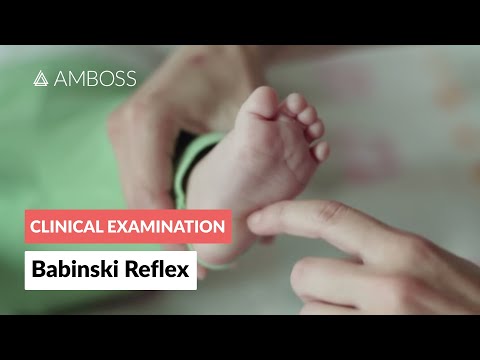
Pediatric Neurological Examination: Babinski and Plantar Reflex Assessment
Special Clinical Provocation & Neurological/Functional Tests: AHA (Assisting Hand Assessment, 18 mos–12 yrs), Modified Tardieu Scale (thumb-in-palm, pronator teres, gastrocnemius), and ankle/wrist goniometry.