Duchenne Muscular Dystrophy (Pediatric DMD)Childhood Progressive Muscle Wasting (Duchenne Muscular Dystrophy (DMD))
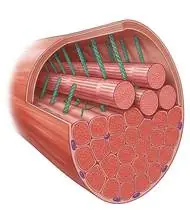
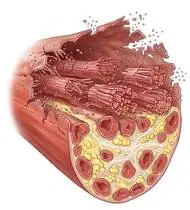
Duchenne Muscular Dystrophy (Pediatric DMD) — Overview
Pediatric Duchenne Muscular Dystrophy (DMD) typically manifests between ages 2 and 5 years with delayed motor milestones, waddling gait, toe-walking, calf pseudohypertrophy, and the classic Gowers' Sign. In the pediatric ambulatory stage (ages 2–10) and early non-ambulatory stage, physiotherapy is centered on preventing equinus/hip-flexor/ITB contractures BEFORE they cause loss of ambulation, utilizing night AFOs, hydrotherapy (warm pool play), and strictly avoiding eccentric/high-resistance overload!
Pediatric Duchenne Muscular Dystrophy (childhood DMD) is a genetic muscle condition usually noticed between ages 2 and 5 when a boy has trouble running, climbing stairs, or rises from the floor by pushing his hands up his thighs (Gowers' sign) while walking on his tiptoes with firm-looking calves. Starting gentle evening stretches, bedtime ankle splints, tummy-lying reading time, and swimming right from childhood can keep your child walking independently for years longer!
Primary Causes & Biomechanics
Key Points You Should Know
- •Complete absence of sarcolemmal dystrophin causing progressive degeneration of proximal pelvic and thigh muscles in early childhood
- •Biomechanical Compensation in Pediatric DMD Gait: Weak gluteus maximus forces anterior pelvic tilt + lumbar hyperlordosis (to keep the center of mass behind the hip joint), while weak quadriceps forces slight ankle equinus (toe-walking) to create a ground-reaction knee-extension moment!
- •Crucial Pediatric Orthotic Rule: Because daytime equinus helps lock the weak knee during walking, rigid AFOs must NEVER be worn during daytime walking in ambulatory DMD boys (they cause immediate falls!)—AFOs are worn strictly AT NIGHT in bed!
- •Why Night Splints (AFOs) Are Worn ONLY in Bed (Not While Walking!): A boy with DMD naturally walks slightly on his toes because it helps lock his knee straight. Putting stiff ankle braces on him *during daytime walking* blocks that balance trick and makes him fall! Instead, put his ankle splints on at bedtime every night to keep the Achilles tendons long without interfering with daytime play.
- •Make Stretching Part of Bedtime Story Time: Doing 3 slow, gentle calf stretches after a warm bath and having him read or watch a cartoon lying flat on his tummy for 15–20 minutes keeps both the ankles and hips straight effortlessly.
- •No Trampolines or Downhill Running: Jumping on trampolines, jumping off beds/steps, or running downhill causes 'eccentric' muscle strain that harms muscle fibers—choose swimming, tricycle/bike riding on flat paths, and water play instead!
Assessment Methods
1. Goniometric ROM & Postural / Kinematic Analysis
North Star Ambulatory Assessment (NSAA, 0–34 points), Timed Rise from Floor (Gowers' time in seconds), 10-Meter Walk/Run, 4-Stair Climb, and Ankle Dorsiflexion / Iliotibial Band (Ober) / Hip Flexor (Thomas) goniometry.
2. Special Clinical Provocation & Neurological/Functional Tests
Gowers' Sign observation, 6-Minute Walk Test (6MWT), and PUL 2.0 / FVC respiratory baseline (starting at age 5–6).
3. Standardized Clinical Outcome Scales & Imaging Criteria
NSAA, Timed Gowers' Test, 6MWT, and Pediatric Ankle Dorsiflexion ROM (target ≥10° neutral).
1. Range of Motion & Posture Check
Your physiotherapist gently evaluates how comfortably and smoothly your pediatric striated muscle sarcolemma (early childhood X-linked absence of dystrophin — Xp21 DMD gene) moves and checks your overall posture.
2. Muscle Strength & Functional Movement Check
Your muscle balance, walking or reaching comfort, and specific gentle movement tests are evaluated without triggering sharp pain.
3. Typical Symptoms & Daily Impact Review
Gowers' Sign & Proximal Weakness (Ages 2–5): Rolling onto the stomach and 'climbing up his own legs' with his hands to stand up from the floor, accompanied by a waddling walk and frequent falls.
Treatment Options & Phase-Based Protocol
✨ Enriched GIF Exercise & Precaution GuidePhase 1: Acute Symptom Modulation, Tissue Protection & Early Activation
- •Phase 1 Clinical Focus & Tissue Protection: Phase 1 — Early Childhood Daily Playful Stretching & Night AFO Phase (Ages 2–7): Every single evening after a warm bath, perform slow, gentle, pain-free gastro-soleus towel stretches (3x30–60s), 15–20 min of prone tummy-lying (while reading/playing on a tablet to stretch hip flexors!), and wear custom Resting Night AFOs in bed!
- •Pain, Edema & Neuromuscular Modulation: Targeted physical modalities, relative load management, and early protected mobility of the pediatric striated muscle sarcolemma (early childhood X-linked absence of dystrophin — Xp21 DMD gene) without provoking mechanical or inflammatory irritation.
- •Proximal & Distal Kinetic Chain Maintenance: Maintain active mobility and circulation in adjacent joints while protecting the primary healing structures in Duchenne Muscular Dystrophy (DMD).
Phase 2: Progressive Mobility, Motor Control & Targeted Strengthening
- •Phase 2 Progressive Mobilization & Motor Control: Phase 2 — Submaximal Joyful Play & Aquatic Hydrotherapy Phase: Swimming and warm-pool aquatic play (the #1 safest childhood exercise in DMD—zero eccentric shock!), gentle supine heel slides & pelvic bridges, and breath-blowing games (pinwheels, bubbles).
- •Biomechanical Alignment & Co-Contraction: Restore balanced agonist-antagonist force couples, joint centration, and multi-planar neuromuscular control across the pediatric striated muscle sarcolemma (early childhood X-linked absence of dystrophin — Xp21 DMD gene).
- •Myofascial Extensibility & Endurance: Address secondary compensatory tightness and build local muscular endurance within safe, symptom-free biomechanical parameters.
Phase 3: Functional Integration, Proprioception & Long-Term Prevention
- •Phase 3 Functional Integration & Long-Term Prevention: Phase 3 — Prolonged Standing, Scoliosis Protection & Upper Limb Function Phase: Daily standing-frame or KAFO standing (preserving bone mineral density, keeping the spine straight, and delaying scoliosis during corticosteroid therapy!), scapular posture, and fine finger/hand play.
- •Proprioceptive Balance & Dynamic Loading: Progress to task-specific closed-chain, balance, and functional movement patterns tailored to daily life, occupational, or athletic demands.
- •Self-Management & Relapse Prophylaxis: Establish lifelong ergonomic habits, home exercise maintenance, and early warning-sign awareness to prevent recurrence.
Step 1: Calming Pain, Protecting the Area & Gentle Starter Motion
- •Why Night Splints (AFOs) Are Worn ONLY in Bed (Not While Walking!): A boy with DMD naturally walks slightly on his toes because it helps lock his knee straight. Putting stiff ankle braces on him *during daytime walking* blocks that balance trick and makes him fall! Instead, put his ankle splints on at bedtime every night to keep the Achilles tendons long without interfering with daytime play.
- •Calm Protection & Gentle Start: During the initial stage of Childhood Progressive Muscle Wasting, avoid painful overloading and perform the gentle, pain-free starter movements shown below to support circulation and comfort.
- •Respecting Your Body's Signals: Every movement should stay within a comfortable, non-painful zone—never force through sharp or radiating pain.
Step 2: Restoring Flexibility & Building Supporting Muscle Strength
- •Make Stretching Part of Bedtime Story Time: Doing 3 slow, gentle calf stretches after a warm bath and having him read or watch a cartoon lying flat on his tummy for 15–20 minutes keeps both the ankles and hips straight effortlessly.
- •Step-by-Step Flexibility & Support: As acute sensitivity settles, gradually build mobility and strengthen the supporting muscles around the joint at a steady, controlled pace.
- •Posture & Breathing Coordination: Keep your posture upright and breathe smoothly (never hold your breath!) during every repetition.
Step 3: Safe Daily Habits, Stamina & Preventing Recurrence
- •No Trampolines or Downhill Running: Jumping on trampolines, jumping off beds/steps, or running downhill causes 'eccentric' muscle strain that harms muscle fibers—choose swimming, tricycle/bike riding on flat paths, and water play instead!
- •Confident Return to Daily Life: Integrate your stronger muscles and improved balance into walking, stairs, work, and recreational activities.
- •Preventing Future Flare-Ups: Continue your core protective habits and key maintenance exercises even after symptoms resolve.
Animated (GIF) Therapeutic Exercise Guide
Animated clinical exercise protocol with biomechanical angles, target muscle groups, and dosage parameters (Click image to enlarge)
Step-by-step animated exercise demonstrations you can safely perform at home (Click image to enlarge)
 🔍 Enlarge
1. Long-Sitting Towel-Assisted Gastrocnemius-Soleus & Plantar Fascia Stretch
1. Seated Towel Calf & Foot Arch Stretch
Long-sitting with a towel looped around the metatarsal heads, applying a slow, sustained passive pull into ankle dorsiflexion. Restores gastrocnemius-soleus-Achilles length and reduces plantar fascial and equine tension. Specifically indicated in Duchenne Muscular Dystrophy (DMD) rehabilitation to optimize pediatric striated muscle sarcolemma (early childhood X-linked absence of dystrophin — Xp21 DMD gene) biomechanics and neuromuscular control.
Sit with your leg extended and loop a towel around the ball of your foot. Gently pull both ends of the towel toward you until you feel a comfortable stretch in your calf and sole, holding for 20–30 seconds. Perform smoothly within a comfortable, pain-free range to support your Childhood Progressive Muscle Wasting recovery.
 🔍 Enlarge
2. Rhythmic Active Ankle Dorsiflexion & Plantarflexion Pumping (Venous/Edema Pump)
2. Ankle Toe-Pulls and Pointing (Circulation & Swelling Pump)
Rhythmic alternating contraction of the tibialis anterior and gastrocnemius-soleus complex. Activates the deep venous calf pump to prevent deep vein thrombosis (DVT), clears distal edema, and maintains talocrural mobility. Specifically indicated in Duchenne Muscular Dystrophy (DMD) rehabilitation to optimize pediatric striated muscle sarcolemma (early childhood X-linked absence of dystrophin — Xp21 DMD gene) biomechanics and neuromuscular control.
While lying down or sitting with your legs supported, pull your toes and feet firmly upward toward your shins, hold for 3 seconds, then point them downward like pressing a gas pedal. Perform smoothly within a comfortable, pain-free range to support your Childhood Progressive Muscle Wasting recovery.
 🔍 Enlarge
3. Supine Active-Assisted Heel Slide & Synovial Diffusion Mobilization
3. Supine Heel Slide (Gentle Knee & Hip Bending)
Controlled flexion and extension of the lower extremity by sliding the heel along the support surface without axial weight-bearing. Stimulates synovial fluid diffusion across avascular cartilage and prevents capsular adhesions. Specifically indicated in Duchenne Muscular Dystrophy (DMD) rehabilitation to optimize pediatric striated muscle sarcolemma (early childhood X-linked absence of dystrophin — Xp21 DMD gene) biomechanics and neuromuscular control.
While lying on your back, slowly slide your heel along the bed sheet toward your hip within a comfortable, pain-free angle, hold for 3 seconds, and gently slide it back out straight. Perform smoothly within a comfortable, pain-free range to support your Childhood Progressive Muscle Wasting recovery.
 🔍 Enlarge
4. Diaphragmatic & Pursed-Lip Breathing (PLB — Autonomic & Ventilatory Control)
4. Calm Belly Breathing with Pursed-Lip Exhale
Slow nasal inhalation expanding the lower ribcage and abdomen (while relaxing accessory neck/shoulder muscles), followed by prolonged expiration through pursed lips at a 1:2 ratio. Prevents dynamic airway collapse, improves basal ventilation, and reduces sympathetic tone. Specifically indicated in Duchenne Muscular Dystrophy (DMD) rehabilitation to optimize pediatric striated muscle sarcolemma (early childhood X-linked absence of dystrophin — Xp21 DMD gene) biomechanics and neuromuscular control.
Sit comfortably and place one hand on your chest and the other on your belly. Breathe in slowly through your nose for 2–3 seconds so your belly gently rises, then breathe out slowly for 4–6 seconds through pursed lips as if flickering a candle. Perform smoothly within a comfortable, pain-free range to support your Childhood Progressive Muscle Wasting recovery.
 🔍 Enlarge
5. Prone Positioning & Controlled Thoracolumbar Extension (McKenzie / Back Extensor)
5. Prone Lying & Gentle Back Extension Lift
Prone positioning and graduated thoracic/lumbar extension (with a pillow under the abdomen when indicated for spinal unloading). Counters flexed postural kyphosis, stretches tight hip flexors, and strengthens paraspinal extensors. Specifically indicated in Duchenne Muscular Dystrophy (DMD) rehabilitation to optimize pediatric striated muscle sarcolemma (early childhood X-linked absence of dystrophin — Xp21 DMD gene) biomechanics and neuromuscular control.
Lie on your stomach (place a small pillow under your hips/tummy if needed for comfort). Gently lift your head and chest slightly off the mat by squeezing your back muscles without straining your neck, hold for 3–5 seconds, and lower. Perform smoothly within a comfortable, pain-free range to support your Childhood Progressive Muscle Wasting recovery.
 🔍 Enlarge
6. Scapulothoracic Retraction & Depression (Middle/Lower Trapezius & Rhomboids)
6. Shoulder Blade Squeeze (Postural Alignment)
Adduction and depression of the scapulae via the middle/lower trapezius and rhomboids while inhibiting upper trapezius overactivity. Corrects anterior scapular tilt, widens the subacromial outlet, and unloads the anterior thoracic column. Specifically indicated in Duchenne Muscular Dystrophy (DMD) rehabilitation to optimize pediatric striated muscle sarcolemma (early childhood X-linked absence of dystrophin — Xp21 DMD gene) biomechanics and neuromuscular control.
Sit or stand tall. Keep your shoulders relaxed away from your ears, gently draw your shoulder blades together and slightly downward toward your back pockets, hold for 5 seconds, and release. Perform smoothly within a comfortable, pain-free range to support your Childhood Progressive Muscle Wasting recovery.
Movements to Avoid & Strict Precautions
1. Jumping on Trampolines, Jumping Down From Furniture/Steps, or Downhill Running (Tears Dystrophin-Deficient Muscle Cells!)
1. Jumping on trampolines, jumping off couches/stairs, or exhausting rough play (STRICTLY FORBIDDEN!)
2. Wearing Rigid Ankle Braces (AFOs) During Daytime Walking (Causes Immediate Falls in Ambulatory Boys!)
2. Putting stiff AFO braces on during daytime walking (wear them at night in bed!)
3. Skipping Bedtime Calf Stretches & Night AFOs (Allows Rapid Equinus Contracture That Stops Walking!)
3. Skipping evening calf stretches and bedtime splints
4. Keeping a Child in Bed for Weeks After a Minor Leg Fracture (Causes Permanent Loss of Walking Ability!)
4. Leaving the child immobilized in bed without early supported standing after a minor injury
Duchenne Muscular Dystrophy (Pediatric DMD) — Video Guide
Click directly on any video to open and watch in a window, or review details via 📋 Summary & Options.
Condition Overview Video (1 Video)
Summary of pathophysiology, biomechanics, and clinical presentation
What the condition is, why it develops, and its basic mechanism

What Are Duchenne and Becker Muscular Dystrophy (DMD / BMD)?
Pediatric Duchenne Muscular Dystrophy (DMD) typically manifests between ages 2 and 5 years with delayed motor milestones, waddling gait, toe-walking, calf pseudohypertrophy, and the classic Gowers' Sign. In the pediatric ambulatory stage (ages 2–10) and early non-ambulatory stage, physiotherapy is centered on preventing equinus/hip-flexor/ITB contractures BEFORE they cause loss of ambulation, utilizing night AFOs, hydrotherapy (warm pool play), and strictly avoiding eccentric/high-resistance overload!
Pediatric Duchenne Muscular Dystrophy (childhood DMD) is a genetic muscle condition usually noticed between ages 2 and 5 when a boy has trouble running, climbing stairs, or rises from the floor by pushing his hands up his thighs (Gowers' sign) while walking on his tiptoes with firm-looking calves. Starting gentle evening stretches, bedtime ankle splints, tummy-lying reading time, and swimming right from childhood can keep your child walking independently for years longer!
Treatment and Exercise Videos
Phase-based physiotherapy protocols, mobilization, and therapeutic exercises
Step-by-step recovery and safe home exercise applications

Physiotherapy, Submaximal Exercise, and Contracture Management in Muscular Dystrophies
Phase 1: Acute Symptom Modulation, Tissue Protection & Early Activation: Phase 1 Clinical Focus & Tissue Protection: Phase 1 — Early Childhood Daily Playful Stretching & Night AFO Phase (Ages 2–7): Every single evening after a warm bath, perform slow, gentle, pain-free gastro-soleus towel stretches (3x30–60s), 15–20 min of prone tummy-lying (while reading/playing on a tablet to stretch hip flexors!), and wear custom Resting Night AFOs in bed!
Step 1: Calming Pain, Protecting the Area & Gentle Starter Motion: Why Night Splints (AFOs) Are Worn ONLY in Bed (Not While Walking!): A boy with DMD naturally walks slightly on his toes because it helps lock his knee straight. Putting stiff ankle braces on him *during daytime walking* blocks that balance trick and makes him fall! Instead, put his ankle splints on at bedtime every night to keep the Achilles tendons long without interfering with daytime play.

Trunk Control, Balance, and Functional Home Exercises in Pediatric Rehabilitation
Phase 2: Progressive Mobility, Motor Control & Targeted Strengthening: Phase 2 Progressive Mobilization & Motor Control: Phase 2 — Submaximal Joyful Play & Aquatic Hydrotherapy Phase: Swimming and warm-pool aquatic play (the #1 safest childhood exercise in DMD—zero eccentric shock!), gentle supine heel slides & pelvic bridges, and breath-blowing games (pinwheels, bubbles).
Step 2: Restoring Flexibility & Building Supporting Muscle Strength: Make Stretching Part of Bedtime Story Time: Doing 3 slow, gentle calf stretches after a warm bath and having him read or watch a cartoon lying flat on his tummy for 15–20 minutes keeps both the ankles and hips straight effortlessly.
Clinical Assessment, Goniometry & Special Test Videos
Displayed only in Healthcare Professional mode (hidden in Patient mode)

Gowers' Sign (Gowers' Maneuver) — Clinical Examination of Proximal Pelvic Weakness
Goniometric ROM & Postural / Kinematic Analysis: North Star Ambulatory Assessment (NSAA, 0–34 points), Timed Rise from Floor (Gowers' time in seconds), 10-Meter Walk/Run, 4-Stair Climb, and Ankle Dorsiflexion / Iliotibial Band (Ober) / Hip Flexor (Thomas) goniometry.

Classic Gowers' Rising Test Assessment in Duchenne and Becker Muscular Dystrophy
Special Clinical Provocation & Neurological/Functional Tests: Gowers' Sign observation, 6-Minute Walk Test (6MWT), and PUL 2.0 / FVC respiratory baseline (starting at age 5–6).

Ankle and Foot Goniometric Measurement (Dorsiflexion, Plantarflexion, Inversion/Eversion)
Standardized Clinical Outcome Scales & Imaging Criteria: NSAA, Timed Gowers' Test, 6MWT, and Pediatric Ankle Dorsiflexion ROM (target ≥10° neutral).