Down Syndrome (Trisomy 21)Down Syndrome (Down Syndrome (Trisomy 21))
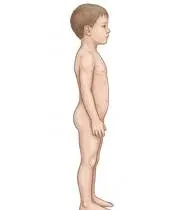
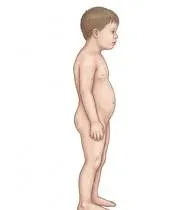
Down Syndrome (Trisomy 21) — Overview
Down Syndrome (Trisomy 21) is the most common chromosomal condition (~1 in 700 live births), presenting neuromotorically with the triad of 1) Generalized Muscular Hypotonia (central decreased postural tone), 2) Generalized Ligamentous Laxity (abnormal Type VI collagen gene dosage on chromosome 21), and 3) Reduced Cerebellar Volume (causing delayed balance and anticipatory postural adjustments). Because hypotonia and hypermobility make upright stability challenging, infants and toddlers develop compensatory wide-based static postures ('frog-leg' supine posture, wide-split sitting with a rounded C-kyphosis, knee hyperextension [genu recurvatum], and severe flexible pes planus with calcaneal valgus) instead of dynamic trunk rotation! MANDATORY SAFETY RULE: 15–20% of children with Down Syndrome have Atlantoaxial Instability (AAI — laxity of the transverse ligament at C1–C2); high-risk neck flexion/somersaults are strictly contraindicated!
Down syndrome (Trisomy 21) is a genetic condition in which children have low muscle tone (hypotonia) and extra-flexible joints (ligament laxity). Every child with Down syndrome WILL learn to sit, stand, walk, and run—our goal in physiotherapy is not just 'walking faster,' but building strong core and hip muscles from the very start so your child walks with aligned knees, supported foot arches, and lifelong joint health!
Primary Causes & Biomechanics
Key Points You Should Know
- •Trisomy 21 causing central cerebellar/cortical hypotonia and systemic ligamentous hyperlaxity (Type VI collagen alpha-1/alpha-2 chains)
- •Compensatory 'Wide-Base Locking' Strategy: Instead of using abdominal/gluteal co-contraction, toddlers spread their legs into a wide split, lock their knees into hyperextension, and collapse onto the medial borders of their flat feet (pronated wide-base waddling gait)
- •Associated Medical Factors: 40–50% Congenital Heart Defects (AVSD/VSD — check surgical clearance before vigorous exercise!), Atlantoaxial Instability (C1–C2), hypothyroidism, and hip subluxation
- •Why 'How' Your Child Moves Matters More Than 'How Fast': Because their joints are so flexible, toddlers with Down syndrome love to do the 'splits' to sit up or lock their knees backward to stand. Gently guiding their legs to stay hip-width apart (using a small stool to sit on) teaches their tummy and hip muscles to work properly!
- •Supportive Shoes / Ankle Inserts (SMOs) for Flat Feet: When your toddler starts standing and walking, supporting their super-flexible ankles with snug, supportive shoes (or custom SMO arch inserts) stops their ankles from rolling inward and protects their knees.
- •The Neck Safety Rule (C1–C2 Protection): Because the ligaments at the very top of the neck can be loose in Down syndrome, somersaults, forward rolls, diving, and trampolines are strictly off-limits to keep the spinal cord safe!
Assessment Methods
1. Goniometric ROM & Postural / Kinematic Analysis
Gross Motor Function Measure (GMFM-88 with Down Syndrome growth curves!), AIMS (Alberta Infant Motor Scale), and Peabody Developmental Motor Scales (PDMS-2).
2. Special Clinical Provocation & Neurological/Functional Tests
Atlantoaxial Instability (AAI) Neurological Screen (hyperreflexia, Babinski, clonus, neck pain/torticollis, or sudden gait loss!), Foot Posture Index (flexible pes planus & calcaneal valgus), and Congenital Heart Disease surgical clearance check.
3. Standardized Clinical Outcome Scales & Imaging Criteria
GMFM-88 (Down Syndrome reference curves), AIMS, and Beighton Hypermobility Score.
1. Range of Motion & Posture Check
Your physiotherapist gently evaluates how comfortably and smoothly your chromosome 21 (Trisomy 21), cerebellar/cortical motor control pathways, and generalized ligamentous/muscular connective tissue moves and checks your overall posture.
2. Muscle Strength & Functional Movement Check
Your muscle balance, walking or reaching comfort, and specific gentle movement tests are evaluated without triggering sharp pain.
3. Typical Symptoms & Daily Impact Review
Generalized Low Muscle Tone (Hypotonia) & Flexible Joints: In infancy, lying in a wide 'frog-leg' posture, head lag when pulled to sit, and a rounded back when sitting.
Treatment Options & Phase-Based Protocol
✨ Enriched GIF Exercise & Precaution GuidePhase 1: Acute Symptom Modulation, Tissue Protection & Early Activation
- •Phase 1 Clinical Focus & Tissue Protection: Phase 1 — Midline Organization, Tummy Time & Anti-'Frog-Leg' Infant Phase (Months 0–9): Use towel rolls/nested positioning to bring arms and legs to the midline, perform supported Tummy Time (on a small chest roll or parent's chest) to build cervical/scapular co-contraction, and facilitate rolling with trunk rotation & hands-to-feet supine play (strengthening abdominal flexors!).
- •Pain, Edema & Neuromuscular Modulation: Targeted physical modalities, relative load management, and early protected mobility of the chromosome 21 (Trisomy 21), cerebellar/cortical motor control pathways, and generalized ligamentous/muscular connective tissue without provoking mechanical or inflammatory irritation.
- •Proximal & Distal Kinetic Chain Maintenance: Maintain active mobility and circulation in adjacent joints while protecting the primary healing structures in Down Syndrome (Trisomy 21).
Phase 2: Progressive Mobility, Motor Control & Targeted Strengthening
- •Phase 2 Progressive Mobilization & Motor Control: Phase 2 — Quadruped Weight-Bearing, Trunk Rotation & Narrow-Base Sitting/Standing Phase (Months 9–24): Prevent wide-split sitting (use a narrow posture bench or gentle thigh wrap so legs stay hip-width apart!), practice four-point kneeling (quadruped Bird-Dog / crawling over cushions), and vertical pull-to-stand & chair sit-to-stand transfers.
- •Biomechanical Alignment & Co-Contraction: Restore balanced agonist-antagonist force couples, joint centration, and multi-planar neuromuscular control across the chromosome 21 (Trisomy 21), cerebellar/cortical motor control pathways, and generalized ligamentous/muscular connective tissue.
- •Myofascial Extensibility & Endurance: Address secondary compensatory tightness and build local muscular endurance within safe, symptom-free biomechanical parameters.
Phase 3: Functional Integration, Proprioception & Long-Term Prevention
- •Phase 3 Functional Integration & Long-Term Prevention: Phase 3 — Orthotic Foot Alignment (SMO), Single-Leg Balance & Aerobic Phase (Ages 2+): Fit Supramalleolar Orthoses (SMOs) or supportive high-top arch shoes (controlling severe calcaneal valgus so the toddler develops a narrow heel-to-toe gait!), calf raises, side-lying/standing hip abduction, tandem balance games, and lifelong aerobic activity.
- •Proprioceptive Balance & Dynamic Loading: Progress to task-specific closed-chain, balance, and functional movement patterns tailored to daily life, occupational, or athletic demands.
- •Self-Management & Relapse Prophylaxis: Establish lifelong ergonomic habits, home exercise maintenance, and early warning-sign awareness to prevent recurrence.
Step 1: Calming Pain, Protecting the Area & Gentle Starter Motion
- •Why 'How' Your Child Moves Matters More Than 'How Fast': Because their joints are so flexible, toddlers with Down syndrome love to do the 'splits' to sit up or lock their knees backward to stand. Gently guiding their legs to stay hip-width apart (using a small stool to sit on) teaches their tummy and hip muscles to work properly!
- •Calm Protection & Gentle Start: During the initial stage of Down Syndrome, avoid painful overloading and perform the gentle, pain-free starter movements shown below to support circulation and comfort.
- •Respecting Your Body's Signals: Every movement should stay within a comfortable, non-painful zone—never force through sharp or radiating pain.
Step 2: Restoring Flexibility & Building Supporting Muscle Strength
- •Supportive Shoes / Ankle Inserts (SMOs) for Flat Feet: When your toddler starts standing and walking, supporting their super-flexible ankles with snug, supportive shoes (or custom SMO arch inserts) stops their ankles from rolling inward and protects their knees.
- •Step-by-Step Flexibility & Support: As acute sensitivity settles, gradually build mobility and strengthen the supporting muscles around the joint at a steady, controlled pace.
- •Posture & Breathing Coordination: Keep your posture upright and breathe smoothly (never hold your breath!) during every repetition.
Step 3: Safe Daily Habits, Stamina & Preventing Recurrence
- •The Neck Safety Rule (C1–C2 Protection): Because the ligaments at the very top of the neck can be loose in Down syndrome, somersaults, forward rolls, diving, and trampolines are strictly off-limits to keep the spinal cord safe!
- •Confident Return to Daily Life: Integrate your stronger muscles and improved balance into walking, stairs, work, and recreational activities.
- •Preventing Future Flare-Ups: Continue your core protective habits and key maintenance exercises even after symptoms resolve.
Animated (GIF) Therapeutic Exercise Guide
Animated clinical exercise protocol with biomechanical angles, target muscle groups, and dosage parameters (Click image to enlarge)
Step-by-step animated exercise demonstrations you can safely perform at home (Click image to enlarge)
 🔍 Enlarge
1. Quadruped Contralateral Arm-Leg Reach ('Bird-Dog' Multifidus & Deep Core)
1. All-Fours Opposite Arm & Leg Reach (Bird-Dog)
In quadruped with a neutral lumbopelvic spine and abdominal drawing-in (transversus abdominis), extending opposite upper and lower extremities horizontally without pelvic rotation or lumbar hyperextension. Minimizes spinal compressive load while maximizing multifidus recruitment. Specifically indicated in Down Syndrome (Trisomy 21) rehabilitation to optimize chromosome 21 (Trisomy 21), cerebellar/cortical motor control pathways, and generalized ligamentous/muscular connective tissue biomechanics and neuromuscular control.
On your hands and knees, keep your back flat like a tabletop and gently tighten your tummy. Slowly reach one arm forward and the opposite leg straight back withoutarching your lower back, hold for 5 seconds, and switch sides. Perform smoothly within a comfortable, pain-free range to support your Down Syndrome recovery.
 🔍 Enlarge
2. Intrinsic Foot Core ('Short Foot') & Medial Longitudinal Arch Activation
2. Seated Arch Doming (Short Foot) & Towel Scrunch
Drawing the first metatarsal head toward the calcaneus to elevate the medial longitudinal arch without curling the toes (or performing controlled towel curls). Strengthens the intrinsic plantar muscles supporting the subtalar and midtarsal joints. Specifically indicated in Down Syndrome (Trisomy 21) rehabilitation to optimize chromosome 21 (Trisomy 21), cerebellar/cortical motor control pathways, and generalized ligamentous/muscular connective tissue biomechanics and neuromuscular control.
While seated with your foot flat on the floor (or on a small towel), gently draw the ball of your foot toward your heel to lift your inner arch without curling your toes, hold for 5 seconds, and relax. Perform smoothly within a comfortable, pain-free range to support your Down Syndrome recovery.
 🔍 Enlarge
3. Functional Closed-Kinetic-Chain Chair Transfer (Sit-to-Stand Biomechanics)
3. Controlled Chair Sit-to-Stand Transfer
Controlled transition from sitting to standing and eccentric lowering back to the chair with symmetrical weight distribution, anterior trunk inclination ('nose over toes'), and neutral frontal knee alignment. Specifically indicated in Down Syndrome (Trisomy 21) rehabilitation to optimize chromosome 21 (Trisomy 21), cerebellar/cortical motor control pathways, and generalized ligamentous/muscular connective tissue biomechanics and neuromuscular control.
Sit near the front of a sturdy chair with your feet hip-width apart. Lean slightly forward and push evenly through both heels to stand up tall, then slowly lower yourself back down over 3 seconds. Perform smoothly within a comfortable, pain-free range to support your Down Syndrome recovery.
 🔍 Enlarge
4. Diaphragmatic & Pursed-Lip Breathing (PLB — Autonomic & Ventilatory Control)
4. Calm Belly Breathing with Pursed-Lip Exhale
Slow nasal inhalation expanding the lower ribcage and abdomen (while relaxing accessory neck/shoulder muscles), followed by prolonged expiration through pursed lips at a 1:2 ratio. Prevents dynamic airway collapse, improves basal ventilation, and reduces sympathetic tone. Specifically indicated in Down Syndrome (Trisomy 21) rehabilitation to optimize chromosome 21 (Trisomy 21), cerebellar/cortical motor control pathways, and generalized ligamentous/muscular connective tissue biomechanics and neuromuscular control.
Sit comfortably and place one hand on your chest and the other on your belly. Breathe in slowly through your nose for 2–3 seconds so your belly gently rises, then breathe out slowly for 4–6 seconds through pursed lips as if flickering a candle. Perform smoothly within a comfortable, pain-free range to support your Down Syndrome recovery.
 🔍 Enlarge
5. Supine Lumbopelvic Bridging (Gluteus Maximus & Posterior Chain Co-Contraction)
5. Supine Hip Bridge (Controlled Pelvic Lift)
From hook-lying with transversus abdominis pre-activation, elevating the pelvis until hips, pelvis, and shoulders form a neutral diagonal line. Strengthens the gluteus maximus, hamstrings, and erector spinae synergy without lumbar hyperlordosis. Specifically indicated in Down Syndrome (Trisomy 21) rehabilitation to optimize chromosome 21 (Trisomy 21), cerebellar/cortical motor control pathways, and generalized ligamentous/muscular connective tissue biomechanics and neuromuscular control.
Lie on your back with your knees bent and feet flat hip-width apart. Gently tighten your tummy and glutes, lift your hips until your body forms a straight line from shoulders to knees, hold for 5 seconds, and lower slowly. Perform smoothly within a comfortable, pain-free range to support your Down Syndrome recovery.
 🔍 Enlarge
6. Single-Leg / Semi-Tandem Proprioceptive & Weight-Shift Balance Training
6. Supported Weight-Shifting & Tandem Balance Practice
Controlled mediolateral/anteroposterior weight shifting and tandem or single-leg stance near a stable support. Enhances mechanoreceptor feedback, ankle/hip postural reflexes, and dynamic gait stability. Specifically indicated in Down Syndrome (Trisomy 21) rehabilitation to optimize chromosome 21 (Trisomy 21), cerebellar/cortical motor control pathways, and generalized ligamentous/muscular connective tissue biomechanics and neuromuscular control.
Stand near a counter or sturdy chair for safety. Place one foot slightly in front of the other (or shift your weight smoothly from side to side) and hold your balance upright for 20–30 seconds. Perform smoothly within a comfortable, pain-free range to support your Down Syndrome recovery.
Movements to Avoid & Strict Precautions
1. Somersaults, Forward Rolls, Trampolines, Diving, or Contact Sports (Atlantoaxial C1–C2 Spinal Cord Injury Risk!)
1. Doing somersaults, forward rolls in gymnastics, jumping on trampolines, or diving (STRICTLY FORBIDDEN due to top-neck ligament laxity!)
2. Allowing the Toddler to Sit up by Doing a Wide 180° Front Split ('Pancake Split' Transition!)
2. Letting your toddler push up into sitting by splitting their legs 180 degrees wide (gently guide them to roll onto their side and push up instead!)
3. Pulling an Infant Up to Sitting by the Hands When the Head Still Lags Behind
3. Pulling the baby up by the hands while their head drops backward (always support behind the shoulders and head!)
4. Walking Barefoot on Hard Floors With Severely Rolled-In Ankles
4. Letting a toddler with very loose ankles walk barefoot on hard tile floors all day without supportive footwear
Down Syndrome (Trisomy 21) — Video Guide
Click directly on any video to open and watch in a window, or review details via 📋 Summary & Options.
Condition Overview Video (1 Video)
Summary of pathophysiology, biomechanics, and clinical presentation
What the condition is, why it develops, and its basic mechanism

Hypotonia and the Importance of Early Physical Therapy in Infants with Down Syndrome
Down Syndrome (Trisomy 21) is the most common chromosomal condition (~1 in 700 live births), presenting neuromotorically with the triad of 1) Generalized Muscular Hypotonia (central decreased postural tone), 2) Generalized Ligamentous Laxity (abnormal Type VI collagen gene dosage on chromosome 21), and 3) Reduced Cerebellar Volume (causing delayed balance and anticipatory postural adjustments). Because hypotonia and hypermobility make upright stability challenging, infants and toddlers develop compensatory wide-based static postures ('frog-leg' supine posture, wide-split sitting with a rounded C-kyphosis, knee hyperextension [genu recurvatum], and severe flexible pes planus with calcaneal valgus) instead of dynamic trunk rotation! MANDATORY SAFETY RULE: 15–20% of children with Down Syndrome have Atlantoaxial Instability (AAI — laxity of the transverse ligament at C1–C2); high-risk neck flexion/somersaults are strictly contraindicated!
Down syndrome (Trisomy 21) is a genetic condition in which children have low muscle tone (hypotonia) and extra-flexible joints (ligament laxity). Every child with Down syndrome WILL learn to sit, stand, walk, and run—our goal in physiotherapy is not just 'walking faster,' but building strong core and hip muscles from the very start so your child walks with aligned knees, supported foot arches, and lifelong joint health!
Treatment and Exercise Videos
Phase-based physiotherapy protocols, mobilization, and therapeutic exercises
Step-by-step recovery and safe home exercise applications

Down Syndrome and Pediatric Physiotherapy: Gross Motor Milestones and Exercises
Phase 1: Acute Symptom Modulation, Tissue Protection & Early Activation: Phase 1 Clinical Focus & Tissue Protection: Phase 1 — Midline Organization, Tummy Time & Anti-'Frog-Leg' Infant Phase (Months 0–9): Use towel rolls/nested positioning to bring arms and legs to the midline, perform supported Tummy Time (on a small chest roll or parent's chest) to build cervical/scapular co-contraction, and facilitate rolling with trunk rotation & hands-to-feet supine play (strengthening abdominal flexors!).
Step 1: Calming Pain, Protecting the Area & Gentle Starter Motion: Why 'How' Your Child Moves Matters More Than 'How Fast': Because their joints are so flexible, toddlers with Down syndrome love to do the 'splits' to sit up or lock their knees backward to stand. Gently guiding their legs to stay hip-width apart (using a small stool to sit on) teaches their tummy and hip muscles to work properly!

Rolling and Trunk Rotation Facilitation Exercises in Infants
Phase 2: Progressive Mobility, Motor Control & Targeted Strengthening: Phase 2 Progressive Mobilization & Motor Control: Phase 2 — Quadruped Weight-Bearing, Trunk Rotation & Narrow-Base Sitting/Standing Phase (Months 9–24): Prevent wide-split sitting (use a narrow posture bench or gentle thigh wrap so legs stay hip-width apart!), practice four-point kneeling (quadruped Bird-Dog / crawling over cushions), and vertical pull-to-stand & chair sit-to-stand transfers.
Step 2: Restoring Flexibility & Building Supporting Muscle Strength: Supportive Shoes / Ankle Inserts (SMOs) for Flat Feet: When your toddler starts standing and walking, supporting their super-flexible ankles with snug, supportive shoes (or custom SMO arch inserts) stops their ankles from rolling inward and protects their knees.
Clinical Assessment, Goniometry & Special Test Videos
Displayed only in Healthcare Professional mode (hidden in Patient mode)

Newborn and Infant Primitive Reflex Examination (Moro, Grasp, ATNR, Galant)
Goniometric ROM & Postural / Kinematic Analysis: Gross Motor Function Measure (GMFM-88 with Down Syndrome growth curves!), AIMS (Alberta Infant Motor Scale), and Peabody Developmental Motor Scales (PDMS-2).
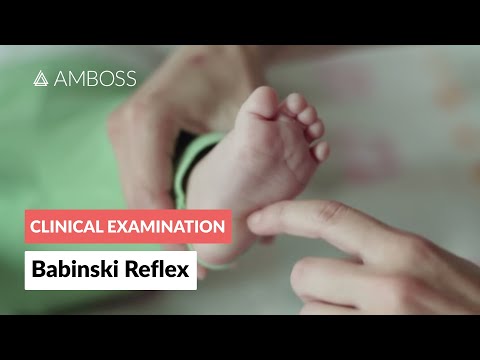
Pediatric Neurological Examination: Babinski and Plantar Reflex Assessment
Special Clinical Provocation & Neurological/Functional Tests: Atlantoaxial Instability (AAI) Neurological Screen (hyperreflexia, Babinski, clonus, neck pain/torticollis, or sudden gait loss!), Foot Posture Index (flexible pes planus & calcaneal valgus), and Congenital Heart Disease surgical clearance check.