Temporomandibular Joint Dysfunction (TMD)Jaw Joint Pain & Clicking Disorder (Temporomandibular Joint Dysfunction (TMD))
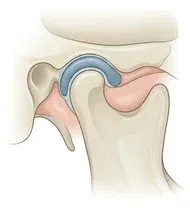
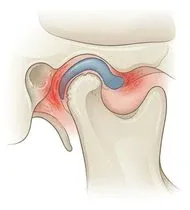
Temporomandibular Joint Dysfunction (TMD) — Overview
Temporomandibular Joint Dysfunction (TMD) encompasses intra-articular disc displacements (anterior disc displacement with reduction—characterized by reciprocal clicking—or without reduction—characterized by closed lock <25–30 mm) and myofascial pain of the masticatory muscles (masseter, temporalis, medial/lateral pterygoids) closely linked with forward head posture (C0–C2 hyperextension).
Temporomandibular Joint Dysfunction (TMD / jaw joint disorder) is a condition where overworking of the chewing muscles (clenching) or forward slipping of the small cartilage cushion inside your jaw joint causes jaw pain, clicking sounds, headaches, or difficulty opening wide.
Primary Causes & Biomechanics
Key Points You Should Know
- •Nocturnal/diurnal bruxism (teeth clenching/grinding), psychosocial stress, and parafunctional habits (gum chewing, unilateral chewing, nail/pen biting)
- •Forward head posture altering suprahyoid/infrahyoid resting tension and pulling the mandible posteriorly into retrodiscal compression
- •Lateral pterygoid superior head spasm pulling the biconcave articular disc anteromedially
- •The Golden Jaw Rest Rule: Your upper and lower teeth should ONLY touch when swallowing! At all other times, keep your lips closed, teeth slightly apart, and tongue resting gently on the roof of your mouth.
- •Click-Free Hinge Opening: Keeping the tip of your tongue on the roof of your mouth while opening partway trains your jaw to hinge smoothly without clicking.
- •Neck Posture Connection: Slouching with your head forward pulls your jaw backward and increases jaw tension.
Assessment Methods
1. Goniometric ROM & Postural / Kinematic Analysis
Active pain-free interincisal mouth opening (Normal: 40–50 mm / 3 knuckles; <35 mm indicates hypomobility/closed lock), lateral excursion (8–12 mm), and protrusion.
2. Special Clinical Provocation & Neurological/Functional Tests
Palpation of the lateral TMJ pole, masseter, and temporalis; auscultation/palpation of reciprocal clicking or crepitus; and C- or S-shaped mandibular deviation/deflection during opening.
3. Standardized Clinical Outcome Scales & Imaging Criteria
Fonseca Anamnestic Index, Jaw Functional Limitation Scale (JFLS), DC/TMD criteria, and TMJ MRI (gold standard for disc position).
1. Range of Motion & Posture Check
Your physiotherapist gently evaluates how comfortably and smoothly your temporomandibular joint (TMJ — mandibular condyle, articular disc, retrodiscal tissue) and masticatory/upper cervical complex moves and checks your overall posture.
2. Muscle Strength & Functional Movement Check
Your muscle balance, walking or reaching comfort, and specific gentle movement tests are evaluated without triggering sharp pain.
3. Typical Symptoms & Daily Impact Review
Preauricular jaw pain, temple headaches, morning jaw stiffness (from night clenching), and audible clicking/popping during mouth opening or chewing.
Treatment Options & Phase-Based Protocol
✨ Enriched GIF Exercise & Precaution GuidePhase 1: Acute Symptom Modulation, Tissue Protection & Early Activation
- •Phase 1 Clinical Focus & Tissue Protection: Resting Jaw Posture, Myofascial Release & Decompression Phase (Weeks 1–2): Education on the Rocabado physiological rest position (tongue tip on palate behind upper incisors 'N-spot', teeth apart, lips relaxed), moist heat, masseter/temporalis myofascial release, and suboccipital C0–C2 decompression.
- •Pain, Edema & Neuromuscular Modulation: Targeted physical modalities, relative load management, and early protected mobility of the temporomandibular joint (TMJ — mandibular condyle, articular disc, retrodiscal tissue) and masticatory/upper cervical complex without provoking mechanical or inflammatory irritation.
- •Proximal & Distal Kinetic Chain Maintenance: Maintain active mobility and circulation in adjacent joints while protecting the primary healing structures in Temporomandibular Joint Dysfunction (TMD).
Phase 2: Progressive Mobility, Motor Control & Targeted Strengthening
- •Phase 2 Progressive Mobilization & Motor Control: Disc-Condyle Coordination & Craniocervical Alignment Phase (Weeks 2–4): Rocabado 6x6 program—controlled hinge rotation opening (<20 mm with tongue on palate) in front of a mirror to eliminate clicking, craniocervical chin-tucks, and scapular retraction.
- •Biomechanical Alignment & Co-Contraction: Restore balanced agonist-antagonist force couples, joint centration, and multi-planar neuromuscular control across the temporomandibular joint (TMJ — mandibular condyle, articular disc, retrodiscal tissue) and masticatory/upper cervical complex.
- •Myofascial Extensibility & Endurance: Address secondary compensatory tightness and build local muscular endurance within safe, symptom-free biomechanical parameters.
Phase 3: Functional Integration, Proprioception & Long-Term Prevention
- •Phase 3 Functional Integration & Long-Term Prevention: Neuromuscular Stabilization & Bruxism Control Phase (Week 4+): Submaximal isometric mandibular rhythmic stabilization (0 mm movement), bilateral soft-diet transition, and nocturnal occlusal splint integration with dental specialists.
- •Proprioceptive Balance & Dynamic Loading: Progress to task-specific closed-chain, balance, and functional movement patterns tailored to daily life, occupational, or athletic demands.
- •Self-Management & Relapse Prophylaxis: Establish lifelong ergonomic habits, home exercise maintenance, and early warning-sign awareness to prevent recurrence.
Step 1: Calming Pain, Protecting the Area & Gentle Starter Motion
- •The Golden Jaw Rest Rule: Your upper and lower teeth should ONLY touch when swallowing! At all other times, keep your lips closed, teeth slightly apart, and tongue resting gently on the roof of your mouth.
- •Calm Protection & Gentle Start: During the initial stage of Jaw Joint Pain & Clicking Disorder, avoid painful overloading and perform the gentle, pain-free starter movements shown below to support circulation and comfort.
- •Respecting Your Body's Signals: Every movement should stay within a comfortable, non-painful zone—never force through sharp or radiating pain.
Step 2: Restoring Flexibility & Building Supporting Muscle Strength
- •Click-Free Hinge Opening: Keeping the tip of your tongue on the roof of your mouth while opening partway trains your jaw to hinge smoothly without clicking.
- •Step-by-Step Flexibility & Support: As acute sensitivity settles, gradually build mobility and strengthen the supporting muscles around the joint at a steady, controlled pace.
- •Posture & Breathing Coordination: Keep your posture upright and breathe smoothly (never hold your breath!) during every repetition.
Step 3: Safe Daily Habits, Stamina & Preventing Recurrence
- •Neck Posture Connection: Slouching with your head forward pulls your jaw backward and increases jaw tension.
- •Confident Return to Daily Life: Integrate your stronger muscles and improved balance into walking, stairs, work, and recreational activities.
- •Preventing Future Flare-Ups: Continue your core protective habits and key maintenance exercises even after symptoms resolve.
Animated (GIF) Therapeutic Exercise Guide
Animated clinical exercise protocol with biomechanical angles, target muscle groups, and dosage parameters (Click image to enlarge)
Step-by-step animated exercise demonstrations you can safely perform at home (Click image to enlarge)
 🔍 Enlarge
1. Rocabado Physiological Jaw Rest Position ('N' Tongue Posture) & Chin-Tuck
1. Tongue-on-Palate Jaw Rest & Upright Neck Posture
Placing the tip of the tongue gently on the incisive papilla behind the upper front teeth (saying 'N'), keeping molars 2–3 mm apart and lips relaxed, combined with axial cervical retraction. Eliminates bruxism clenching and unloads the retrodiscal tissues. Specifically indicated in Temporomandibular Joint Dysfunction (TMD) rehabilitation to optimize temporomandibular joint (TMJ — mandibular condyle, articular disc, retrodiscal tissue) and masticatory/upper cervical complex biomechanics and neuromuscular control.
Say the letter 'N' and leave the tip of your tongue resting gently on the roof of your mouth behind your upper front teeth. Keep your teeth slightly apart and your shoulders relaxed. Perform smoothly within a comfortable, pain-free range to support your Jaw Joint Pain & Clicking Disorder recovery.
 🔍 Enlarge
2. Controlled Pure Condylar Rotation Hinge Opening (<20 mm Tongue-on-Palate)
2. Click-Free Controlled Jaw Opening with Tongue on Roof of Mouth
Opening and closing the mandible up to 15–20 mm while keeping the tongue tip anchored against the hard palate. Restricts anterior condylar translation and trains pure rotational movement in the lower TMJ compartment without disc clicking. Specifically indicated in Temporomandibular Joint Dysfunction (TMD) rehabilitation to optimize temporomandibular joint (TMJ — mandibular condyle, articular disc, retrodiscal tissue) and masticatory/upper cervical complex biomechanics and neuromuscular control.
Keep the tip of your tongue pressed gently against the roof of your mouth and slowly open and close your jaw partway in front of a mirror—stopping before any clicking sound occurs. Perform smoothly within a comfortable, pain-free range to support your Jaw Joint Pain & Clicking Disorder recovery.
 🔍 Enlarge
3. Masticatory Myofascial Inhibition (Masseter/Temporalis) & Parasympathetic Breathing
3. Cheek & Temple Muscle Massage with Calm Breathing
Gentle circular digital myofascial release over the superficial masseter and anterior temporalis fibers synchronized with slow diaphragmatic exhalation. Down-regulates trigeminal motor nucleus hyperactivity and nocturnal clenching tone. Specifically indicated in Temporomandibular Joint Dysfunction (TMD) rehabilitation to optimize temporomandibular joint (TMJ — mandibular condyle, articular disc, retrodiscal tissue) and masticatory/upper cervical complex biomechanics and neuromuscular control.
With your teeth slightly apart, use your fingertips to gently massage your cheeks (jaw muscles) and temples in slow circular motions while taking deep, relaxing breaths. Perform smoothly within a comfortable, pain-free range to support your Jaw Joint Pain & Clicking Disorder recovery.
 🔍 Enlarge
4. Mandibular Rhythmic Stabilization (Submaximal Isometric Reciprocal Inhibition)
4. Gentle Two-Finger Isometric Jaw Centering (Zero Movement)
With the jaw in resting posture (5–10 mm open), applying very light fingertip contact (10% effort) to the chin in opening, closing, and lateral directions while keeping the mandible stationary (0 mm movement). Normalizes lateral pterygoid tone through reciprocal inhibition. Specifically indicated in Temporomandibular Joint Dysfunction (TMD) rehabilitation to optimize temporomandibular joint (TMJ — mandibular condyle, articular disc, retrodiscal tissue) and masticatory/upper cervical complex biomechanics and neuromuscular control.
Let your jaw relax slightly open. Place two fingers lightly against your chin and apply feather-light pressure (left, right, and upward) while keeping your jaw completely still without clenching. Perform smoothly within a comfortable, pain-free range to support your Jaw Joint Pain & Clicking Disorder recovery.
 🔍 Enlarge
5. Suboccipital Myofascial Release & Occipitoatlantal (C0–C2) Decompression
5. Base-of-Skull (Suboccipital) Gentle Release & Nod
Gentle digital decompression beneath the external occipital protuberance combined with micro-amplitude craniocervical flexion nods. Relieves C0–C2 extension compression that refers pain to the TMJ via the trigeminocervical complex. Specifically indicated in Temporomandibular Joint Dysfunction (TMD) rehabilitation to optimize temporomandibular joint (TMJ — mandibular condyle, articular disc, retrodiscal tissue) and masticatory/upper cervical complex biomechanics and neuromuscular control.
Place your fingertips gently in the soft hollow at the base of your skull. Apply light upward support and make tiny, relaxed 'yes' nods while breathing out slowly. Perform smoothly within a comfortable, pain-free range to support your Jaw Joint Pain & Clicking Disorder recovery.
 🔍 Enlarge
6. Rocabado 6x6 Scapulothoracic Retraction & Infrahyoid/Suprahyoid Balance
6. Tongue-on-Palate Shoulder Blade Alignment (Rocabado Step 6)
Integrating physiological tongue-on-palate jaw rest and craniocervical retraction with lower trapezius scapular retraction/depression. Balances suprahyoid/infrahyoid elastic pull on the mandible during prolonged desk or clinical work. Specifically indicated in Temporomandibular Joint Dysfunction (TMD) rehabilitation to optimize temporomandibular joint (TMJ — mandibular condyle, articular disc, retrodiscal tissue) and masticatory/upper cervical complex biomechanics and neuromuscular control.
Rest your tongue on the roof of your mouth, glide your chin gently back, and draw your shoulder blades down and together for 6 seconds—repeating 6 times every 2 hours. Perform smoothly within a comfortable, pain-free range to support your Jaw Joint Pain & Clicking Disorder recovery.
Movements to Avoid & Strict Precautions
1. Chewing Gum, Eating Hard/Chewy Foods (Nuts, Tough Meat, Bagels) & Biting Apples Whole
1. Chewing gum, eating hard nuts/crusty bread, or biting into whole apples/sandwiches
2. Wide Uncontrolled Yawning (Always Support Under Your Chin With Your Fist When Yawning!)
2. Yawning wide with an open mouth (always place your fist under your chin to limit wide yawning!)
3. Daytime Teeth Clenching, Nail/Lip Biting, or Resting Your Chin on Your Hand
3. Clenching your teeth during stress, biting nails/pens, or resting your chin in your hand
4. Repeatedly Popping or Clicking Your Jaw on Purpose to 'Test' It
4. Intentionally moving your jaw side-to-side to make it click (wears down the disc ligament!)
Temporomandibular Joint Dysfunction (TMD) — Video Guide
Click directly on any video to open and watch in a window, or review details via 📋 Summary & Options.
Condition Overview Video (1 Video)
Summary of pathophysiology, biomechanics, and clinical presentation
What the condition is, why it develops, and its basic mechanism

What Is Temporomandibular Joint (TMJ) Dysfunction? Physical Therapy Approaches
Temporomandibular Joint Dysfunction (TMD) encompasses intra-articular disc displacements (anterior disc displacement with reduction—characterized by reciprocal clicking—or without reduction—characterized by closed lock <25–30 mm) and myofascial pain of the masticatory muscles (masseter, temporalis, medial/lateral pterygoids) closely linked with forward head posture (C0–C2 hyperextension).
Temporomandibular Joint Dysfunction (TMD / jaw joint disorder) is a condition where overworking of the chewing muscles (clenching) or forward slipping of the small cartilage cushion inside your jaw joint causes jaw pain, clicking sounds, headaches, or difficulty opening wide.
Treatment and Exercise Videos
Phase-based physiotherapy protocols, mobilization, and therapeutic exercises
Step-by-step recovery and safe home exercise applications

Physiotherapy Exercises for Temporomandibular Joint (TMJ) Disorders
Phase 1: Acute Symptom Modulation, Tissue Protection & Early Activation: Phase 1 Clinical Focus & Tissue Protection: Resting Jaw Posture, Myofascial Release & Decompression Phase (Weeks 1–2): Education on the Rocabado physiological rest position (tongue tip on palate behind upper incisors 'N-spot', teeth apart, lips relaxed), moist heat, masseter/temporalis myofascial release, and suboccipital C0–C2 decompression.
Step 1: Calming Pain, Protecting the Area & Gentle Starter Motion: The Golden Jaw Rest Rule: Your upper and lower teeth should ONLY touch when swallowing! At all other times, keep your lips closed, teeth slightly apart, and tongue resting gently on the roof of your mouth.

Jaw Pain, Bruxism (Teeth Clenching), and TMJ Relaxation Exercises
Phase 2: Progressive Mobility, Motor Control & Targeted Strengthening: Phase 2 Progressive Mobilization & Motor Control: Disc-Condyle Coordination & Craniocervical Alignment Phase (Weeks 2–4): Rocabado 6x6 program—controlled hinge rotation opening (<20 mm with tongue on palate) in front of a mirror to eliminate clicking, craniocervical chin-tucks, and scapular retraction.
Step 2: Restoring Flexibility & Building Supporting Muscle Strength: Click-Free Hinge Opening: Keeping the tip of your tongue on the roof of your mouth while opening partway trains your jaw to hinge smoothly without clicking.
Clinical Assessment, Goniometry & Special Test Videos
Displayed only in Healthcare Professional mode (hidden in Patient mode)

Clinical Assessment and Physiotherapy in Temporomandibular Joint Dysfunction
Goniometric ROM & Postural / Kinematic Analysis: Active pain-free interincisal mouth opening (Normal: 40–50 mm / 3 knuckles; <35 mm indicates hypomobility/closed lock), lateral excursion (8–12 mm), and protrusion.