Medial Epicondylitis (Golfer's Elbow)Golfer's Elbow (Medial Epicondylitis)
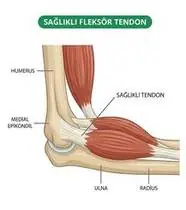
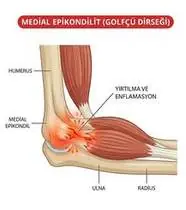
Medial Epicondylitis (Golfer's Elbow) — Overview
Medial epicondylitis ('Golfer's Elbow') is a chronic degenerative tendinosis of the common flexor-pronator tendon origin (primarily M. pronator teres and M. flexor carpi radialis) at the medial epicondyle of the humerus. Because the ulnar nerve courses immediately posterior to the medial epicondyle in the cubital tunnel and the ulnar collateral ligament (UCL) lies deep to the tendon, up to 20–50% of patients exhibit concomitant ulnar nerve symptoms.
Medial epicondylitis (golfer's elbow) is an overload injury of the tendons on the inner bony bump of your elbow that bend your wrist palm-ward and turn your forearm—triggered by heavy carrying, pull-ups, tool use, or racquet/golf swings.
Primary Causes & Biomechanics
Key Points You Should Know
- •Repetitive valgus stress combined with forceful wrist flexion and forearm pronation (golf swing, baseball pitching/javelin throwing, pull-ups, heavy carrying, or carpentry/plumbing)
- •Micro-tearing and collagen disorganization at the tenoperiosteal junction of the pronator teres and flexor carpi radialis
- •Coexisting cubital tunnel ulnar nerve irritation or anterior bundle UCL insufficiency in overhead athletes
- •Protecting the Nearby 'Funny Bone' Nerve: The ulnar nerve runs right behind the inner elbow bump; avoid resting your inner elbow on hard armrests or sleeping with your elbow tightly bent.
- •Slow Eccentric Strengthening: With your palm facing up on a table edge, slowly lowering a light weight rebuilds the inner elbow tendon.
- •Avoid Chin-Ups & Heavy Suitcases Early On: Pulling with palms facing you or carrying heavy buckets puts peak stress on the inner elbow.
Assessment Methods
1. Goniometric ROM & Postural / Kinematic Analysis
Wrist flexion/extension, forearm pronation/supination, and elbow extension ROM.
2. Special Clinical Provocation & Neurological/Functional Tests
Reverse Cozen's (Golfer's Elbow) Test (pain on resisted wrist flexion and forearm pronation), passive wrist extension + elbow extension stretch test, Cubital Tunnel Tinel's Test (ulnar nerve screen!), and Valgus Stress / Moving Valgus Stress Test (UCL integrity).
3. Standardized Clinical Outcome Scales & Imaging Criteria
PRTEE / QuickDASH, Pain-Free Grip Strength, and diagnostic ultrasound.
1. Range of Motion & Posture Check
Your physiotherapist gently evaluates how comfortably and smoothly your common flexor-pronator tendon origin (M. pronator teres and M. flexor carpi radialis) at the medial humeral epicondyle moves and checks your overall posture.
2. Muscle Strength & Functional Movement Check
Your muscle balance, walking or reaching comfort, and specific gentle movement tests are evaluated without triggering sharp pain.
3. Typical Symptoms & Daily Impact Review
Aching or sharp pain over the anterior-inferior aspect of the medial epicondyle that radiates down the palmar forearm, aggravated by gripping, turning a key, flexing the wrist, or throwing.
Treatment Options & Phase-Based Protocol
✨ Enriched GIF Exercise & Precaution GuidePhase 1: Acute Symptom Modulation, Tissue Protection & Early Activation
- •Phase 1 Clinical Focus & Tissue Protection: Pain Control & Ulnar Nerve Protection Phase (Weeks 1–2): Isometric wrist flexion holds (30–45s), avoiding sustained >90° elbow flexion if ulnar paresthesia is present, Six-Pack tendon gliding, and scapular retraction.
- •Pain, Edema & Neuromuscular Modulation: Targeted physical modalities, relative load management, and early protected mobility of the common flexor-pronator tendon origin (M. pronator teres and M. flexor carpi radialis) at the medial humeral epicondyle without provoking mechanical or inflammatory irritation.
- •Proximal & Distal Kinetic Chain Maintenance: Maintain active mobility and circulation in adjacent joints while protecting the primary healing structures in Medial Epicondylitis.
Phase 2: Progressive Mobility, Motor Control & Targeted Strengthening
- •Phase 2 Progressive Mobilization & Motor Control: Eccentric Flexor-Pronator Remodeling Phase (Weeks 2–6): Slow eccentric wrist flexion lowering (palm up over table edge), controlled forearm pronation-supination, and gentle straight-arm wrist flexor stretching.
- •Biomechanical Alignment & Co-Contraction: Restore balanced agonist-antagonist force couples, joint centration, and multi-planar neuromuscular control across the common flexor-pronator tendon origin (M. pronator teres and M. flexor carpi radialis) at the medial humeral epicondyle.
- •Myofascial Extensibility & Endurance: Address secondary compensatory tightness and build local muscular endurance within safe, symptom-free biomechanical parameters.
Phase 3: Functional Integration, Proprioception & Long-Term Prevention
- •Phase 3 Functional Integration & Long-Term Prevention: Kinetic Chain & Grip Restoration Phase (Week 6–12): Putty/ball grip strengthening, rotator cuff & core stabilization (vital for throwing/racquet athletes), and graduated return to sport.
- •Proprioceptive Balance & Dynamic Loading: Progress to task-specific closed-chain, balance, and functional movement patterns tailored to daily life, occupational, or athletic demands.
- •Self-Management & Relapse Prophylaxis: Establish lifelong ergonomic habits, home exercise maintenance, and early warning-sign awareness to prevent recurrence.
Step 1: Calming Pain, Protecting the Area & Gentle Starter Motion
- •Protecting the Nearby 'Funny Bone' Nerve: The ulnar nerve runs right behind the inner elbow bump; avoid resting your inner elbow on hard armrests or sleeping with your elbow tightly bent.
- •Calm Protection & Gentle Start: During the initial stage of Golfer's Elbow, avoid painful overloading and perform the gentle, pain-free starter movements shown below to support circulation and comfort.
- •Respecting Your Body's Signals: Every movement should stay within a comfortable, non-painful zone—never force through sharp or radiating pain.
Step 2: Restoring Flexibility & Building Supporting Muscle Strength
- •Slow Eccentric Strengthening: With your palm facing up on a table edge, slowly lowering a light weight rebuilds the inner elbow tendon.
- •Step-by-Step Flexibility & Support: As acute sensitivity settles, gradually build mobility and strengthen the supporting muscles around the joint at a steady, controlled pace.
- •Posture & Breathing Coordination: Keep your posture upright and breathe smoothly (never hold your breath!) during every repetition.
Step 3: Safe Daily Habits, Stamina & Preventing Recurrence
- •Avoid Chin-Ups & Heavy Suitcases Early On: Pulling with palms facing you or carrying heavy buckets puts peak stress on the inner elbow.
- •Confident Return to Daily Life: Integrate your stronger muscles and improved balance into walking, stairs, work, and recreational activities.
- •Preventing Future Flare-Ups: Continue your core protective habits and key maintenance exercises even after symptoms resolve.
Animated (GIF) Therapeutic Exercise Guide
Animated clinical exercise protocol with biomechanical angles, target muscle groups, and dosage parameters (Click image to enlarge)
Step-by-step animated exercise demonstrations you can safely perform at home (Click image to enlarge)
 🔍 Enlarge
1. Biarticular Forearm Flexor & Extensor Myofascial Stretch
1. Straight-Arm Gentle Wrist Flexor & Extensor Stretch
With the elbow in full extension, using the contralateral hand to apply a slow, sustained passive stretch into wrist flexion (for ECRB/extensors) and wrist extension (for common flexors). Reduces resting myotendinous tension. Specifically indicated in Medial Epicondylitis rehabilitation to optimize common flexor-pronator tendon origin (M. pronator teres and M. flexor carpi radialis) at the medial humeral epicondyle biomechanics and neuromuscular control.
Extend your arm forward with your elbow straight. Use your other hand to gently bend your wrist downward until you feel a mild stretch in your forearm, hold for 20–30 seconds, then repeat bending upward. Perform smoothly within a comfortable, pain-free range to support your Golfer's Elbow recovery.
 🔍 Enlarge
2. Radiocarpal & Midcarpal Active/Eccentric Flexion and Extension
2. Table-Edge Wrist Bending Up and Down
Controlled sagittal plane wrist flexion and extension with the forearm supported on a table edge and digits relaxed. Restores radiocarpal/midcarpal roll-and-glide mechanics and stimulates aligned collagen synthesis in forearm tendons. Specifically indicated in Medial Epicondylitis rehabilitation to optimize common flexor-pronator tendon origin (M. pronator teres and M. flexor carpi radialis) at the medial humeral epicondyle biomechanics and neuromuscular control.
Rest your forearm on a table with your wrist hanging comfortably over the edge. Slowly lift your hand upward toward the ceiling, hold for 3 seconds, then lower it gently downward. Perform smoothly within a comfortable, pain-free range to support your Golfer's Elbow recovery.
 🔍 Enlarge
3. Proximal & Distal Radioulnar Joint (PRUJ/DRUJ) Supination and Pronation
3. Elbow-at-Side Palm Up and Palm Down Rotation
Isolated forearm rotation with the elbow flexed at 90° and adducted against the trunk to eliminate compensatory glenohumeral rotation. Restores radial head spinning and distal radioulnar translation. Specifically indicated in Medial Epicondylitis rehabilitation to optimize common flexor-pronator tendon origin (M. pronator teres and M. flexor carpi radialis) at the medial humeral epicondyle biomechanics and neuromuscular control.
Keep your elbow bent at a right angle and tucked closely against your waist. Slowly turn your palm upward toward the ceiling, hold for 3 seconds, then turn your palm downward toward the floor. Perform smoothly within a comfortable, pain-free range to support your Golfer's Elbow recovery.
 🔍 Enlarge
4. Progressive Isotonic Grip & Pinch Strengthening with Extensor Co-Contraction
4. Soft Therapy Ball / Putty Squeeze
Graded isometric squeeze of therapeutic putty or a soft ball with the wrist held in 15°–20° functional extension. Rebuilds extrinsic digital flexor strength alongside synergistic wrist extensor stabilization. Specifically indicated in Medial Epicondylitis rehabilitation to optimize common flexor-pronator tendon origin (M. pronator teres and M. flexor carpi radialis) at the medial humeral epicondyle biomechanics and neuromuscular control.
Hold a soft therapy ball or sponge in your palm while keeping your wrist straight. Squeeze gently without triggering sharp pain, hold for 5 seconds, and slowly relax your fingers. Perform smoothly within a comfortable, pain-free range to support your Golfer's Elbow recovery.
 🔍 Enlarge
5. Six-Pack Differential Flexor Tendon Gliding (FDS & FDP Excursion)
5. Step-by-Step Finger Tendon Gliding (Hook, Straight & Full Fist)
Sequential progression through Straight Hand, Tabletop (intrinsic-plus), Hook Fist (maximum FDS/FDP differential glide), Full Fist, and Straight Fist positions. Prevents peritendinous adhesions within the carpal tunnel and fibro-osseous digital sheaths. Specifically indicated in Medial Epicondylitis rehabilitation to optimize common flexor-pronator tendon origin (M. pronator teres and M. flexor carpi radialis) at the medial humeral epicondyle biomechanics and neuromuscular control.
Start with your fingers straight, then bend at the knuckles (tabletop), curl just the fingertips (hook fist), make a gentle full fist, and open wide again—holding each position for 2–3 seconds. Perform smoothly within a comfortable, pain-free range to support your Golfer's Elbow recovery.
 🔍 Enlarge
6. Scapulothoracic Retraction & Depression (Middle/Lower Trapezius & Rhomboids)
6. Shoulder Blade Squeeze (Postural Alignment)
Adduction and depression of the scapulae via the middle/lower trapezius and rhomboids while inhibiting upper trapezius overactivity. Corrects anterior scapular tilt, widens the subacromial outlet, and unloads the anterior thoracic column. Specifically indicated in Medial Epicondylitis rehabilitation to optimize common flexor-pronator tendon origin (M. pronator teres and M. flexor carpi radialis) at the medial humeral epicondyle biomechanics and neuromuscular control.
Sit or stand tall. Keep your shoulders relaxed away from your ears, gently draw your shoulder blades together and slightly downward toward your back pockets, hold for 5 seconds, and release. Perform smoothly within a comfortable, pain-free range to support your Golfer's Elbow recovery.
Movements to Avoid & Strict Precautions
1. Heavy Chin-Ups, Pull-Ups, Bicep Curls With Wrists Cocked, or Carrying Heavy Buckets
1. Doing pull-ups/chin-ups, heavy curls, or carrying heavy buckets/suitcases
2. Leaning the Inner Elbow Directly on Hard Desk Edges or Car Armrests
2. Resting the inner side of your elbow on hard table edges or armrests
3. Forceful Wrist Snapping During Golf Swings or Racquet Strokes During Acute Pain
3. Hitting fat golf shots off hard mats or snapping the wrist during sports while painful
4. Sleeping With the Elbows Tightly Bent Under the Pillow
4. Sleeping with your elbows folded tightly under your head/pillow
Medial Epicondylitis (Golfer's Elbow) — Video Guide
Click directly on any video to open and watch in a window, or review details via 📋 Summary & Options.
Condition Overview Video (1 Video)
Summary of pathophysiology, biomechanics, and clinical presentation
What the condition is, why it develops, and its basic mechanism
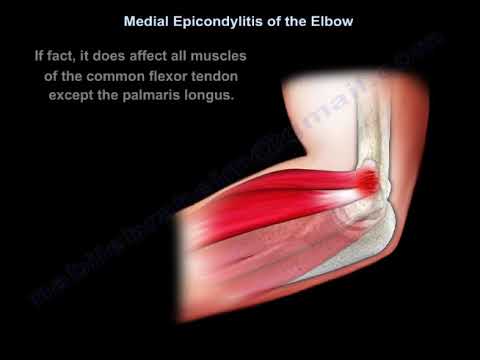
What Are Medial Epicondylitis (Golfer's Elbow) and Lateral Epicondylitis?
Medial epicondylitis ('Golfer's Elbow') is a chronic degenerative tendinosis of the common flexor-pronator tendon origin (primarily M. pronator teres and M. flexor carpi radialis) at the medial epicondyle of the humerus. Because the ulnar nerve courses immediately posterior to the medial epicondyle in the cubital tunnel and the ulnar collateral ligament (UCL) lies deep to the tendon, up to 20–50% of patients exhibit concomitant ulnar nerve symptoms.
Medial epicondylitis (golfer's elbow) is an overload injury of the tendons on the inner bony bump of your elbow that bend your wrist palm-ward and turn your forearm—triggered by heavy carrying, pull-ups, tool use, or racquet/golf swings.
Treatment and Exercise Videos
Phase-based physiotherapy protocols, mobilization, and therapeutic exercises
Step-by-step recovery and safe home exercise applications

Golfer's Elbow (Medial Epicondylitis) Stretching and Eccentric Strengthening
Phase 1: Acute Symptom Modulation, Tissue Protection & Early Activation: Phase 1 Clinical Focus & Tissue Protection: Pain Control & Ulnar Nerve Protection Phase (Weeks 1–2): Isometric wrist flexion holds (30–45s), avoiding sustained >90° elbow flexion if ulnar paresthesia is present, Six-Pack tendon gliding, and scapular retraction.
Step 1: Calming Pain, Protecting the Area & Gentle Starter Motion: Protecting the Nearby 'Funny Bone' Nerve: The ulnar nerve runs right behind the inner elbow bump; avoid resting your inner elbow on hard armrests or sleeping with your elbow tightly bent.

Home Physiotherapy Exercises for Medial Epicondylitis (Golfer's Elbow)
Phase 2: Progressive Mobility, Motor Control & Targeted Strengthening: Phase 2 Progressive Mobilization & Motor Control: Eccentric Flexor-Pronator Remodeling Phase (Weeks 2–6): Slow eccentric wrist flexion lowering (palm up over table edge), controlled forearm pronation-supination, and gentle straight-arm wrist flexor stretching.
Step 2: Restoring Flexibility & Building Supporting Muscle Strength: Slow Eccentric Strengthening: With your palm facing up on a table edge, slowly lowering a light weight rebuilds the inner elbow tendon.
Clinical Assessment, Goniometry & Special Test Videos
Displayed only in Healthcare Professional mode (hidden in Patient mode)

Medial Epicondylitis (Golfer's Elbow / Reverse Cozen) Clinical Test
Goniometric ROM & Postural / Kinematic Analysis: Wrist flexion/extension, forearm pronation/supination, and elbow extension ROM.

Elbow and Forearm Goniometric Measurement (Flexion, Extension, Supination, Pronation)
Special Clinical Provocation & Neurological/Functional Tests: Reverse Cozen's (Golfer's Elbow) Test (pain on resisted wrist flexion and forearm pronation), passive wrist extension + elbow extension stretch test, Cubital Tunnel Tinel's Test (ulnar nerve screen!), and Valgus Stress / Moving Valgus Stress Test (UCL integrity).