Hallux Valgus (Bunion Deformity)Bunion (Big Toe Deformity) (Hallux Valgus)
Hallux Valgus (Bunion Deformity) — Overview
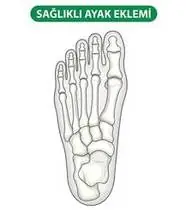
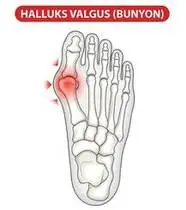
Hallux valgus (bunion deformity) is a progressive complex three-dimensional forefoot deformity characterized by medial deviation of the first metatarsal (metatarsus primus varus, Intermetatarsal Angle IMA >9°) and lateral deviation and pronation of the great toe (Hallux Valgus Angle HVA >15°). As the 1st metatarsal head drifts medially off its sesamoid apparatus, the M. abductor hallucis slips plantarward (losing its medial stabilizing vector), while the M. adductor hallucis and extensor/flexor hallucis longus act like bowstrings pulling the hallux further into valgus.
Hallux valgus (bunion / big toe deformity) occurs when the long bone behind your big toe drifts inward while the tip of your big toe angles outward toward your second toe—creating a prominent, tender bump on the inner side of your forefoot.
Primary Causes & Biomechanics
Key Points You Should Know
- •Genetic predisposition, hypermobility of the 1st tarsometatarsal (Lapidus) joint, and pes planus / subtalar pronation (which unlocks the medial column during push-off)
- •Constrictive narrow toe-box and high-heeled footwear (shifting 70–80% of body weight onto the forefoot and squeezing the hallux laterally)
- •Muscle imbalance: weakened/plantarly displaced M. abductor hallucis vs. tight M. adductor hallucis
- •Your Shoe's Toe-Box Must Match Your Foot Shape: Switching to shoes with a wide, foot-shaped front (toe-box) and low heel immediately stops external pressure on the bunion bump.
- •The 'Toe-Spread-Out' Exercise: Learning to lift and spread your toes while gently pressing your big toe inward wakes up the small muscle along your inner arch that pulls the big toe straight.
- •Toe Spacer + Arch Support: Wearing a soft silicone spacer between your first and second toes during walking aligns the joint.
Assessment Methods
1. Goniometric ROM & Postural / Kinematic Analysis
1st MTP dorsiflexion (N: 65–70°, essential for the Windlass push-off!) and active hallux abduction.
2. Special Clinical Provocation & Neurological/Functional Tests
Clinical grading (Mild HVA 15–20°, Moderate 20–40°, Severe >40° with 2nd toe overriding/hammertoe), 1st tarsometatarsal hypermobility check, and medial eminence bursitis assessment.
3. Standardized Clinical Outcome Scales & Imaging Criteria
Weight-bearing AP/lateral foot radiographs (HVA, IMA, DMAA), AOFAS Hallux Scale, and Manchester Scale.
1. Range of Motion & Posture Check
Your physiotherapist gently evaluates how comfortably and smoothly your first metatarsophalangeal (1st MTP) joint, first metatarsocuneiform joint, and hallux sesamoid complex moves and checks your overall posture.
2. Muscle Strength & Functional Movement Check
Your muscle balance, walking or reaching comfort, and specific gentle movement tests are evaluated without triggering sharp pain.
3. Typical Symptoms & Daily Impact Review
Prominent bony bump (bunion) on the inner side of the 1st MTP joint with redness, friction callusing, and throbbing medial bursitis pain when wearing narrow shoes.
Treatment Options & Phase-Based Protocol
✨ Enriched GIF Exercise & Precaution GuidePhase 1: Acute Symptom Modulation, Tissue Protection & Early Activation
- •Phase 1 Clinical Focus & Tissue Protection: Footwear Modification, Bunion Offloading & Mobility Phase (Weeks 1–2): Wide toe-box, zero-to-low drop shoes, silicone toe spacer (between 1st and 2nd toes) / night hallux valgus splint, Maitland Grade II–III 1st MTP traction & sesamoid glides, and towel calf stretches.
- •Pain, Edema & Neuromuscular Modulation: Targeted physical modalities, relative load management, and early protected mobility of the first metatarsophalangeal (1st MTP) joint, first metatarsocuneiform joint, and hallux sesamoid complex without provoking mechanical or inflammatory irritation.
- •Proximal & Distal Kinetic Chain Maintenance: Maintain active mobility and circulation in adjacent joints while protecting the primary healing structures in Hallux Valgus.
Phase 2: Progressive Mobility, Motor Control & Targeted Strengthening
- •Phase 2 Progressive Mobilization & Motor Control: Abductor Hallucis & Intrinsic Foot Core Phase (Weeks 2–6): Short-Foot arch doming & 'Toe-Spread-Out' (actively spreading all toes while pushing the big toe medially and little toe laterally) to selectively recruit M. abductor hallucis, plus ankle pumps.
- •Biomechanical Alignment & Co-Contraction: Restore balanced agonist-antagonist force couples, joint centration, and multi-planar neuromuscular control across the first metatarsophalangeal (1st MTP) joint, first metatarsocuneiform joint, and hallux sesamoid complex.
- •Myofascial Extensibility & Endurance: Address secondary compensatory tightness and build local muscular endurance within safe, symptom-free biomechanical parameters.
Phase 3: Functional Integration, Proprioception & Long-Term Prevention
- •Phase 3 Functional Integration & Long-Term Prevention: Dynamic Propulsion & Proximal Alignment Phase (Week 6–12): Controlled heel raises (keeping weight across the 1st–2nd MTP tripod without rolling inward), single-leg balance, and gluteus medius strengthening (controlling lower-limb internal rotation that drives foot pronation!).
- •Proprioceptive Balance & Dynamic Loading: Progress to task-specific closed-chain, balance, and functional movement patterns tailored to daily life, occupational, or athletic demands.
- •Self-Management & Relapse Prophylaxis: Establish lifelong ergonomic habits, home exercise maintenance, and early warning-sign awareness to prevent recurrence.
Step 1: Calming Pain, Protecting the Area & Gentle Starter Motion
- •Your Shoe's Toe-Box Must Match Your Foot Shape: Switching to shoes with a wide, foot-shaped front (toe-box) and low heel immediately stops external pressure on the bunion bump.
- •Calm Protection & Gentle Start: During the initial stage of Bunion (Big Toe Deformity), avoid painful overloading and perform the gentle, pain-free starter movements shown below to support circulation and comfort.
- •Respecting Your Body's Signals: Every movement should stay within a comfortable, non-painful zone—never force through sharp or radiating pain.
Step 2: Restoring Flexibility & Building Supporting Muscle Strength
- •The 'Toe-Spread-Out' Exercise: Learning to lift and spread your toes while gently pressing your big toe inward wakes up the small muscle along your inner arch that pulls the big toe straight.
- •Step-by-Step Flexibility & Support: As acute sensitivity settles, gradually build mobility and strengthen the supporting muscles around the joint at a steady, controlled pace.
- •Posture & Breathing Coordination: Keep your posture upright and breathe smoothly (never hold your breath!) during every repetition.
Step 3: Safe Daily Habits, Stamina & Preventing Recurrence
- •Toe Spacer + Arch Support: Wearing a soft silicone spacer between your first and second toes during walking aligns the joint.
- •Confident Return to Daily Life: Integrate your stronger muscles and improved balance into walking, stairs, work, and recreational activities.
- •Preventing Future Flare-Ups: Continue your core protective habits and key maintenance exercises even after symptoms resolve.
Animated (GIF) Therapeutic Exercise Guide
Animated clinical exercise protocol with biomechanical angles, target muscle groups, and dosage parameters (Click image to enlarge)
Step-by-step animated exercise demonstrations you can safely perform at home (Click image to enlarge)
 🔍 Enlarge
1. Intrinsic Foot Core ('Short Foot') & Medial Longitudinal Arch Activation
1. Seated Arch Doming (Short Foot) & Towel Scrunch
Drawing the first metatarsal head toward the calcaneus to elevate the medial longitudinal arch without curling the toes (or performing controlled towel curls). Strengthens the intrinsic plantar muscles supporting the subtalar and midtarsal joints. Specifically indicated in Hallux Valgus rehabilitation to optimize first metatarsophalangeal (1st MTP) joint, first metatarsocuneiform joint, and hallux sesamoid complex biomechanics and neuromuscular control.
While seated with your foot flat on the floor (or on a small towel), gently draw the ball of your foot toward your heel to lift your inner arch without curling your toes, hold for 5 seconds, and relax. Perform smoothly within a comfortable, pain-free range to support your Bunion (Big Toe Deformity) recovery.
 🔍 Enlarge
2. Rhythmic Active Ankle Dorsiflexion & Plantarflexion Pumping (Venous/Edema Pump)
2. Ankle Toe-Pulls and Pointing (Circulation & Swelling Pump)
Rhythmic alternating contraction of the tibialis anterior and gastrocnemius-soleus complex. Activates the deep venous calf pump to prevent deep vein thrombosis (DVT), clears distal edema, and maintains talocrural mobility. Specifically indicated in Hallux Valgus rehabilitation to optimize first metatarsophalangeal (1st MTP) joint, first metatarsocuneiform joint, and hallux sesamoid complex biomechanics and neuromuscular control.
While lying down or sitting with your legs supported, pull your toes and feet firmly upward toward your shins, hold for 3 seconds, then point them downward like pressing a gas pedal. Perform smoothly within a comfortable, pain-free range to support your Bunion (Big Toe Deformity) recovery.
 🔍 Enlarge
3. Long-Sitting Towel-Assisted Gastrocnemius-Soleus & Plantar Fascia Stretch
3. Seated Towel Calf & Foot Arch Stretch
Long-sitting with a towel looped around the metatarsal heads, applying a slow, sustained passive pull into ankle dorsiflexion. Restores gastrocnemius-soleus-Achilles length and reduces plantar fascial and equine tension. Specifically indicated in Hallux Valgus rehabilitation to optimize first metatarsophalangeal (1st MTP) joint, first metatarsocuneiform joint, and hallux sesamoid complex biomechanics and neuromuscular control.
Sit with your leg extended and loop a towel around the ball of your foot. Gently pull both ends of the towel toward you until you feel a comfortable stretch in your calf and sole, holding for 20–30 seconds. Perform smoothly within a comfortable, pain-free range to support your Bunion (Big Toe Deformity) recovery.
 🔍 Enlarge
4. Closed-Chain Bilateral/Eccentric Heel Raise (Triceps Surae & Achilles Loading)
4. Supported Standing Heel Raise & Slow Lowering
Controlled concentric heel elevation followed by slow (3–4 second) eccentric lowering into neutral dorsiflexion. Stimulates Type I collagen alignment in the Achilles/plantar aponeurosis and builds ankle plantarflexor propulsion. Specifically indicated in Hallux Valgus rehabilitation to optimize first metatarsophalangeal (1st MTP) joint, first metatarsocuneiform joint, and hallux sesamoid complex biomechanics and neuromuscular control.
Hold lightly onto a wall or chair back. Rise up onto the balls of both feet, pause at the top, and slowly lower your heels back down to the floor over 3–4 seconds. Perform smoothly within a comfortable, pain-free range to support your Bunion (Big Toe Deformity) recovery.
 🔍 Enlarge
5. Supported Standing Hip Abduction & Closed-Chain Stance Stabilization
5. Counter-Supported Standing Side Leg Lift
Standing upright with light hand support, abducting the lower limb in the frontal plane while the stance-leg gluteus medius contracts isometrically to keep the pelvis level. Builds functional gait stability. Specifically indicated in Hallux Valgus rehabilitation to optimize first metatarsophalangeal (1st MTP) joint, first metatarsocuneiform joint, and hallux sesamoid complex biomechanics and neuromuscular control.
Hold lightly onto a sturdy counter or chair back and stand tall. Without leaning your trunk sideways, lift your leg out to the side, pause for 2–3 seconds, and slowly return. Perform smoothly within a comfortable, pain-free range to support your Bunion (Big Toe Deformity) recovery.
 🔍 Enlarge
6. Single-Leg / Semi-Tandem Proprioceptive & Weight-Shift Balance Training
6. Supported Weight-Shifting & Tandem Balance Practice
Controlled mediolateral/anteroposterior weight shifting and tandem or single-leg stance near a stable support. Enhances mechanoreceptor feedback, ankle/hip postural reflexes, and dynamic gait stability. Specifically indicated in Hallux Valgus rehabilitation to optimize first metatarsophalangeal (1st MTP) joint, first metatarsocuneiform joint, and hallux sesamoid complex biomechanics and neuromuscular control.
Stand near a counter or sturdy chair for safety. Place one foot slightly in front of the other (or shift your weight smoothly from side to side) and hold your balance upright for 20–30 seconds. Perform smoothly within a comfortable, pain-free range to support your Bunion (Big Toe Deformity) recovery.
Movements to Avoid & Strict Precautions
1. Wearing Narrow, Pointed-Toe Shoes or High Heels (>3–4 cm)
1. Wearing pointy-toed shoes, tight dress shoes, or high heels (squeezes the big toe sideways!)
2. Allowing the Foot to Roll Inward (Overpronation) During Push-Off
2. Pushing off the inner side of your big toe with a collapsed arch while walking
3. Expecting a Hard Night Splint Alone to Fix the Toe Without Active Foot-Core Exercises
3. Relying only on passive splints without training your foot arch and hip muscles
4. Popping or Cutting Calluses/Blisters Over the Bunion Bump Yourself
4. Cutting corns or blisters over the bunion with sharp tools
Hallux Valgus (Bunion Deformity) — Video Guide
Click directly on any video to open and watch in a window, or review details via 📋 Summary & Options.
Condition Overview Video (1 Video)
Summary of pathophysiology, biomechanics, and clinical presentation
What the condition is, why it develops, and its basic mechanism

What Is Hallux Valgus (Bunion)? 7 Effective Exercises and Conservative Care
Hallux valgus (bunion deformity) is a progressive complex three-dimensional forefoot deformity characterized by medial deviation of the first metatarsal (metatarsus primus varus, Intermetatarsal Angle IMA >9°) and lateral deviation and pronation of the great toe (Hallux Valgus Angle HVA >15°). As the 1st metatarsal head drifts medially off its sesamoid apparatus, the M. abductor hallucis slips plantarward (losing its medial stabilizing vector), while the M. adductor hallucis and extensor/flexor hallucis longus act like bowstrings pulling the hallux further into valgus.
Hallux valgus (bunion / big toe deformity) occurs when the long bone behind your big toe drifts inward while the tip of your big toe angles outward toward your second toe—creating a prominent, tender bump on the inner side of your forefoot.
Treatment and Exercise Videos
Phase-based physiotherapy protocols, mobilization, and therapeutic exercises
Step-by-step recovery and safe home exercise applications

Mobilization and Physiotherapy Techniques in Pediatric Foot Deformities
Phase 1: Acute Symptom Modulation, Tissue Protection & Early Activation: Phase 1 Clinical Focus & Tissue Protection: Footwear Modification, Bunion Offloading & Mobility Phase (Weeks 1–2): Wide toe-box, zero-to-low drop shoes, silicone toe spacer (between 1st and 2nd toes) / night hallux valgus splint, Maitland Grade II–III 1st MTP traction & sesamoid glides, and towel calf stretches.
Step 1: Calming Pain, Protecting the Area & Gentle Starter Motion: Your Shoe's Toe-Box Must Match Your Foot Shape: Switching to shoes with a wide, foot-shaped front (toe-box) and low heel immediately stops external pressure on the bunion bump.

Foot Core (Short Foot) Exercises for Flat Feet and Low Medial Arch
Phase 2: Progressive Mobility, Motor Control & Targeted Strengthening: Phase 2 Progressive Mobilization & Motor Control: Abductor Hallucis & Intrinsic Foot Core Phase (Weeks 2–6): Short-Foot arch doming & 'Toe-Spread-Out' (actively spreading all toes while pushing the big toe medially and little toe laterally) to selectively recruit M. abductor hallucis, plus ankle pumps.
Step 2: Restoring Flexibility & Building Supporting Muscle Strength: The 'Toe-Spread-Out' Exercise: Learning to lift and spread your toes while gently pressing your big toe inward wakes up the small muscle along your inner arch that pulls the big toe straight.
Clinical Assessment, Goniometry & Special Test Videos
Displayed only in Healthcare Professional mode (hidden in Patient mode)

Ankle and Foot Goniometric Measurement (Dorsiflexion, Plantarflexion, Inversion/Eversion)
Goniometric ROM & Postural / Kinematic Analysis: 1st MTP dorsiflexion (N: 65–70°, essential for the Windlass push-off!) and active hallux abduction.