Fibromyalgia Syndrome (Central Sensitization)Soft Tissue Rheumatism (Widespread Pain) (Fibromyalgia)
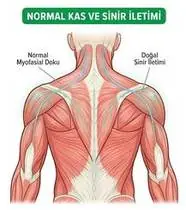
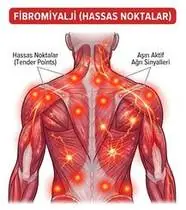
Fibromyalgia Syndrome (Central Sensitization) — Overview
Fibromyalgia Syndrome (FMS) is a chronic nociplastic pain disorder driven by central sensitization—amplified ascending nociceptive signaling (elevated Substance P and glutamate) coupled with impaired descending endogenous pain inhibition (reduced serotonin/norepinephrine in the dorsal horn) and hypothalamic-pituitary-adrenal (HPA) / autonomic nervous system dysregulation (sympathetic hyperactivity). Clinically defined by ACR 2010/2016 criteria (Widespread Pain Index [WPI] + Symptom Severity Scale [SSS] lasting >3 months), it requires Graded Low-to-Moderate Aerobic Exercise and Pacing to activate exercise-induced hypoalgesia without triggering a 'boom-and-bust' post-exertional flare!
Fibromyalgia (widespread myofascial pain & central sensitization) is a condition where the brain and spinal cord's pain volume control gets turned up too high (central sensitization) while deep sleep is disrupted—causing widespread muscle aching, tender spots around the neck and shoulders, morning stiffness, and unrefreshing sleep.
Primary Causes & Biomechanics
Key Points You Should Know
- •Central nervous system amplification (allodynia and hyperalgesia) where normal mechanical/thermal stimuli are perceived as painful
- •Autonomic nervous system imbalance (persistent sympathetic 'fight-or-flight' tone) disrupting Stage N3 slow-wave deep restorative sleep
- •Deconditioning cycle: fear of movement -> muscle deconditioning & microcirculatory hypoxia -> worsened myofascial trigger points
- •Why Gentle Aerobic Exercise Turns Down the Pain Volume: Regular, gentle walking, warm-pool exercise, or cycling causes your brain to release its own natural painkillers (endorphins and serotonin) that turn down the nervous system's pain volume!
- •Avoiding the 'Good-Day Trap' (Pacing): On a day when you feel energetic, doing 4 hours of heavy housework causes a painful 3-day flare ('boom-and-bust'). Keep your daily activity steady and balanced!
- •Calming the Nervous System With Belly Breathing: Slow diaphragmatic breathing switches your body out of 'stress mode' and relaxes tight neck and back muscles.
Assessment Methods
1. Goniometric ROM & Postural / Kinematic Analysis
ACR Widespread Pain Index (WPI, 0–19 body regions) and Symptom Severity Scale (SSS, 0–12 evaluating fatigue, unrefreshing sleep, and cognitive 'fibro-fog'), plus 18 classic tender-point palpation (<4 kg/cm²).
2. Special Clinical Provocation & Neurological/Functional Tests
6-Minute Walk Test (6MWT), 30-Second Chair Stand, cervical/scapular postural assessment, and mandatory laboratory exclusion of mimics (TSH, Vitamin D, Ferritin, Vitamin B12, ESR, CRP, CPK).
3. Standardized Clinical Outcome Scales & Imaging Criteria
FIQR (Revised Fibromyalgia Impact Questionnaire), WPI/SSS scores, Pittsburgh Sleep Quality Index (PSQI), and Borg RPE.
1. Range of Motion & Posture Check
Your physiotherapist gently evaluates how comfortably and smoothly your central nervous system pain-processing pathways (central sensitization) and widespread myofascial tissues moves and checks your overall posture.
2. Muscle Strength & Functional Movement Check
Your muscle balance, walking or reaching comfort, and specific gentle movement tests are evaluated without triggering sharp pain.
3. Typical Symptoms & Daily Impact Review
Chronic Widespread Musculoskeletal Pain (>3 Months) affecting both the left and right sides of the body, above and below the waist, and the axial spine (especially neck, upper trapezius, and lower back).
Treatment Options & Phase-Based Protocol
✨ Enriched GIF Exercise & Precaution GuidePhase 1: Acute Symptom Modulation, Tissue Protection & Early Activation
- •Phase 1 Clinical Focus & Tissue Protection: Autonomic Down-Regulation, Sleep Hygiene & Gentle Mobility Phase (Weeks 1–2): Diaphragmatic & pursed-lip breathing (stimulating vagal parasympathetic tone!), warm hydrotherapy/baths, submaximal pain-free cervical & upper trapezius stretching, and scapular retraction.
- •Pain, Edema & Neuromuscular Modulation: Targeted physical modalities, relative load management, and early protected mobility of the central nervous system pain-processing pathways (central sensitization) and widespread myofascial tissues without provoking mechanical or inflammatory irritation.
- •Proximal & Distal Kinetic Chain Maintenance: Maintain active mobility and circulation in adjacent joints while protecting the primary healing structures in Fibromyalgia.
Phase 2: Progressive Mobility, Motor Control & Targeted Strengthening
- •Phase 2 Progressive Mobilization & Motor Control: Graded Low-Impact Aerobic Conditioning Phase ('Start Low, Go Slow' — Weeks 2–8): 20–30 minutes of low-to-moderate aerobic exercise (Borg RPE 11–13: brisk walking, heated-pool aquatic therapy at 32–34°C, or stationary cycling) 3–4 days/week + supine heel slides & pelvic tilts.
- •Biomechanical Alignment & Co-Contraction: Restore balanced agonist-antagonist force couples, joint centration, and multi-planar neuromuscular control across the central nervous system pain-processing pathways (central sensitization) and widespread myofascial tissues.
- •Myofascial Extensibility & Endurance: Address secondary compensatory tightness and build local muscular endurance within safe, symptom-free biomechanical parameters.
Phase 3: Functional Integration, Proprioception & Long-Term Prevention
- •Phase 3 Functional Integration & Long-Term Prevention: Submaximal Functional Strengthening & Energy Pacing Phase (Week 8+): Light, non-exhausting wall mini-squats, pelvic bridging, Bird-Dog, and Activity Pacing (avoiding 'overdoing it on a good day' which causes a 3-day crash!).
- •Proprioceptive Balance & Dynamic Loading: Progress to task-specific closed-chain, balance, and functional movement patterns tailored to daily life, occupational, or athletic demands.
- •Self-Management & Relapse Prophylaxis: Establish lifelong ergonomic habits, home exercise maintenance, and early warning-sign awareness to prevent recurrence.
Step 1: Calming Pain, Protecting the Area & Gentle Starter Motion
- •Why Gentle Aerobic Exercise Turns Down the Pain Volume: Regular, gentle walking, warm-pool exercise, or cycling causes your brain to release its own natural painkillers (endorphins and serotonin) that turn down the nervous system's pain volume!
- •Calm Protection & Gentle Start: During the initial stage of Soft Tissue Rheumatism (Widespread Pain), avoid painful overloading and perform the gentle, pain-free starter movements shown below to support circulation and comfort.
- •Respecting Your Body's Signals: Every movement should stay within a comfortable, non-painful zone—never force through sharp or radiating pain.
Step 2: Restoring Flexibility & Building Supporting Muscle Strength
- •Avoiding the 'Good-Day Trap' (Pacing): On a day when you feel energetic, doing 4 hours of heavy housework causes a painful 3-day flare ('boom-and-bust'). Keep your daily activity steady and balanced!
- •Step-by-Step Flexibility & Support: As acute sensitivity settles, gradually build mobility and strengthen the supporting muscles around the joint at a steady, controlled pace.
- •Posture & Breathing Coordination: Keep your posture upright and breathe smoothly (never hold your breath!) during every repetition.
Step 3: Safe Daily Habits, Stamina & Preventing Recurrence
- •Calming the Nervous System With Belly Breathing: Slow diaphragmatic breathing switches your body out of 'stress mode' and relaxes tight neck and back muscles.
- •Confident Return to Daily Life: Integrate your stronger muscles and improved balance into walking, stairs, work, and recreational activities.
- •Preventing Future Flare-Ups: Continue your core protective habits and key maintenance exercises even after symptoms resolve.
Animated (GIF) Therapeutic Exercise Guide
Animated clinical exercise protocol with biomechanical angles, target muscle groups, and dosage parameters (Click image to enlarge)
Step-by-step animated exercise demonstrations you can safely perform at home (Click image to enlarge)
 🔍 Enlarge
1. Scapulothoracic Retraction & Depression (Middle/Lower Trapezius & Rhomboids)
1. Shoulder Blade Squeeze (Postural Alignment)
Adduction and depression of the scapulae via the middle/lower trapezius and rhomboids while inhibiting upper trapezius overactivity. Corrects anterior scapular tilt, widens the subacromial outlet, and unloads the anterior thoracic column. Specifically indicated in Fibromyalgia rehabilitation to optimize central nervous system pain-processing pathways (central sensitization) and widespread myofascial tissues biomechanics and neuromuscular control.
Sit or stand tall. Keep your shoulders relaxed away from your ears, gently draw your shoulder blades together and slightly downward toward your back pockets, hold for 5 seconds, and release. Perform smoothly within a comfortable, pain-free range to support your Soft Tissue Rheumatism (Widespread Pain) recovery.
 🔍 Enlarge
2. Supine Wand-Assisted (Cane) Active-Assisted Shoulder Elevation
2. Lying Cane/Stick-Assisted Two-Handed Arm Raise
In supine (scapula stabilized against the plinth and gravity eliminated in the final arc), the unaffected upper extremity guides a wand/stick to elevate the affected shoulder smoothly without deltoid-induced superior humeral shear. Specifically indicated in Fibromyalgia rehabilitation to optimize central nervous system pain-processing pathways (central sensitization) and widespread myofascial tissues biomechanics and neuromuscular control.
Lie on your back holding a light stick or cane with both hands. Use your healthy arm to gently guide both arms up overhead as far as comfortable, hold for 3 seconds, and slowly lower. Perform smoothly within a comfortable, pain-free range to support your Soft Tissue Rheumatism (Widespread Pain) recovery.
 🔍 Enlarge
3. Quadruped Contralateral Arm-Leg Reach ('Bird-Dog' Multifidus & Deep Core)
3. All-Fours Opposite Arm & Leg Reach (Bird-Dog)
In quadruped with a neutral lumbopelvic spine and abdominal drawing-in (transversus abdominis), extending opposite upper and lower extremities horizontally without pelvic rotation or lumbar hyperextension. Minimizes spinal compressive load while maximizing multifidus recruitment. Specifically indicated in Fibromyalgia rehabilitation to optimize central nervous system pain-processing pathways (central sensitization) and widespread myofascial tissues biomechanics and neuromuscular control.
On your hands and knees, keep your back flat like a tabletop and gently tighten your tummy. Slowly reach one arm forward and the opposite leg straight back withoutarching your lower back, hold for 5 seconds, and switch sides. Perform smoothly within a comfortable, pain-free range to support your Soft Tissue Rheumatism (Widespread Pain) recovery.
 🔍 Enlarge
4. Functional Closed-Kinetic-Chain Chair Transfer (Sit-to-Stand Biomechanics)
4. Controlled Chair Sit-to-Stand Transfer
Controlled transition from sitting to standing and eccentric lowering back to the chair with symmetrical weight distribution, anterior trunk inclination ('nose over toes'), and neutral frontal knee alignment. Specifically indicated in Fibromyalgia rehabilitation to optimize central nervous system pain-processing pathways (central sensitization) and widespread myofascial tissues biomechanics and neuromuscular control.
Sit near the front of a sturdy chair with your feet hip-width apart. Lean slightly forward and push evenly through both heels to stand up tall, then slowly lower yourself back down over 3 seconds. Perform smoothly within a comfortable, pain-free range to support your Soft Tissue Rheumatism (Widespread Pain) recovery.
 🔍 Enlarge
5. Diaphragmatic & Pursed-Lip Breathing (PLB — Autonomic & Ventilatory Control)
5. Calm Belly Breathing with Pursed-Lip Exhale
Slow nasal inhalation expanding the lower ribcage and abdomen (while relaxing accessory neck/shoulder muscles), followed by prolonged expiration through pursed lips at a 1:2 ratio. Prevents dynamic airway collapse, improves basal ventilation, and reduces sympathetic tone. Specifically indicated in Fibromyalgia rehabilitation to optimize central nervous system pain-processing pathways (central sensitization) and widespread myofascial tissues biomechanics and neuromuscular control.
Sit comfortably and place one hand on your chest and the other on your belly. Breathe in slowly through your nose for 2–3 seconds so your belly gently rises, then breathe out slowly for 4–6 seconds through pursed lips as if flickering a candle. Perform smoothly within a comfortable, pain-free range to support your Soft Tissue Rheumatism (Widespread Pain) recovery.
 🔍 Enlarge
6. Submaximal Cervical Lateral Flexion & Upper Trapezius / Scalene Myofascial Stretch
6. Gentle Side Neck & Shoulder Relaxation Stretch
With the ipsilateral shoulder depressed and stabilized, gently tilting the head toward the opposite shoulder within a strictly pain-free, non-radicular range. Releases hypertonic upper trapezius, levator scapulae, and scalene myofascial trigger points. Specifically indicated in Fibromyalgia rehabilitation to optimize central nervous system pain-processing pathways (central sensitization) and widespread myofascial tissues biomechanics and neuromuscular control.
Sit upright and relax your shoulders down. Slowly tilt your ear toward your opposite shoulder until you feel a gentle, comfortable stretch along the side of your neck, hold for 20 seconds while breathing calmly, and return to center. Perform smoothly within a comfortable, pain-free range to support your Soft Tissue Rheumatism (Widespread Pain) recovery.
Movements to Avoid & Strict Precautions
1. High-Intensity Exhausting Workouts or Heavy Eccentric Weightlifting ('No Pain, No Gain' Triggers Severe Flares!)
1. Doing exhausting, high-intensity workouts or heavy eccentric lifting that leaves your muscles trembling
2. Overworking on a 'Good Day' Without Pacing Rest Breaks ('Boom-and-Bust' Cycle)
2. Doing all your heavy cleaning or errands at once on a good day without rest breaks
3. Complete Bed Rest & Inactivity (Increases Central Pain Sensitivity and Stiffness!)
3. Staying in bed all day and avoiding all movement (makes the pain volume louder!)
4. Cold Drafts, Caffeine/Screens Late at Night, and Holding Stress in Shrugged Shoulders
4. Sitting in cold air-conditioning drafts or drinking caffeine late in the evening
Fibromyalgia Syndrome (Central Sensitization) — Video Guide
Click directly on any video to open and watch in a window, or review details via 📋 Summary & Options.
Condition Overview Video (1 Video)
Summary of pathophysiology, biomechanics, and clinical presentation
What the condition is, why it develops, and its basic mechanism
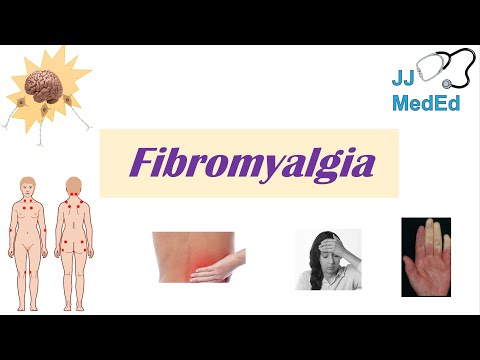
What Is Fibromyalgia Syndrome? Symptoms and Central Sensitization Mechanism
Fibromyalgia Syndrome (FMS) is a chronic nociplastic pain disorder driven by central sensitization—amplified ascending nociceptive signaling (elevated Substance P and glutamate) coupled with impaired descending endogenous pain inhibition (reduced serotonin/norepinephrine in the dorsal horn) and hypothalamic-pituitary-adrenal (HPA) / autonomic nervous system dysregulation (sympathetic hyperactivity). Clinically defined by ACR 2010/2016 criteria (Widespread Pain Index [WPI] + Symptom Severity Scale [SSS] lasting >3 months), it requires Graded Low-to-Moderate Aerobic Exercise and Pacing to activate exercise-induced hypoalgesia without triggering a 'boom-and-bust' post-exertional flare!
Fibromyalgia (widespread myofascial pain & central sensitization) is a condition where the brain and spinal cord's pain volume control gets turned up too high (central sensitization) while deep sleep is disrupted—causing widespread muscle aching, tender spots around the neck and shoulders, morning stiffness, and unrefreshing sleep.
Treatment and Exercise Videos
Phase-based physiotherapy protocols, mobilization, and therapeutic exercises
Step-by-step recovery and safe home exercise applications

Fibromyalgia Exercises | Gentle Routine for Widespread Pain and Morning Fatigue
Phase 1: Acute Symptom Modulation, Tissue Protection & Early Activation: Phase 1 Clinical Focus & Tissue Protection: Autonomic Down-Regulation, Sleep Hygiene & Gentle Mobility Phase (Weeks 1–2): Diaphragmatic & pursed-lip breathing (stimulating vagal parasympathetic tone!), warm hydrotherapy/baths, submaximal pain-free cervical & upper trapezius stretching, and scapular retraction.
Step 1: Calming Pain, Protecting the Area & Gentle Starter Motion: Why Gentle Aerobic Exercise Turns Down the Pain Volume: Regular, gentle walking, warm-pool exercise, or cycling causes your brain to release its own natural painkillers (endorphins and serotonin) that turn down the nervous system's pain volume!

Relaxation and Stretching Exercises for Fibromyalgia and Myofascial Neck-Back Pain
Phase 2: Progressive Mobility, Motor Control & Targeted Strengthening: Phase 2 Progressive Mobilization & Motor Control: Graded Low-Impact Aerobic Conditioning Phase ('Start Low, Go Slow' — Weeks 2–8): 20–30 minutes of low-to-moderate aerobic exercise (Borg RPE 11–13: brisk walking, heated-pool aquatic therapy at 32–34°C, or stationary cycling) 3–4 days/week + supine heel slides & pelvic tilts.
Step 2: Restoring Flexibility & Building Supporting Muscle Strength: Avoiding the 'Good-Day Trap' (Pacing): On a day when you feel energetic, doing 4 hours of heavy housework causes a painful 3-day flare ('boom-and-bust'). Keep your daily activity steady and balanced!
Clinical Assessment, Goniometry & Special Test Videos
Displayed only in Healthcare Professional mode (hidden in Patient mode)
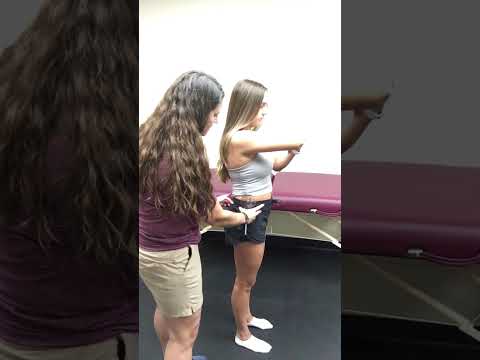
Vertebral Column (Cervical & Thoracolumbar Spine) Goniometric and Tape Measurement
Goniometric ROM & Postural / Kinematic Analysis: ACR Widespread Pain Index (WPI, 0–19 body regions) and Symptom Severity Scale (SSS, 0–12 evaluating fatigue, unrefreshing sleep, and cognitive 'fibro-fog'), plus 18 classic tender-point palpation (<4 kg/cm²).
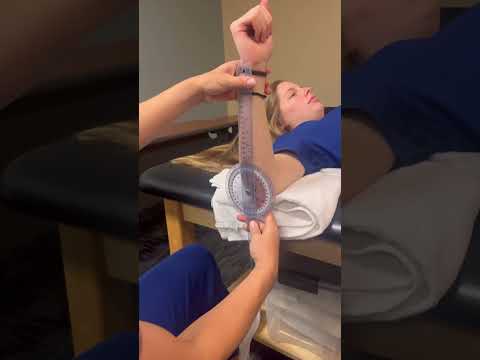
Shoulder Joint Goniometric Measurement (Flexion, Abduction, Internal & External Rotation)
Special Clinical Provocation & Neurological/Functional Tests: 6-Minute Walk Test (6MWT), 30-Second Chair Stand, cervical/scapular postural assessment, and mandatory laboratory exclusion of mimics (TSH, Vitamin D, Ferritin, Vitamin B12, ESR, CRP, CPK).