Cervical Spondylosis (Cervical Osteoarthritis)Neck Arthritis (Wear & Tear) (Cervical Spondylosis)
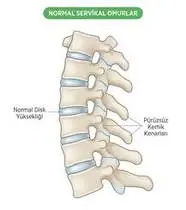
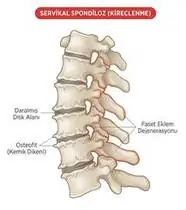
Cervical Spondylosis (Cervical Osteoarthritis) — Overview
Cervical spondylosis is chronic osteoarthritic degeneration of the cervical spine involving disc space narrowing, uncovertebral (joints of Luschka) and facet osteophyte formation, and ligamentous thickening, most commonly affecting the high-mobility C5–C6 and C6–C7 segments.
Cervical spondylosis (neck osteoarthritis / wear-and-tear) is age-related thinning of the neck discs and formation of small bone spurs around the neck joints, causing neck stiffness, grinding sounds when turning the head, and shoulder-blade aching.
Primary Causes & Biomechanics
Key Points You Should Know
- •Cumulative mechanical stress from sustained flexed desk/screen postures and age-related disc desiccation
- •Upper-crossed syndrome: tight upper trapezius/levator scapulae/pectorals paired with weak deep cervical flexors and lower trapezius
- •Uncovertebral osteophytes narrowing the intervertebral foramen during neck extension and rotation
- •Why Grinding Sounds Happen: Hearing sand-like clicking or grinding (crepitus) when turning your neck is common in spondylosis and improves as neck posture is corrected.
- •Warmth Before Stretching: Applying a warm towel for 15 minutes before gentle chin-tucks and stretches melts away morning neck stiffness.
- •Orthopedic Pillow Support: Your pillow should fill the hollow of your neck so your head stays level with your spine while sleeping on your back or side.
Assessment Methods
1. Goniometric ROM & Postural / Kinematic Analysis
Cervical active ROM in flexion, extension, bilateral lateral flexion, and rotation (often accompanied by fine crepitus and end-range stiffness).
2. Special Clinical Provocation & Neurological/Functional Tests
Cervical quadrant (Spurling) screening, Manual Cervical Distraction test, craniocervical flexion endurance test, and upper limb neurological screen.
3. Standardized Clinical Outcome Scales & Imaging Criteria
Neck Disability Index (NDI), VAS pain score, and cervical radiographs/MRI.
1. Range of Motion & Posture Check
Your physiotherapist gently evaluates how comfortably and smoothly your cervical intervertebral discs, uncovertebral (Luschka) joints, and cervical facet joints (C4–C7) moves and checks your overall posture.
2. Muscle Strength & Functional Movement Check
Your muscle balance, walking or reaching comfort, and specific gentle movement tests are evaluated without triggering sharp pain.
3. Typical Symptoms & Daily Impact Review
Chronic neck aching, morning stiffness, audible crepitus during head rotation, and referred pain to the occiput (cervicogenic headache), upper trapezius, and interscapular region.
Treatment Options & Phase-Based Protocol
✨ Enriched GIF Exercise & Precaution GuidePhase 1: Acute Symptom Modulation, Tissue Protection & Early Activation
- •Phase 1 Clinical Focus & Tissue Protection: Thermal Relaxation & Craniocervical Alignment Phase (Weeks 1–2): Moist heat (15–20 min) + TENS for paraspinal spasm, axial craniocervical retraction (Chin-Tuck), and gentle cervical/upper trapezius myofascial stretching.
- •Pain, Edema & Neuromuscular Modulation: Targeted physical modalities, relative load management, and early protected mobility of the cervical intervertebral discs, uncovertebral (Luschka) joints, and cervical facet joints (C4–C7) without provoking mechanical or inflammatory irritation.
- •Proximal & Distal Kinetic Chain Maintenance: Maintain active mobility and circulation in adjacent joints while protecting the primary healing structures in Cervical Spondylosis.
Phase 2: Progressive Mobility, Motor Control & Targeted Strengthening
- •Phase 2 Progressive Mobilization & Motor Control: Scapulothoracic & Deep Neck Flexor Strengthening Phase (Weeks 2–6): Scapular retraction and depression, wall-referenced axial posture alignment, and towel-supported shoulder external rotation.
- •Biomechanical Alignment & Co-Contraction: Restore balanced agonist-antagonist force couples, joint centration, and multi-planar neuromuscular control across the cervical intervertebral discs, uncovertebral (Luschka) joints, and cervical facet joints (C4–C7).
- •Myofascial Extensibility & Endurance: Address secondary compensatory tightness and build local muscular endurance within safe, symptom-free biomechanical parameters.
Phase 3: Functional Integration, Proprioception & Long-Term Prevention
- •Phase 3 Functional Integration & Long-Term Prevention: Kinetic Chain Endurance & Ergonomic Phase (Week 6+): Scapular plane Full-Can elevation, diaphragmatic breathing (reducing accessory scalene/SCM breathing), and ergonomic workstation/pillow optimization.
- •Proprioceptive Balance & Dynamic Loading: Progress to task-specific closed-chain, balance, and functional movement patterns tailored to daily life, occupational, or athletic demands.
- •Self-Management & Relapse Prophylaxis: Establish lifelong ergonomic habits, home exercise maintenance, and early warning-sign awareness to prevent recurrence.
Step 1: Calming Pain, Protecting the Area & Gentle Starter Motion
- •Why Grinding Sounds Happen: Hearing sand-like clicking or grinding (crepitus) when turning your neck is common in spondylosis and improves as neck posture is corrected.
- •Calm Protection & Gentle Start: During the initial stage of Neck Arthritis (Wear & Tear), avoid painful overloading and perform the gentle, pain-free starter movements shown below to support circulation and comfort.
- •Respecting Your Body's Signals: Every movement should stay within a comfortable, non-painful zone—never force through sharp or radiating pain.
Step 2: Restoring Flexibility & Building Supporting Muscle Strength
- •Warmth Before Stretching: Applying a warm towel for 15 minutes before gentle chin-tucks and stretches melts away morning neck stiffness.
- •Step-by-Step Flexibility & Support: As acute sensitivity settles, gradually build mobility and strengthen the supporting muscles around the joint at a steady, controlled pace.
- •Posture & Breathing Coordination: Keep your posture upright and breathe smoothly (never hold your breath!) during every repetition.
Step 3: Safe Daily Habits, Stamina & Preventing Recurrence
- •Orthopedic Pillow Support: Your pillow should fill the hollow of your neck so your head stays level with your spine while sleeping on your back or side.
- •Confident Return to Daily Life: Integrate your stronger muscles and improved balance into walking, stairs, work, and recreational activities.
- •Preventing Future Flare-Ups: Continue your core protective habits and key maintenance exercises even after symptoms resolve.
Animated (GIF) Therapeutic Exercise Guide
Animated clinical exercise protocol with biomechanical angles, target muscle groups, and dosage parameters (Click image to enlarge)
Step-by-step animated exercise demonstrations you can safely perform at home (Click image to enlarge)
 🔍 Enlarge
1. Craniocervical Axial Retraction ('Chin-Tuck' — Deep Cervical Flexor Activation)
1. Chin-Tuck (Double-Chin) Postural Neck Alignment
Horizontal posterior translation of the cranium and cervical spine without tipping the head up or down. Activates the deep cervical flexors (longus colli/capitis), decompresses suboccipital structures, and opens the lower cervical intervertebral foramina. Specifically indicated in Cervical Spondylosis rehabilitation to optimize cervical intervertebral discs, uncovertebral (Luschka) joints, and cervical facet joints (C4–C7) biomechanics and neuromuscular control.
Sit or stand tall looking straight ahead. Gently glide your chin straight backward (as if making a subtle double chin) without tilting your head down, feel the back of your neck lengthen, hold for 5 seconds, and relax. Perform smoothly within a comfortable, pain-free range to support your Neck Arthritis (Wear & Tear) recovery.
 🔍 Enlarge
2. Scapulothoracic Retraction & Depression (Middle/Lower Trapezius & Rhomboids)
2. Shoulder Blade Squeeze (Postural Alignment)
Adduction and depression of the scapulae via the middle/lower trapezius and rhomboids while inhibiting upper trapezius overactivity. Corrects anterior scapular tilt, widens the subacromial outlet, and unloads the anterior thoracic column. Specifically indicated in Cervical Spondylosis rehabilitation to optimize cervical intervertebral discs, uncovertebral (Luschka) joints, and cervical facet joints (C4–C7) biomechanics and neuromuscular control.
Sit or stand tall. Keep your shoulders relaxed away from your ears, gently draw your shoulder blades together and slightly downward toward your back pockets, hold for 5 seconds, and release. Perform smoothly within a comfortable, pain-free range to support your Neck Arthritis (Wear & Tear) recovery.
 🔍 Enlarge
3. Supine Wand-Assisted (Cane) Active-Assisted Shoulder Elevation
3. Lying Cane/Stick-Assisted Two-Handed Arm Raise
In supine (scapula stabilized against the plinth and gravity eliminated in the final arc), the unaffected upper extremity guides a wand/stick to elevate the affected shoulder smoothly without deltoid-induced superior humeral shear. Specifically indicated in Cervical Spondylosis rehabilitation to optimize cervical intervertebral discs, uncovertebral (Luschka) joints, and cervical facet joints (C4–C7) biomechanics and neuromuscular control.
Lie on your back holding a light stick or cane with both hands. Use your healthy arm to gently guide both arms up overhead as far as comfortable, hold for 3 seconds, and slowly lower. Perform smoothly within a comfortable, pain-free range to support your Neck Arthritis (Wear & Tear) recovery.
 🔍 Enlarge
4. Towel-Supported Glenohumeral External Rotation (Infraspinatus & Teres Minor)
4. Outward Forearm Rotation with Rolled Towel Under Elbow
External rotation performed at 90° elbow flexion with a rolled towel placed between the elbow and trunk (20°–30° scaption). Enhances infraspinatus/teres minor recruitment while preventing superior humeral head migration and deltoid shear. Specifically indicated in Cervical Spondylosis rehabilitation to optimize cervical intervertebral discs, uncovertebral (Luschka) joints, and cervical facet joints (C4–C7) biomechanics and neuromuscular control.
Place a small rolled towel between your elbow and your side with your elbow bent at 90 degrees. Keeping your elbow pressed gently against the towel, rotate your forearm outward, hold for 3 seconds, and return slowly. Perform smoothly within a comfortable, pain-free range to support your Neck Arthritis (Wear & Tear) recovery.
 🔍 Enlarge
5. Submaximal Cervical Lateral Flexion & Upper Trapezius / Scalene Myofascial Stretch
5. Gentle Side Neck & Shoulder Relaxation Stretch
With the ipsilateral shoulder depressed and stabilized, gently tilting the head toward the opposite shoulder within a strictly pain-free, non-radicular range. Releases hypertonic upper trapezius, levator scapulae, and scalene myofascial trigger points. Specifically indicated in Cervical Spondylosis rehabilitation to optimize cervical intervertebral discs, uncovertebral (Luschka) joints, and cervical facet joints (C4–C7) biomechanics and neuromuscular control.
Sit upright and relax your shoulders down. Slowly tilt your ear toward your opposite shoulder until you feel a gentle, comfortable stretch along the side of your neck, hold for 20 seconds while breathing calmly, and return to center. Perform smoothly within a comfortable, pain-free range to support your Neck Arthritis (Wear & Tear) recovery.
 🔍 Enlarge
6. Wall-Referenced Axial Spinal Extension & Postural Decompression
6. Wall-Supported Tall Standing & Back Alignment
Standing with heels, gluteals, thoracic spine, and occiput aligned against a wall while performing axial elongation and gentle scapular/occipital pressure. Corrects thoracic hyperkyphosis and unloads anterior vertebral bodies. Specifically indicated in Cervical Spondylosis rehabilitation to optimize cervical intervertebral discs, uncovertebral (Luschka) joints, and cervical facet joints (C4–C7) biomechanics and neuromuscular control.
Stand with your heels, hips, upper back, and the back of your head lightly touching a wall. Lengthen the crown of your head toward the ceiling, gently press your shoulder blades back, and hold for 5–10 seconds while breathing calmly. Perform smoothly within a comfortable, pain-free range to support your Neck Arthritis (Wear & Tear) recovery.
Movements to Avoid & Strict Precautions
1. Rapid Neck Circles ('Rolling the Head Around') or Forceful Neck Cracking
1. Rolling your head in full circles backward or cracking your neck forcefully
2. Prolonged Looking Down at Smartphones or Working With a Twisted Monitor
2. Looking down at a phone for hours or working at a screen placed off to one side
3. Holding a Phone Between Your Ear and Shoulder
3. Cradling a phone between your ear and shoulder
4. Lifting Heavy Loads Overhead With Shrugged Shoulders
4. Lifting heavy objects overhead while shrugging your shoulders toward your ears
Cervical Spondylosis (Cervical Osteoarthritis) — Video Guide
Click directly on any video to open and watch in a window, or review details via 📋 Summary & Options.
Condition Overview Video (1 Video)
Summary of pathophysiology, biomechanics, and clinical presentation
What the condition is, why it develops, and its basic mechanism

What Is Cervical Spondylosis (Neck Osteoarthritis)? How Is It Treated?
Cervical spondylosis is chronic osteoarthritic degeneration of the cervical spine involving disc space narrowing, uncovertebral (joints of Luschka) and facet osteophyte formation, and ligamentous thickening, most commonly affecting the high-mobility C5–C6 and C6–C7 segments.
Cervical spondylosis (neck osteoarthritis / wear-and-tear) is age-related thinning of the neck discs and formation of small bone spurs around the neck joints, causing neck stiffness, grinding sounds when turning the head, and shoulder-blade aching.
Treatment and Exercise Videos
Phase-based physiotherapy protocols, mobilization, and therapeutic exercises
Step-by-step recovery and safe home exercise applications

Range of Motion and Strengthening Exercises for Cervical Spondylosis
Phase 1: Acute Symptom Modulation, Tissue Protection & Early Activation: Phase 1 Clinical Focus & Tissue Protection: Thermal Relaxation & Craniocervical Alignment Phase (Weeks 1–2): Moist heat (15–20 min) + TENS for paraspinal spasm, axial craniocervical retraction (Chin-Tuck), and gentle cervical/upper trapezius myofascial stretching.
Step 1: Calming Pain, Protecting the Area & Gentle Starter Motion: Why Grinding Sounds Happen: Hearing sand-like clicking or grinding (crepitus) when turning your neck is common in spondylosis and improves as neck posture is corrected.

3 Effective Equipment-Free Deep Neck Flexor and Retraction Exercises
Phase 2: Progressive Mobility, Motor Control & Targeted Strengthening: Phase 2 Progressive Mobilization & Motor Control: Scapulothoracic & Deep Neck Flexor Strengthening Phase (Weeks 2–6): Scapular retraction and depression, wall-referenced axial posture alignment, and towel-supported shoulder external rotation.
Step 2: Restoring Flexibility & Building Supporting Muscle Strength: Warmth Before Stretching: Applying a warm towel for 15 minutes before gentle chin-tucks and stretches melts away morning neck stiffness.
Clinical Assessment, Goniometry & Special Test Videos
Displayed only in Healthcare Professional mode (hidden in Patient mode)

Cervical Compression and Distraction Tests — Neck Pain Clinical Assessment
Goniometric ROM & Postural / Kinematic Analysis: Cervical active ROM in flexion, extension, bilateral lateral flexion, and rotation (often accompanied by fine crepitus and end-range stiffness).
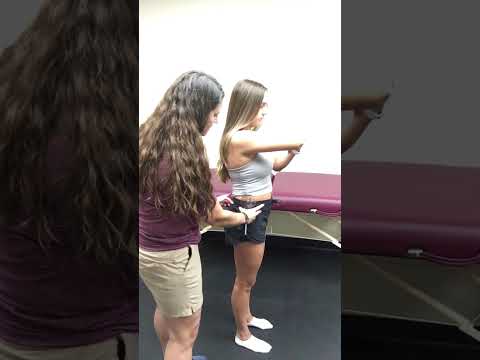
Vertebral Column (Cervical & Thoracolumbar Spine) Goniometric and Tape Measurement
Special Clinical Provocation & Neurological/Functional Tests: Cervical quadrant (Spurling) screening, Manual Cervical Distraction test, craniocervical flexion endurance test, and upper limb neurological screen.