Parkinson's DiseaseParkinson's Movement Disorder (Parkinson's Disease)
Parkinson's Disease — Overview
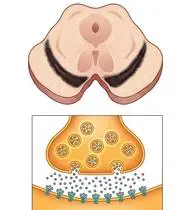
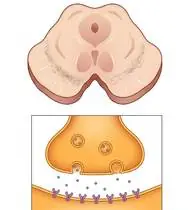
Parkinson's Disease (PD) is a progressive neurodegenerative movement disorder caused by loss of dopaminergic neurons in the substantia nigra pars compacta and Lewy body (alpha-synuclein) pathology, resulting in the 4 Cardinal Motor Signs (TRAP): Tremor (4–6 Hz asymmetric 'pill-rolling' resting tremor), Rigidity (lead-pipe / cogwheel velocity-independent resistance), Akinesia/Bradykinesia (slowness of movement initiation and progressive decrement in movement amplitude — hypokinesia), and Postural Instability. Crucially, while the automatic basal ganglia loop is impaired, the conscious premotor/cerebellar pathways triggered by external visual/auditory cues and high-amplitude 'THINK BIG' commands (LSVT BIG principle) remain intact!
Parkinson's disease is a movement condition in which a reduction in the brain's chemical messenger (dopamine) causes movements to automatically become smaller and slower (bradykinesia), muscles to feel stiff (rigidity), the posture to stoop forward, and a resting tremor in the hand. The exciting breakthrough in neurorehabilitation is that using big, deliberate movements ('THINK BIG!'), counting out loud, and using visual/rhythmic cues completely bypasses the slow automatic circuit!
Primary Causes & Biomechanics
Key Points You Should Know
- •Dopamine depletion in the striatum over-inhibiting the thalamus and scaling down movement amplitude (bradykinesia/hypokinesia, micrographia, hypomimia, hypophonia)
- •Stooped Flexor Posture (Camptocormia / Pisa syndrome): Progressive dominance of neck, trunk, hip, and knee flexors shifting the center of mass anteriorly and causing festination (short, accelerating shuffling steps)
- •Freezing of Gait (FOG): Sudden transient inability to step forward when initiating gait, turning 360°, passing through narrow doorways, or dual-tasking
- •Exercise During Your Medication 'ON' Window: Always perform your exercise routine 45 to 90 minutes after taking your Parkinson's medication, when dopamine levels are at their peak and your muscles respond best.
- •How to Unlock 'Freezing of Gait' in 3 Seconds: If your feet suddenly feel glued to the floor at a doorway or turn, DO NOT try to lean forward and force your foot (that causes a fall!). Instead: 1) Stop and stand tall, 2) Shift your weight sideways onto one hip, and 3) Step HIGH and LONG as if stepping over a log or laser line on the floor!
- •Never Pivot on the Spot When Turning: Instead of spinning on one foot, turn in a wide arc like walking around the numbers of a clock face.
Assessment Methods
1. Goniometric ROM & Postural / Kinematic Analysis
Hoehn and Yahr Staging (Stages 1–5), MDS-UPDRS Part III motor exam, and thoracic/hip extension ROM.
2. Special Clinical Provocation & Neurological/Functional Tests
Mini-BESTest / Berg Balance Scale, Pull Test (retropulsion postural reflex check), Timed Up and Go (TUG — single-task vs. cognitive/motor dual-task!), Freezing of Gait Questionnaire (FOG-Q), and 6-Minute Walk Test.
3. Standardized Clinical Outcome Scales & Imaging Criteria
Hoehn & Yahr Stage, MDS-UPDRS, TUG Dual-Task, and 10-Meter Walk Test.
1. Range of Motion & Posture Check
Your physiotherapist gently evaluates how comfortably and smoothly your substantia nigra pars compacta dopaminergic neurons and basal ganglia-thalamocortical motor circuit moves and checks your overall posture.
2. Muscle Strength & Functional Movement Check
Your muscle balance, walking or reaching comfort, and specific gentle movement tests are evaluated without triggering sharp pain.
3. Typical Symptoms & Daily Impact Review
Resting 'Pill-Rolling' Tremor (4–6 Hz) that starts in one hand at rest and decreases during voluntary reaching, accompanied by cogwheel stiffness (rigidity) and slowness/shrinking of movements (bradykinesia, small handwriting, softer voice).
Treatment Options & Phase-Based Protocol
✨ Enriched GIF Exercise & Precaution GuidePhase 1: Acute Symptom Modulation, Tissue Protection & Early Activation
- •Phase 1 Clinical Focus & Tissue Protection: Medication 'ON' Phase Anti-Flexor Extension & Rotational Phase: Schedule all exercise 45–90 minutes after Levodopa ('ON' state)! Counter the stooped flexor posture via wall-referenced axial spinal extension, prone lying & active back/hip extension, scapular retraction, and deep thoracic expansion breathing (with loud vocal counting for hypophonia!).
- •Pain, Edema & Neuromuscular Modulation: Targeted physical modalities, relative load management, and early protected mobility of the substantia nigra pars compacta dopaminergic neurons and basal ganglia-thalamocortical motor circuit without provoking mechanical or inflammatory irritation.
- •Proximal & Distal Kinetic Chain Maintenance: Maintain active mobility and circulation in adjacent joints while protecting the primary healing structures in Parkinson's Disease.
Phase 2: Progressive Mobility, Motor Control & Targeted Strengthening
- •Phase 2 Progressive Mobilization & Motor Control: High-Amplitude (LSVT BIG Principle) & Trunk-Pelvic Rotation Phase: Exaggerated high-amplitude movements ('THINK BIG, COUNT OUT LOUD 1 to 12!'), quadruped Bird-Dog, supine pelvic bridging, and wide-stance chair sit-to-stand.
- •Biomechanical Alignment & Co-Contraction: Restore balanced agonist-antagonist force couples, joint centration, and multi-planar neuromuscular control across the substantia nigra pars compacta dopaminergic neurons and basal ganglia-thalamocortical motor circuit.
- •Myofascial Extensibility & Endurance: Address secondary compensatory tightness and build local muscular endurance within safe, symptom-free biomechanical parameters.
Phase 3: Functional Integration, Proprioception & Long-Term Prevention
- •Phase 3 Functional Integration & Long-Term Prevention: External Cueing for Freezing of Gait (FOG) & Balance Phase: Rhythmic auditory (metronome/march music) and visual (floor laser/tape stripes) cueing, deliberate heel-strike ('HEEL first, long step!'), wide U-turn clock-face stepping (never pivot on the spot!), and tandem/weight-shift balance training.
- •Proprioceptive Balance & Dynamic Loading: Progress to task-specific closed-chain, balance, and functional movement patterns tailored to daily life, occupational, or athletic demands.
- •Self-Management & Relapse Prophylaxis: Establish lifelong ergonomic habits, home exercise maintenance, and early warning-sign awareness to prevent recurrence.
Step 1: Calming Pain, Protecting the Area & Gentle Starter Motion
- •Exercise During Your Medication 'ON' Window: Always perform your exercise routine 45 to 90 minutes after taking your Parkinson's medication, when dopamine levels are at their peak and your muscles respond best.
- •Calm Protection & Gentle Start: During the initial stage of Parkinson's Movement Disorder, avoid painful overloading and perform the gentle, pain-free starter movements shown below to support circulation and comfort.
- •Respecting Your Body's Signals: Every movement should stay within a comfortable, non-painful zone—never force through sharp or radiating pain.
Step 2: Restoring Flexibility & Building Supporting Muscle Strength
- •How to Unlock 'Freezing of Gait' in 3 Seconds: If your feet suddenly feel glued to the floor at a doorway or turn, DO NOT try to lean forward and force your foot (that causes a fall!). Instead: 1) Stop and stand tall, 2) Shift your weight sideways onto one hip, and 3) Step HIGH and LONG as if stepping over a log or laser line on the floor!
- •Step-by-Step Flexibility & Support: As acute sensitivity settles, gradually build mobility and strengthen the supporting muscles around the joint at a steady, controlled pace.
- •Posture & Breathing Coordination: Keep your posture upright and breathe smoothly (never hold your breath!) during every repetition.
Step 3: Safe Daily Habits, Stamina & Preventing Recurrence
- •Never Pivot on the Spot When Turning: Instead of spinning on one foot, turn in a wide arc like walking around the numbers of a clock face.
- •Confident Return to Daily Life: Integrate your stronger muscles and improved balance into walking, stairs, work, and recreational activities.
- •Preventing Future Flare-Ups: Continue your core protective habits and key maintenance exercises even after symptoms resolve.
Animated (GIF) Therapeutic Exercise Guide
Animated clinical exercise protocol with biomechanical angles, target muscle groups, and dosage parameters (Click image to enlarge)
Step-by-step animated exercise demonstrations you can safely perform at home (Click image to enlarge)
 🔍 Enlarge
1. Wall-Referenced Axial Spinal Extension & Postural Decompression
1. Wall-Supported Tall Standing & Back Alignment
Standing with heels, gluteals, thoracic spine, and occiput aligned against a wall while performing axial elongation and gentle scapular/occipital pressure. Corrects thoracic hyperkyphosis and unloads anterior vertebral bodies. Specifically indicated in Parkinson's Disease rehabilitation to optimize substantia nigra pars compacta dopaminergic neurons and basal ganglia-thalamocortical motor circuit biomechanics and neuromuscular control.
Stand with your heels, hips, upper back, and the back of your head lightly touching a wall. Lengthen the crown of your head toward the ceiling, gently press your shoulder blades back, and hold for 5–10 seconds while breathing calmly. Perform smoothly within a comfortable, pain-free range to support your Parkinson's Movement Disorder recovery.
 🔍 Enlarge
2. Thoracic Expansion Exercise (TEE) with Bilateral Arm Elevation & 3s Inspiratory Hold
2. Chest-Opening Deep Breath with Arm Raise
Synchronizing deep nasal inspiration with bilateral shoulder flexion/abduction and a 3-second end-inspiratory hold before passive/pursed-lip expiration. Opens collateral ventilation channels to prevent basal atelectasis and maintains costovertebral compliance. Specifically indicated in Parkinson's Disease rehabilitation to optimize substantia nigra pars compacta dopaminergic neurons and basal ganglia-thalamocortical motor circuit biomechanics and neuromuscular control.
While sitting upright, breathe in deeply through your nose while opening your arms upward and outward to expand your ribcage. Hold the breath inside for 3 seconds, then exhale slowly while lowering your arms. Perform smoothly within a comfortable, pain-free range to support your Parkinson's Movement Disorder recovery.
 🔍 Enlarge
3. Scapulothoracic Retraction & Depression (Middle/Lower Trapezius & Rhomboids)
3. Shoulder Blade Squeeze (Postural Alignment)
Adduction and depression of the scapulae via the middle/lower trapezius and rhomboids while inhibiting upper trapezius overactivity. Corrects anterior scapular tilt, widens the subacromial outlet, and unloads the anterior thoracic column. Specifically indicated in Parkinson's Disease rehabilitation to optimize substantia nigra pars compacta dopaminergic neurons and basal ganglia-thalamocortical motor circuit biomechanics and neuromuscular control.
Sit or stand tall. Keep your shoulders relaxed away from your ears, gently draw your shoulder blades together and slightly downward toward your back pockets, hold for 5 seconds, and release. Perform smoothly within a comfortable, pain-free range to support your Parkinson's Movement Disorder recovery.
 🔍 Enlarge
4. Supine Lumbopelvic Bridging (Gluteus Maximus & Posterior Chain Co-Contraction)
4. Supine Hip Bridge (Controlled Pelvic Lift)
From hook-lying with transversus abdominis pre-activation, elevating the pelvis until hips, pelvis, and shoulders form a neutral diagonal line. Strengthens the gluteus maximus, hamstrings, and erector spinae synergy without lumbar hyperlordosis. Specifically indicated in Parkinson's Disease rehabilitation to optimize substantia nigra pars compacta dopaminergic neurons and basal ganglia-thalamocortical motor circuit biomechanics and neuromuscular control.
Lie on your back with your knees bent and feet flat hip-width apart. Gently tighten your tummy and glutes, lift your hips until your body forms a straight line from shoulders to knees, hold for 5 seconds, and lower slowly. Perform smoothly within a comfortable, pain-free range to support your Parkinson's Movement Disorder recovery.
 🔍 Enlarge
5. Functional Closed-Kinetic-Chain Chair Transfer (Sit-to-Stand Biomechanics)
5. Controlled Chair Sit-to-Stand Transfer
Controlled transition from sitting to standing and eccentric lowering back to the chair with symmetrical weight distribution, anterior trunk inclination ('nose over toes'), and neutral frontal knee alignment. Specifically indicated in Parkinson's Disease rehabilitation to optimize substantia nigra pars compacta dopaminergic neurons and basal ganglia-thalamocortical motor circuit biomechanics and neuromuscular control.
Sit near the front of a sturdy chair with your feet hip-width apart. Lean slightly forward and push evenly through both heels to stand up tall, then slowly lower yourself back down over 3 seconds. Perform smoothly within a comfortable, pain-free range to support your Parkinson's Movement Disorder recovery.
 🔍 Enlarge
6. Single-Leg / Semi-Tandem Proprioceptive & Weight-Shift Balance Training
6. Supported Weight-Shifting & Tandem Balance Practice
Controlled mediolateral/anteroposterior weight shifting and tandem or single-leg stance near a stable support. Enhances mechanoreceptor feedback, ankle/hip postural reflexes, and dynamic gait stability. Specifically indicated in Parkinson's Disease rehabilitation to optimize substantia nigra pars compacta dopaminergic neurons and basal ganglia-thalamocortical motor circuit biomechanics and neuromuscular control.
Stand near a counter or sturdy chair for safety. Place one foot slightly in front of the other (or shift your weight smoothly from side to side) and hold your balance upright for 20–30 seconds. Perform smoothly within a comfortable, pain-free range to support your Parkinson's Movement Disorder recovery.
Movements to Avoid & Strict Precautions
1. Abruptly Stopping or Skipping Levodopa / Dopaminergic Medications (Triggers Akinetic Crisis!)
1. NEVER stop or skip your Parkinson's medications suddenly!
2. Pivoting Sharply on One Foot to Turn Around (Primary Cause of Hip-Fracture Falls in Parkinson's!)
2. Spinning on the spot to turn around (always make a wide 'U-turn' stepping in a circle!)
3. Dual-Tasking While Walking on Uneven Ground or Stairs (e.g., Talking on a Phone or Carrying a Full Tray)
3. Carrying a full tray with both hands or looking at a phone while walking (focus 100% on big heel-strike steps!)
4. Standing Up Rapidly From Bed Without Sitting on the Edge for 30 Seconds & Pumping Ankles
4. Jumping straight out of bed (sit on the edge for 30 seconds and pump your ankles first to prevent dizziness)
Parkinson's Disease — Video Guide
Click directly on any video to open and watch in a window, or review details via 📋 Summary & Options.
Condition Overview Video (1 Video)
Summary of pathophysiology, biomechanics, and clinical presentation
What the condition is, why it develops, and its basic mechanism

What Is Parkinson's Disease? Symptoms, Causes, and Clinical Presentation
Parkinson's Disease (PD) is a progressive neurodegenerative movement disorder caused by loss of dopaminergic neurons in the substantia nigra pars compacta and Lewy body (alpha-synuclein) pathology, resulting in the 4 Cardinal Motor Signs (TRAP): Tremor (4–6 Hz asymmetric 'pill-rolling' resting tremor), Rigidity (lead-pipe / cogwheel velocity-independent resistance), Akinesia/Bradykinesia (slowness of movement initiation and progressive decrement in movement amplitude — hypokinesia), and Postural Instability. Crucially, while the automatic basal ganglia loop is impaired, the conscious premotor/cerebellar pathways triggered by external visual/auditory cues and high-amplitude 'THINK BIG' commands (LSVT BIG principle) remain intact!
Parkinson's disease is a movement condition in which a reduction in the brain's chemical messenger (dopamine) causes movements to automatically become smaller and slower (bradykinesia), muscles to feel stiff (rigidity), the posture to stoop forward, and a resting tremor in the hand. The exciting breakthrough in neurorehabilitation is that using big, deliberate movements ('THINK BIG!'), counting out loud, and using visual/rhythmic cues completely bypasses the slow automatic circuit!
Treatment and Exercise Videos
Phase-based physiotherapy protocols, mobilization, and therapeutic exercises
Step-by-step recovery and safe home exercise applications

Home Physiotherapy and Mobility Exercises for Patients with Parkinson's Disease
Phase 1: Acute Symptom Modulation, Tissue Protection & Early Activation: Phase 1 Clinical Focus & Tissue Protection: Medication 'ON' Phase Anti-Flexor Extension & Rotational Phase: Schedule all exercise 45–90 minutes after Levodopa ('ON' state)! Counter the stooped flexor posture via wall-referenced axial spinal extension, prone lying & active back/hip extension, scapular retraction, and deep thoracic expansion breathing (with loud vocal counting for hypophonia!).
Step 1: Calming Pain, Protecting the Area & Gentle Starter Motion: Exercise During Your Medication 'ON' Window: Always perform your exercise routine 45 to 90 minutes after taking your Parkinson's medication, when dopamine levels are at their peak and your muscles respond best.

Gait, Freezing of Gait Control, and Balance Exercises in Parkinson's Disease
Phase 2: Progressive Mobility, Motor Control & Targeted Strengthening: Phase 2 Progressive Mobilization & Motor Control: High-Amplitude (LSVT BIG Principle) & Trunk-Pelvic Rotation Phase: Exaggerated high-amplitude movements ('THINK BIG, COUNT OUT LOUD 1 to 12!'), quadruped Bird-Dog, supine pelvic bridging, and wide-stance chair sit-to-stand.
Step 2: Restoring Flexibility & Building Supporting Muscle Strength: How to Unlock 'Freezing of Gait' in 3 Seconds: If your feet suddenly feel glued to the floor at a doorway or turn, DO NOT try to lean forward and force your foot (that causes a fall!). Instead: 1) Stop and stand tall, 2) Shift your weight sideways onto one hip, and 3) Step HIGH and LONG as if stepping over a log or laser line on the floor!
Clinical Assessment, Goniometry & Special Test Videos
Displayed only in Healthcare Professional mode (hidden in Patient mode)

Berg Balance Scale (BBS) — Clinical Postural Control and Balance Examination
Goniometric ROM & Postural / Kinematic Analysis: Hoehn and Yahr Staging (Stages 1–5), MDS-UPDRS Part III motor exam, and thoracic/hip extension ROM.

Systematic Neurological Examination: Reflex, Sensory, Tone, and Motor Assessment
Special Clinical Provocation & Neurological/Functional Tests: Mini-BESTest / Berg Balance Scale, Pull Test (retropulsion postural reflex check), Timed Up and Go (TUG — single-task vs. cognitive/motor dual-task!), Freezing of Gait Questionnaire (FOG-Q), and 6-Minute Walk Test.