Myasthenia Gravis (MG)Muscle Weakness & Rapid Fatigue Disorder (Myasthenia Gravis)
Myasthenia Gravis (MG) — Overview
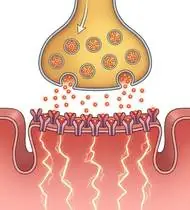
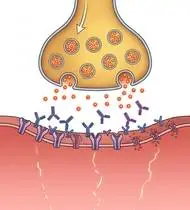
Myasthenia Gravis (MG) is an autoimmune disorder of the neuromuscular junction (NMJ) in which IgG autoantibodies block, cross-link, and destroy postsynaptic nicotinic Acetylcholine Receptors (AChR ~85%) or MuSK (~8–10%), flattening the postsynaptic junctional folds and reducing the neuromuscular transmission 'safety factor'. Because acetylcholine release naturally declines during repetitive nerve firing, MG is defined by fluctuating, fatigable skeletal muscle weakness that worsens with sustained/repetitive activity and in the evening, and improves with rest—while deep tendon reflexes, sensation, and autonomic pupils are 100% normal. Physiotherapy must be timed 60–90 minutes after Pyridostigmine (Mestinon) administration!
Myasthenia Gravis (MG / neuromuscular junction fatigue disorder) is an autoimmune condition where antibodies block the chemical receivers (acetylcholine receptors) at the bridge where nerves meet muscles. Because the signal weakens with repeated use and recharges with rest, muscles feel strong in the morning or after resting, and tire out with repetition or toward evening.
Primary Causes & Biomechanics
Key Points You Should Know
- •Autoimmune postsynaptic AChR blockade (associated with thymic hyperplasia in 65% or thymoma in 10–15%) causing rapid endplate potential rundown during repetitive firing
- •Characteristic topographical progression: Ocular MG (asymmetric ptosis & diplopia — initial presentation in 85%!) -> Bulbar (dysarthria, dysphagia, masticatory fatigue, neck extensor drop) -> Generalized Proximal Limb & Respiratory
- •Thermosensitivity & Medication Timing: Heat, systemic infection, emotional stress, and specific drugs (aminoglycosides, fluoroquinolones, magnesium, beta-blockers) worsen NMJ blockade!
- •The 'Mestinon Golden Hour' for Exercise: Always time your exercises 60 to 90 minutes after taking your Pyridostigmine (Mestinon) during rested morning hours, when the chemical signal across the nerve-muscle bridge is strongest!
- •Why 2-Minute Rest Breaks Work Like Magic: Taking a full 1–2 minute rest between short sets of 6–8 repetitions gives your nerve endings time to refill their chemical messenger so you never trigger weakness.
- •Stop at the First Sign of Heavy Eyelids: If your eyelid starts to droop, your vision blurs, or your voice sounds nasal, your body is telling you to pause and rest immediately.
Assessment Methods
1. Goniometric ROM & Postural / Kinematic Analysis
QMG (Quantitative Myasthenia Gravis Score), MG-ADL (Activities of Daily Living), and Fatigability Provocation Tests (Sustained Upward Gaze for 60s provoking ptosis; Sustained Arm Abduction for 120s; Counting Out Loud to 50 provoking nasal dysarthria).
2. Special Clinical Provocation & Neurological/Functional Tests
Forced Vital Capacity (FVC) & Negative Inspiratory Force (NIF / MIP) (vital to detect impending Myasthenic Crisis!), Ice Pack Test (applying ice over a ptotic eyelid for 2 min inhibits acetylcholinesterase and transiently opens the eyelid!), and neck extensor/proximal limb MMT.
3. Standardized Clinical Outcome Scales & Imaging Criteria
MG-ADL, QMG Score, MGFA Clinical Classification (Class I–V), FVC / MIP, and Repetitive Nerve Stimulation EMG (>10% decremental response).
1. Range of Motion & Posture Check
Your physiotherapist gently evaluates how comfortably and smoothly your neuromuscular junction postsynaptic motor endplate (autoantibodies against Acetylcholine Receptors — AChR or MuSK) moves and checks your overall posture.
2. Muscle Strength & Functional Movement Check
Your muscle balance, walking or reaching comfort, and specific gentle movement tests are evaluated without triggering sharp pain.
3. Typical Symptoms & Daily Impact Review
Fluctuating & Fatigable Muscle Weakness (Hallmark Sign!): Weakness that is minimal or absent in the morning / after rest, and progressively worsens during sustained use or in the evening.
Treatment Options & Phase-Based Protocol
✨ Enriched GIF Exercise & Precaution GuidePhase 1: Acute Symptom Modulation, Tissue Protection & Early Activation
- •Phase 1 Clinical Focus & Tissue Protection: Peak-Medication Timing, Respiratory & Energy Conservation Phase: Schedule all exercise in the morning and 60–90 minutes after Pyridostigmine (Mestinon) dose in a cool room! Perform diaphragmatic & thoracic expansion breathing (building respiratory reserve!), ankle pumps, and unloaded supine heel slides.
- •Pain, Edema & Neuromuscular Modulation: Targeted physical modalities, relative load management, and early protected mobility of the neuromuscular junction postsynaptic motor endplate (autoantibodies against Acetylcholine Receptors — AChR or MuSK) without provoking mechanical or inflammatory irritation.
- •Proximal & Distal Kinetic Chain Maintenance: Maintain active mobility and circulation in adjacent joints while protecting the primary healing structures in Myasthenia Gravis.
Phase 2: Progressive Mobility, Motor Control & Targeted Strengthening
- •Phase 2 Progressive Mobilization & Motor Control: Interval-Paced Proximal Postural Phase: Use short sets (6–8 reps) with mandatory 2-minute complete rest intervals (allowing presynaptic acetylcholine stores to replenish!); perform scapular retraction, supine pelvic bridging, and wand-assisted shoulder mobility.
- •Biomechanical Alignment & Co-Contraction: Restore balanced agonist-antagonist force couples, joint centration, and multi-planar neuromuscular control across the neuromuscular junction postsynaptic motor endplate (autoantibodies against Acetylcholine Receptors — AChR or MuSK).
- •Myofascial Extensibility & Endurance: Address secondary compensatory tightness and build local muscular endurance within safe, symptom-free biomechanical parameters.
Phase 3: Functional Integration, Proprioception & Long-Term Prevention
- •Phase 3 Functional Integration & Long-Term Prevention: Safe Functional Independence & Pacing Phase: Interval-paced chair sit-to-stand, side-lying/standing hip abduction, supported balance, and Activity Pacing (resting BEFORE fatigue/ptosis appears, seated grooming/cooking).
- •Proprioceptive Balance & Dynamic Loading: Progress to task-specific closed-chain, balance, and functional movement patterns tailored to daily life, occupational, or athletic demands.
- •Self-Management & Relapse Prophylaxis: Establish lifelong ergonomic habits, home exercise maintenance, and early warning-sign awareness to prevent recurrence.
Step 1: Calming Pain, Protecting the Area & Gentle Starter Motion
- •The 'Mestinon Golden Hour' for Exercise: Always time your exercises 60 to 90 minutes after taking your Pyridostigmine (Mestinon) during rested morning hours, when the chemical signal across the nerve-muscle bridge is strongest!
- •Calm Protection & Gentle Start: During the initial stage of Muscle Weakness & Rapid Fatigue Disorder, avoid painful overloading and perform the gentle, pain-free starter movements shown below to support circulation and comfort.
- •Respecting Your Body's Signals: Every movement should stay within a comfortable, non-painful zone—never force through sharp or radiating pain.
Step 2: Restoring Flexibility & Building Supporting Muscle Strength
- •Why 2-Minute Rest Breaks Work Like Magic: Taking a full 1–2 minute rest between short sets of 6–8 repetitions gives your nerve endings time to refill their chemical messenger so you never trigger weakness.
- •Step-by-Step Flexibility & Support: As acute sensitivity settles, gradually build mobility and strengthen the supporting muscles around the joint at a steady, controlled pace.
- •Posture & Breathing Coordination: Keep your posture upright and breathe smoothly (never hold your breath!) during every repetition.
Step 3: Safe Daily Habits, Stamina & Preventing Recurrence
- •Stop at the First Sign of Heavy Eyelids: If your eyelid starts to droop, your vision blurs, or your voice sounds nasal, your body is telling you to pause and rest immediately.
- •Confident Return to Daily Life: Integrate your stronger muscles and improved balance into walking, stairs, work, and recreational activities.
- •Preventing Future Flare-Ups: Continue your core protective habits and key maintenance exercises even after symptoms resolve.
Animated (GIF) Therapeutic Exercise Guide
Animated clinical exercise protocol with biomechanical angles, target muscle groups, and dosage parameters (Click image to enlarge)
Step-by-step animated exercise demonstrations you can safely perform at home (Click image to enlarge)
 🔍 Enlarge
1. Diaphragmatic & Pursed-Lip Breathing (PLB — Autonomic & Ventilatory Control)
1. Calm Belly Breathing with Pursed-Lip Exhale
Slow nasal inhalation expanding the lower ribcage and abdomen (while relaxing accessory neck/shoulder muscles), followed by prolonged expiration through pursed lips at a 1:2 ratio. Prevents dynamic airway collapse, improves basal ventilation, and reduces sympathetic tone. Specifically indicated in Myasthenia Gravis rehabilitation to optimize neuromuscular junction postsynaptic motor endplate (autoantibodies against Acetylcholine Receptors — AChR or MuSK) biomechanics and neuromuscular control.
Sit comfortably and place one hand on your chest and the other on your belly. Breathe in slowly through your nose for 2–3 seconds so your belly gently rises, then breathe out slowly for 4–6 seconds through pursed lips as if flickering a candle. Perform smoothly within a comfortable, pain-free range to support your Muscle Weakness & Rapid Fatigue Disorder recovery.
 🔍 Enlarge
2. Craniocervical Axial Retraction ('Chin-Tuck' — Deep Cervical Flexor Activation)
2. Chin-Tuck (Double-Chin) Postural Neck Alignment
Horizontal posterior translation of the cranium and cervical spine without tipping the head up or down. Activates the deep cervical flexors (longus colli/capitis), decompresses suboccipital structures, and opens the lower cervical intervertebral foramina. Specifically indicated in Myasthenia Gravis rehabilitation to optimize neuromuscular junction postsynaptic motor endplate (autoantibodies against Acetylcholine Receptors — AChR or MuSK) biomechanics and neuromuscular control.
Sit or stand tall looking straight ahead. Gently glide your chin straight backward (as if making a subtle double chin) without tilting your head down, feel the back of your neck lengthen, hold for 5 seconds, and relax. Perform smoothly within a comfortable, pain-free range to support your Muscle Weakness & Rapid Fatigue Disorder recovery.
 🔍 Enlarge
3. Supine Wand-Assisted (Cane) Active-Assisted Shoulder Elevation
3. Lying Cane/Stick-Assisted Two-Handed Arm Raise
In supine (scapula stabilized against the plinth and gravity eliminated in the final arc), the unaffected upper extremity guides a wand/stick to elevate the affected shoulder smoothly without deltoid-induced superior humeral shear. Specifically indicated in Myasthenia Gravis rehabilitation to optimize neuromuscular junction postsynaptic motor endplate (autoantibodies against Acetylcholine Receptors — AChR or MuSK) biomechanics and neuromuscular control.
Lie on your back holding a light stick or cane with both hands. Use your healthy arm to gently guide both arms up overhead as far as comfortable, hold for 3 seconds, and slowly lower. Perform smoothly within a comfortable, pain-free range to support your Muscle Weakness & Rapid Fatigue Disorder recovery.
 🔍 Enlarge
4. Scapulothoracic Retraction & Depression (Middle/Lower Trapezius & Rhomboids)
4. Shoulder Blade Squeeze (Postural Alignment)
Adduction and depression of the scapulae via the middle/lower trapezius and rhomboids while inhibiting upper trapezius overactivity. Corrects anterior scapular tilt, widens the subacromial outlet, and unloads the anterior thoracic column. Specifically indicated in Myasthenia Gravis rehabilitation to optimize neuromuscular junction postsynaptic motor endplate (autoantibodies against Acetylcholine Receptors — AChR or MuSK) biomechanics and neuromuscular control.
Sit or stand tall. Keep your shoulders relaxed away from your ears, gently draw your shoulder blades together and slightly downward toward your back pockets, hold for 5 seconds, and release. Perform smoothly within a comfortable, pain-free range to support your Muscle Weakness & Rapid Fatigue Disorder recovery.
 🔍 Enlarge
5. Straight Leg Raise (SLR — Multi-Plane Isometric Knee Lock)
5. Supine Straight Leg Raise
Maintaining the knee locked in full extension (0°) with ankle dorsiflexion while elevating the lower extremity to 45° hip flexion. Strengthens the quadriceps and iliopsoas complex without compressing or shearing the articular surfaces. Specifically indicated in Myasthenia Gravis rehabilitation to optimize neuromuscular junction postsynaptic motor endplate (autoantibodies against Acetylcholine Receptors — AChR or MuSK) biomechanics and neuromuscular control.
Bend your healthy knee with the foot flat on the bed. Tighten the thigh muscle of your affected leg to lock the knee straight, lift the leg to the height of the opposite knee, hold for 3 seconds, and lower slowly. Perform smoothly within a comfortable, pain-free range to support your Muscle Weakness & Rapid Fatigue Disorder recovery.
 🔍 Enlarge
6. Functional Closed-Kinetic-Chain Chair Transfer (Sit-to-Stand Biomechanics)
6. Controlled Chair Sit-to-Stand Transfer
Controlled transition from sitting to standing and eccentric lowering back to the chair with symmetrical weight distribution, anterior trunk inclination ('nose over toes'), and neutral frontal knee alignment. Specifically indicated in Myasthenia Gravis rehabilitation to optimize neuromuscular junction postsynaptic motor endplate (autoantibodies against Acetylcholine Receptors — AChR or MuSK) biomechanics and neuromuscular control.
Sit near the front of a sturdy chair with your feet hip-width apart. Lean slightly forward and push evenly through both heels to stand up tall, then slowly lower yourself back down over 3 seconds. Perform smoothly within a comfortable, pain-free range to support your Muscle Weakness & Rapid Fatigue Disorder recovery.
Movements to Avoid & Strict Precautions
1. Exercising During Medication 'Trough' Hours, Late at Night, or During an Infection/Fever
1. Exercising late in the evening when tired, right before a medication dose is due, or when you have a cold/fever
2. High-Repetition Continuous Sets Without 2-Minute Rest Breaks (Depletes Acetylcholine!)
2. Doing 20–30 continuous repetitions without resting between sets
3. Hot Environments, Saunas, Sunbathing, or Very Hot Baths (Heat Blocks NMJ Conduction!)
3. Taking hot baths, using saunas, or exercising in hot weather (heat immediately weakens the nerve-muscle signal!)
4. Eating Hard/Chewy Meals When Tired (Eat Main Meals 45–60 Min After Medication!)
4. Eating tough, chewy foods late at night when swallowing muscles are tired
Myasthenia Gravis (MG) — Video Guide
Click directly on any video to open and watch in a window, or review details via 📋 Summary & Options.
Condition Overview Video (1 Video)
Summary of pathophysiology, biomechanics, and clinical presentation
What the condition is, why it develops, and its basic mechanism

What Is Myasthenia Gravis (MG) and What Are Its Symptoms?
Myasthenia Gravis (MG) is an autoimmune disorder of the neuromuscular junction (NMJ) in which IgG autoantibodies block, cross-link, and destroy postsynaptic nicotinic Acetylcholine Receptors (AChR ~85%) or MuSK (~8–10%), flattening the postsynaptic junctional folds and reducing the neuromuscular transmission 'safety factor'. Because acetylcholine release naturally declines during repetitive nerve firing, MG is defined by fluctuating, fatigable skeletal muscle weakness that worsens with sustained/repetitive activity and in the evening, and improves with rest—while deep tendon reflexes, sensation, and autonomic pupils are 100% normal. Physiotherapy must be timed 60–90 minutes after Pyridostigmine (Mestinon) administration!
Myasthenia Gravis (MG / neuromuscular junction fatigue disorder) is an autoimmune condition where antibodies block the chemical receivers (acetylcholine receptors) at the bridge where nerves meet muscles. Because the signal weakens with repeated use and recharges with rest, muscles feel strong in the morning or after resting, and tire out with repetition or toward evening.
Treatment and Exercise Videos
Phase-based physiotherapy protocols, mobilization, and therapeutic exercises
Step-by-step recovery and safe home exercise applications

Energy Conservation, Safe Exercise Limits, and Daily Living in Myasthenia Gravis
Phase 1: Acute Symptom Modulation, Tissue Protection & Early Activation: Phase 1 Clinical Focus & Tissue Protection: Peak-Medication Timing, Respiratory & Energy Conservation Phase: Schedule all exercise in the morning and 60–90 minutes after Pyridostigmine (Mestinon) dose in a cool room! Perform diaphragmatic & thoracic expansion breathing (building respiratory reserve!), ankle pumps, and unloaded supine heel slides.
Step 1: Calming Pain, Protecting the Area & Gentle Starter Motion: The 'Mestinon Golden Hour' for Exercise: Always time your exercises 60 to 90 minutes after taking your Pyridostigmine (Mestinon) during rested morning hours, when the chemical signal across the nerve-muscle bridge is strongest!
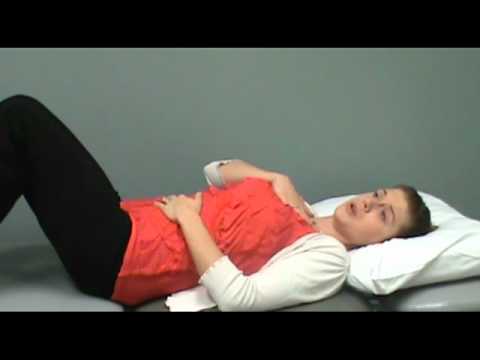
Diaphragmatic Breathing (Abdominal Breathing) Instruction and Clinical Application
Phase 2: Progressive Mobility, Motor Control & Targeted Strengthening: Phase 2 Progressive Mobilization & Motor Control: Interval-Paced Proximal Postural Phase: Use short sets (6–8 reps) with mandatory 2-minute complete rest intervals (allowing presynaptic acetylcholine stores to replenish!); perform scapular retraction, supine pelvic bridging, and wand-assisted shoulder mobility.
Step 2: Restoring Flexibility & Building Supporting Muscle Strength: Why 2-Minute Rest Breaks Work Like Magic: Taking a full 1–2 minute rest between short sets of 6–8 repetitions gives your nerve endings time to refill their chemical messenger so you never trigger weakness.
Clinical Assessment, Goniometry & Special Test Videos
Displayed only in Healthcare Professional mode (hidden in Patient mode)

Myasthenia Gravis Clinical Signs, Fatigability, and Treatment Principles
Goniometric ROM & Postural / Kinematic Analysis: QMG (Quantitative Myasthenia Gravis Score), MG-ADL (Activities of Daily Living), and Fatigability Provocation Tests (Sustained Upward Gaze for 60s provoking ptosis; Sustained Arm Abduction for 120s; Counting Out Loud to 50 provoking nasal dysarthria).

Manual Muscle Testing (MRC 0–5 Grading) — Clinical Motor Strength Examination
Special Clinical Provocation & Neurological/Functional Tests: Forced Vital Capacity (FVC) & Negative Inspiratory Force (NIF / MIP) (vital to detect impending Myasthenic Crisis!), Ice Pack Test (applying ice over a ptotic eyelid for 2 min inhibits acetylcholinesterase and transiently opens the eyelid!), and neck extensor/proximal limb MMT.