Diabetic PolyneuropathyDiabetes-Related Nerve Damage (Diabetic Neuropathy)
Diabetic Polyneuropathy — Overview
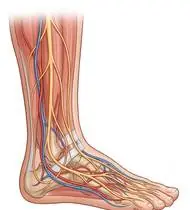
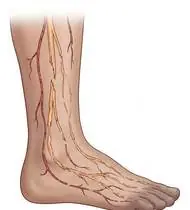
Diabetic Peripheral Neuropathy (DPN — Distal Symmetric Sensorimotor Polyneuropathy) is the most common microvascular complication of Diabetes Mellitus, affecting up to 50% of patients over time. Chronic hyperglycemia (polyol/sorbitol pathway, advanced glycation end-products [AGEs], and oxidative stress) damages the vasa nervorum (microvessels supplying peripheral nerves), causing length-dependent axonal degeneration starting in the longest nerve fibers of the toes and soles and ascending to the mid-shin ('stocking') before affecting the fingers ('glove'). Crucially, Loss of Protective Sensation (LOPS) + intrinsic foot muscle atrophy (claw toes) + autonomic anhidrosis (dry cracked skin) + loss of ankle proprioceptive balance strategy creates a 15-to-20-fold increased risk of neuropathic plantar foot ulcers, Charcot Neuroarthropathy, and falls!
Diabetic neuropathy (diabetes-related nerve damage) occurs when high blood sugar over time affects the tiny blood vessels feeding the longest nerves in the body—starting in the toes and soles of the feet ('stocking' pattern) and causing numbness, burning/tingling (especially at night), and reduced balance awareness. The great news is that targeted ankle/foot exercises, hip balance training, and aerobic exercise directly increase blood flow to the nerves and prevent falls and foot sores!
Primary Causes & Biomechanics
Key Points You Should Know
- •Length-dependent metabolic and microvascular ischemia of small unmyelinated C-fibers (burning pain/temperature) and large myelinated A-beta fibers (vibration, proprioception, light touch)
- •Intrinsic Foot Muscle Motor Neuropathy: Denervation of the lumbricals and interossei causes claw/hammer toe deformities, which pull the protective plantar fat pads distally off the metatarsal heads—concentrating peak plantar pressure!
- •Postural Control Shift: Loss of ankle cutaneous and spindle proprioception disables the rapid Ankle Balance Strategy, forcing reliance on a slower Hip Strategy and doubling fall risk
- •Rule #1 — Never Walk a Single Step Barefoot (Even Indoors!): When protective feeling in the soles of your feet is reduced, you can step on a tiny splinter, tack, or hot tile floor without feeling pain! Always wear supportive, seamless house shoes indoors and check inside your shoes with your hand before putting them on.
- •Why Stretching Your Calf Protects the Ball of Your Foot: Diabetes stiffens the Achilles tendon, which forces you to slam down harder on the ball of your foot when walking. Stretching your calves daily takes pressure off the front of your foot!
- •Training Your Hips to Keep Your Balance: When the nerves in your feet feel numb, your brain uses your hip muscles and eyes to keep your balance—strengthening your hips stops stumbles and falls.
Assessment Methods
1. Goniometric ROM & Postural / Kinematic Analysis
10-gram Semmes-Weinstein Monofilament Test across plantar sites (1st, 3rd, 5th metatarsal heads & hallux—inability to feel 10g pressure defines Loss of Protective Sensation [LOPS]!), 128-Hz Tuning Fork Vibration Perception, and Achilles Reflex.
2. Special Clinical Provocation & Neurological/Functional Tests
Ankle-Brachial Index (ABI) & pedal pulse palpation (Dorsalis Pedis & Posterior Tibial), Single-Leg / Tandem Stance (Eyes Open vs. Eyes Closed — Romberg), and ankle dorsiflexion goniometry (glycosylation of Achilles collagen causes equinus stiffness raising forefoot pressure!).
3. Standardized Clinical Outcome Scales & Imaging Criteria
Michigan Neuropathy Screening Instrument (MNSI), Toronto Clinical Neuropathy Score, Berg Balance Scale, and HbA1c.
1. Range of Motion & Posture Check
Your physiotherapist gently evaluates how comfortably and smoothly your distal peripheral sensory, motor, and autonomic nerve fibers ('glove-and-stocking' distribution in lower > upper extremities) moves and checks your overall posture.
2. Muscle Strength & Functional Movement Check
Your muscle balance, walking or reaching comfort, and specific gentle movement tests are evaluated without triggering sharp pain.
3. Typical Symptoms & Daily Impact Review
Symmetric 'Stocking-and-Glove' Sensory Changes: Numbness (feeling as if 'walking on cotton wool or thick socks') combined with paradoxical burning, electric tingling, or pins-and-needles that is worst at night in bed.
Treatment Options & Phase-Based Protocol
✨ Enriched GIF Exercise & Precaution GuidePhase 1: Acute Symptom Modulation, Tissue Protection & Early Activation
- •Phase 1 Clinical Focus & Tissue Protection: Daily Foot Protection, Glycosylated Achilles Stretching & Microcirculation Phase: Mandatory daily visual/mirror inspection of the soles of both feet, rhythmic active ankle pumps (boosting distal vasa nervorum perfusion!), and long-sitting towel gastro-soleus stretches (restoring ankle dorsiflexion to offload plantar metatarsal heads by 25%!).
- •Pain, Edema & Neuromuscular Modulation: Targeted physical modalities, relative load management, and early protected mobility of the distal peripheral sensory, motor, and autonomic nerve fibers ('glove-and-stocking' distribution in lower > upper extremities) without provoking mechanical or inflammatory irritation.
- •Proximal & Distal Kinetic Chain Maintenance: Maintain active mobility and circulation in adjacent joints while protecting the primary healing structures in Diabetic Neuropathy.
Phase 2: Progressive Mobility, Motor Control & Targeted Strengthening
- •Phase 2 Progressive Mobilization & Motor Control: Intrinsic Foot Core & Proximal Hip Balance Strategy Phase: Short-Foot arch doming & seated towel exercises (wearing protective footwear when standing!), seated terminal knee extension, side-lying/standing hip abduction, and pelvic bridging (strengthening the Hip Balance Strategy to compensate for distal ankle sensory loss!).
- •Biomechanical Alignment & Co-Contraction: Restore balanced agonist-antagonist force couples, joint centration, and multi-planar neuromuscular control across the distal peripheral sensory, motor, and autonomic nerve fibers ('glove-and-stocking' distribution in lower > upper extremities).
- •Myofascial Extensibility & Endurance: Address secondary compensatory tightness and build local muscular endurance within safe, symptom-free biomechanical parameters.
Phase 3: Functional Integration, Proprioception & Long-Term Prevention
- •Phase 3 Functional Integration & Long-Term Prevention: Proprioceptive Fall Prevention & Aerobic Glycemic Control Phase: Supported tandem & weight-shift balance training, chair sit-to-stand, and 30–40 min of low-impact aerobic exercise (stationary cycling, swimming, or walking in seamless diabetic shoes) to improve insulin sensitivity and endoneurial blood flow.
- •Proprioceptive Balance & Dynamic Loading: Progress to task-specific closed-chain, balance, and functional movement patterns tailored to daily life, occupational, or athletic demands.
- •Self-Management & Relapse Prophylaxis: Establish lifelong ergonomic habits, home exercise maintenance, and early warning-sign awareness to prevent recurrence.
Step 1: Calming Pain, Protecting the Area & Gentle Starter Motion
- •Rule #1 — Never Walk a Single Step Barefoot (Even Indoors!): When protective feeling in the soles of your feet is reduced, you can step on a tiny splinter, tack, or hot tile floor without feeling pain! Always wear supportive, seamless house shoes indoors and check inside your shoes with your hand before putting them on.
- •Calm Protection & Gentle Start: During the initial stage of Diabetes-Related Nerve Damage, avoid painful overloading and perform the gentle, pain-free starter movements shown below to support circulation and comfort.
- •Respecting Your Body's Signals: Every movement should stay within a comfortable, non-painful zone—never force through sharp or radiating pain.
Step 2: Restoring Flexibility & Building Supporting Muscle Strength
- •Why Stretching Your Calf Protects the Ball of Your Foot: Diabetes stiffens the Achilles tendon, which forces you to slam down harder on the ball of your foot when walking. Stretching your calves daily takes pressure off the front of your foot!
- •Step-by-Step Flexibility & Support: As acute sensitivity settles, gradually build mobility and strengthen the supporting muscles around the joint at a steady, controlled pace.
- •Posture & Breathing Coordination: Keep your posture upright and breathe smoothly (never hold your breath!) during every repetition.
Step 3: Safe Daily Habits, Stamina & Preventing Recurrence
- •Training Your Hips to Keep Your Balance: When the nerves in your feet feel numb, your brain uses your hip muscles and eyes to keep your balance—strengthening your hips stops stumbles and falls.
- •Confident Return to Daily Life: Integrate your stronger muscles and improved balance into walking, stairs, work, and recreational activities.
- •Preventing Future Flare-Ups: Continue your core protective habits and key maintenance exercises even after symptoms resolve.
Animated (GIF) Therapeutic Exercise Guide
Animated clinical exercise protocol with biomechanical angles, target muscle groups, and dosage parameters (Click image to enlarge)
Step-by-step animated exercise demonstrations you can safely perform at home (Click image to enlarge)
 🔍 Enlarge
1. Intrinsic Foot Core ('Short Foot') & Medial Longitudinal Arch Activation
1. Seated Arch Doming (Short Foot) & Towel Scrunch
Drawing the first metatarsal head toward the calcaneus to elevate the medial longitudinal arch without curling the toes (or performing controlled towel curls). Strengthens the intrinsic plantar muscles supporting the subtalar and midtarsal joints. Specifically indicated in Diabetic Neuropathy rehabilitation to optimize distal peripheral sensory, motor, and autonomic nerve fibers ('glove-and-stocking' distribution in lower > upper extremities) biomechanics and neuromuscular control.
While seated with your foot flat on the floor (or on a small towel), gently draw the ball of your foot toward your heel to lift your inner arch without curling your toes, hold for 5 seconds, and relax. Perform smoothly within a comfortable, pain-free range to support your Diabetes-Related Nerve Damage recovery.
 🔍 Enlarge
2. Long-Sitting Towel-Assisted Gastrocnemius-Soleus & Plantar Fascia Stretch
2. Seated Towel Calf & Foot Arch Stretch
Long-sitting with a towel looped around the metatarsal heads, applying a slow, sustained passive pull into ankle dorsiflexion. Restores gastrocnemius-soleus-Achilles length and reduces plantar fascial and equine tension. Specifically indicated in Diabetic Neuropathy rehabilitation to optimize distal peripheral sensory, motor, and autonomic nerve fibers ('glove-and-stocking' distribution in lower > upper extremities) biomechanics and neuromuscular control.
Sit with your leg extended and loop a towel around the ball of your foot. Gently pull both ends of the towel toward you until you feel a comfortable stretch in your calf and sole, holding for 20–30 seconds. Perform smoothly within a comfortable, pain-free range to support your Diabetes-Related Nerve Damage recovery.
 🔍 Enlarge
3. Rhythmic Active Ankle Dorsiflexion & Plantarflexion Pumping (Venous/Edema Pump)
3. Ankle Toe-Pulls and Pointing (Circulation & Swelling Pump)
Rhythmic alternating contraction of the tibialis anterior and gastrocnemius-soleus complex. Activates the deep venous calf pump to prevent deep vein thrombosis (DVT), clears distal edema, and maintains talocrural mobility. Specifically indicated in Diabetic Neuropathy rehabilitation to optimize distal peripheral sensory, motor, and autonomic nerve fibers ('glove-and-stocking' distribution in lower > upper extremities) biomechanics and neuromuscular control.
While lying down or sitting with your legs supported, pull your toes and feet firmly upward toward your shins, hold for 3 seconds, then point them downward like pressing a gas pedal. Perform smoothly within a comfortable, pain-free range to support your Diabetes-Related Nerve Damage recovery.
 🔍 Enlarge
4. Seated Terminal Knee Extension (Open/Closed Chain VMO Focus)
4. Seated Knee Straightening & Hold
Concentric extension of the knee to the final 30°–0° terminal arc with isometric hold and ankle dorsiflexion. Restores terminal knee extension torque and stabilizes dynamic patellofemoral tracking. Specifically indicated in Diabetic Neuropathy rehabilitation to optimize distal peripheral sensory, motor, and autonomic nerve fibers ('glove-and-stocking' distribution in lower > upper extremities) biomechanics and neuromuscular control.
Sit upright in a chair and slowly straighten your knee completely while pulling your toes toward you. Feel the front thigh muscle tighten, hold for 5 seconds, and slowly lower your foot. Perform smoothly within a comfortable, pain-free range to support your Diabetes-Related Nerve Damage recovery.
 🔍 Enlarge
5. Closed-Chain Bilateral/Eccentric Heel Raise (Triceps Surae & Achilles Loading)
5. Supported Standing Heel Raise & Slow Lowering
Controlled concentric heel elevation followed by slow (3–4 second) eccentric lowering into neutral dorsiflexion. Stimulates Type I collagen alignment in the Achilles/plantar aponeurosis and builds ankle plantarflexor propulsion. Specifically indicated in Diabetic Neuropathy rehabilitation to optimize distal peripheral sensory, motor, and autonomic nerve fibers ('glove-and-stocking' distribution in lower > upper extremities) biomechanics and neuromuscular control.
Hold lightly onto a wall or chair back. Rise up onto the balls of both feet, pause at the top, and slowly lower your heels back down to the floor over 3–4 seconds. Perform smoothly within a comfortable, pain-free range to support your Diabetes-Related Nerve Damage recovery.
 🔍 Enlarge
6. Single-Leg / Semi-Tandem Proprioceptive & Weight-Shift Balance Training
6. Supported Weight-Shifting & Tandem Balance Practice
Controlled mediolateral/anteroposterior weight shifting and tandem or single-leg stance near a stable support. Enhances mechanoreceptor feedback, ankle/hip postural reflexes, and dynamic gait stability. Specifically indicated in Diabetic Neuropathy rehabilitation to optimize distal peripheral sensory, motor, and autonomic nerve fibers ('glove-and-stocking' distribution in lower > upper extremities) biomechanics and neuromuscular control.
Stand near a counter or sturdy chair for safety. Place one foot slightly in front of the other (or shift your weight smoothly from side to side) and hold your balance upright for 20–30 seconds. Perform smoothly within a comfortable, pain-free range to support your Diabetes-Related Nerve Damage recovery.
Movements to Avoid & Strict Precautions
1. Walking Barefoot (Indoors, at the Beach, or to the Bathroom at Night — #1 Cause of Diabetic Foot Ulcers!)
1. Walking barefoot ANYWHERE—even indoors on carpet or tile, or at the beach/pool
2. Using Hot Water Bottles, Heating Pads, or Hot Foot Soaks on Numb Feet (Causes Severe Painless Burns!)
2. Putting hot water bottles, heating pads, or soaking numb feet in hot water (always test bathwater with your elbow!)
3. High-Impact Running/Jumping When Protective Foot Sensation Is Lost (10g Monofilament Negative)
3. High-impact running or jumping on numb feet (choose cycling, swimming, or cushioned walking instead)
4. Cutting Calluses/Corns Yourself or Using Medicated Acid Corn Plasters (Causes Chemical Ulcers!)
4. Using razor blades or acid corn plasters on your feet, or applying lotion *between* your toes
Diabetic Polyneuropathy — Video Guide
Click directly on any video to open and watch in a window, or review details via 📋 Summary & Options.
Condition Overview Video (1 Video)
Summary of pathophysiology, biomechanics, and clinical presentation
What the condition is, why it develops, and its basic mechanism

What Is Diabetic Neuropathy? Symptoms, Sensory Loss, and Treatment Approaches
Diabetic Peripheral Neuropathy (DPN — Distal Symmetric Sensorimotor Polyneuropathy) is the most common microvascular complication of Diabetes Mellitus, affecting up to 50% of patients over time. Chronic hyperglycemia (polyol/sorbitol pathway, advanced glycation end-products [AGEs], and oxidative stress) damages the vasa nervorum (microvessels supplying peripheral nerves), causing length-dependent axonal degeneration starting in the longest nerve fibers of the toes and soles and ascending to the mid-shin ('stocking') before affecting the fingers ('glove'). Crucially, Loss of Protective Sensation (LOPS) + intrinsic foot muscle atrophy (claw toes) + autonomic anhidrosis (dry cracked skin) + loss of ankle proprioceptive balance strategy creates a 15-to-20-fold increased risk of neuropathic plantar foot ulcers, Charcot Neuroarthropathy, and falls!
Diabetic neuropathy (diabetes-related nerve damage) occurs when high blood sugar over time affects the tiny blood vessels feeding the longest nerves in the body—starting in the toes and soles of the feet ('stocking' pattern) and causing numbness, burning/tingling (especially at night), and reduced balance awareness. The great news is that targeted ankle/foot exercises, hip balance training, and aerobic exercise directly increase blood flow to the nerves and prevent falls and foot sores!
Treatment and Exercise Videos
Phase-based physiotherapy protocols, mobilization, and therapeutic exercises
Step-by-step recovery and safe home exercise applications

Nerve Protection and Exercise Principles in Peripheral and Diabetic Neuropathy
Phase 1: Acute Symptom Modulation, Tissue Protection & Early Activation: Phase 1 Clinical Focus & Tissue Protection: Daily Foot Protection, Glycosylated Achilles Stretching & Microcirculation Phase: Mandatory daily visual/mirror inspection of the soles of both feet, rhythmic active ankle pumps (boosting distal vasa nervorum perfusion!), and long-sitting towel gastro-soleus stretches (restoring ankle dorsiflexion to offload plantar metatarsal heads by 25%!).
Step 1: Calming Pain, Protecting the Area & Gentle Starter Motion: Rule #1 — Never Walk a Single Step Barefoot (Even Indoors!): When protective feeling in the soles of your feet is reduced, you can step on a tiny splinter, tack, or hot tile floor without feeling pain! Always wear supportive, seamless house shoes indoors and check inside your shoes with your hand before putting them on.

Ankle Strengthening and Stretching Exercises in Polyneuropathy and Neuro Rehab
Phase 2: Progressive Mobility, Motor Control & Targeted Strengthening: Phase 2 Progressive Mobilization & Motor Control: Intrinsic Foot Core & Proximal Hip Balance Strategy Phase: Short-Foot arch doming & seated towel exercises (wearing protective footwear when standing!), seated terminal knee extension, side-lying/standing hip abduction, and pelvic bridging (strengthening the Hip Balance Strategy to compensate for distal ankle sensory loss!).
Step 2: Restoring Flexibility & Building Supporting Muscle Strength: Why Stretching Your Calf Protects the Ball of Your Foot: Diabetes stiffens the Achilles tendon, which forces you to slam down harder on the ball of your foot when walking. Stretching your calves daily takes pressure off the front of your foot!

Static and Dynamic Balance Training in Neurological Rehabilitation
Phase 3: Functional Integration, Proprioception & Long-Term Prevention: Phase 3 Functional Integration & Long-Term Prevention: Proprioceptive Fall Prevention & Aerobic Glycemic Control Phase: Supported tandem & weight-shift balance training, chair sit-to-stand, and 30–40 min of low-impact aerobic exercise (stationary cycling, swimming, or walking in seamless diabetic shoes) to improve insulin sensitivity and endoneurial blood flow.
Step 3: Safe Daily Habits, Stamina & Preventing Recurrence: Training Your Hips to Keep Your Balance: When the nerves in your feet feel numb, your brain uses your hip muscles and eyes to keep your balance—strengthening your hips stops stumbles and falls.
Clinical Assessment, Goniometry & Special Test Videos
Displayed only in Healthcare Professional mode (hidden in Patient mode)

Systematic Neurological Examination: Reflex, Sensory, Tone, and Motor Assessment
Goniometric ROM & Postural / Kinematic Analysis: 10-gram Semmes-Weinstein Monofilament Test across plantar sites (1st, 3rd, 5th metatarsal heads & hallux—inability to feel 10g pressure defines Loss of Protective Sensation [LOPS]!), 128-Hz Tuning Fork Vibration Perception, and Achilles Reflex.

Berg Balance Scale (BBS) — Clinical Postural Control and Balance Examination
Special Clinical Provocation & Neurological/Functional Tests: Ankle-Brachial Index (ABI) & pedal pulse palpation (Dorsalis Pedis & Posterior Tibial), Single-Leg / Tandem Stance (Eyes Open vs. Eyes Closed — Romberg), and ankle dorsiflexion goniometry (glycosylation of Achilles collagen causes equinus stiffness raising forefoot pressure!).