Amyotrophic Lateral Sclerosis (ALS)Motor Neuron Disease (Amyotrophic Lateral Sclerosis (ALS))
Amyotrophic Lateral Sclerosis (ALS) — Overview
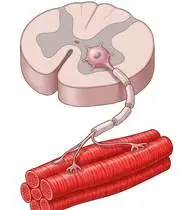
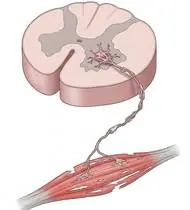
Amyotrophic Lateral Sclerosis (ALS / Motor Neuron Disease — Lou Gehrig's Disease) is a progressive neurodegenerative disorder characterized by the simultaneous degeneration of BOTH Upper Motor Neurons (spasticity, hyperreflexia, Babinski sign, Hoffman sign) AND Lower Motor Neurons (progressive neurogenic muscle atrophy, fasciculations, hyporeflexia, cramps) in the bulbar, cervical, thoracic, and lumbosacral regions—while sensory pathways, cognitive function (in ~85%), extraocular eye muscles, and bladder/bowel sphincters remain characteristically intact. Crucially, physiotherapy must follow the Submaximal Exercise Rule to prevent Overwork Weakness (exhausting partially denervated motor units accelerates axonal loss!).
Amyotrophic Lateral Sclerosis (ALS / Motor Neuron Disease) is a neurological condition in which the motor nerve cells that carry movement signals from the brain and spinal cord to the muscles gradually weaken—while vision, hearing, touch sensation, bladder control, and sharp mental awareness remain completely intact. In ALS, physiotherapy focuses on keeping joints comfortable and flexible, supporting breathing and cough strength, and protecting your energy without ever exhausting your muscles.
Primary Causes & Biomechanics
Key Points You Should Know
- •90% sporadic and 10% familial (SOD1, C9orf72) degeneration of cortical Betz cells and spinal anterior horn motor neurons
- •Clinical onset: ~70% limb-onset (asymmetric painless distal hand weakness ['split-hand sign'] or foot drop) and ~25–30% bulbar-onset (dysarthria, dysphagia, tongue fasciculations)
- •Critical Physiotherapy Law: Muscles with Manual Muscle Test (MMT) grade <3/5 must NEVER be subjected to resistance training, and eccentric / high-intensity exhausting exercise is strictly contraindicated!
- •The 'Never Exhaust a Muscle' Golden Rule: In ALS, pushing a muscle until it trembles or feels sore the next day (overwork weakness) actually harms remaining motor nerves! Every movement should feel gentle and refreshing—you should feel fully recovered within 15–30 minutes after finishing.
- •Why Ultra-Light Braces Save Your Energy: If your foot catches on the carpet (foot drop), wearing a feather-light ankle support (AFO) stops falls and saves your leg energy for the activities you enjoy.
- •Safe Swallowing & Breath Support: Sitting 100% upright and tucking your chin slightly down when swallowing protects your airway, while gentle deep breaths keep your lungs clear.
Assessment Methods
1. Goniometric ROM & Postural / Kinematic Analysis
ALSFRS-R (Revised ALS Functional Rating Scale, 0–48 points) across bulbar, fine motor, gross motor, and respiratory domains.
2. Special Clinical Provocation & Neurological/Functional Tests
Seated AND Supine Forced Vital Capacity (FVC) (a >20–25% drop in FVC when lying supine indicates diaphragmatic paralysis!), Maximum Inspiratory Pressure (MIP), and Peak Cough Flow (PCF <270 L/min indicates ineffective cough requiring assisted cough techniques; <160 L/min indicates critical secretion retention!).
3. Standardized Clinical Outcome Scales & Imaging Criteria
ALSFRS-R, Manual Muscle Testing (MRC 0–5), Modified Ashworth Scale, FVC (% predicted), and Peak Cough Flow (L/min).
1. Range of Motion & Posture Check
Your physiotherapist gently evaluates how comfortably and smoothly your upper motor neurons (motor cortex / corticospinal tract) and lower motor neurons (brainstem cranial nerve nuclei & spinal cord anterior horn alpha motor neurons) moves and checks your overall posture.
2. Muscle Strength & Functional Movement Check
Your muscle balance, walking or reaching comfort, and specific gentle movement tests are evaluated without triggering sharp pain.
3. Typical Symptoms & Daily Impact Review
Painless, asymmetric distal weakness (difficulty turning a key, buttoning shirts, opening jars, or tripping over the toes due to foot drop) accompanied by visible muscle twitching (fasciculations) and nighttime muscle cramps.
Treatment Options & Phase-Based Protocol
✨ Enriched GIF Exercise & Precaution GuidePhase 1: Acute Symptom Modulation, Tissue Protection & Early Activation
- •Phase 1 Clinical Focus & Tissue Protection: Stage 1 (Early Ambulatory Phase) — Submaximal ROM & Energy Conservation: In muscles with MMT ≥3+/5, perform low-to-moderate submaximal (Borg RPE 11–13) non-fatiguing active ROM and gentle aerobic activity with 1–2 min rests between sets; perform ankle pumps, gentle towel calf stretches (for cramps/spasticity), and thumb opposition.
- •Pain, Edema & Neuromuscular Modulation: Targeted physical modalities, relative load management, and early protected mobility of the upper motor neurons (motor cortex / corticospinal tract) and lower motor neurons (brainstem cranial nerve nuclei & spinal cord anterior horn alpha motor neurons) without provoking mechanical or inflammatory irritation.
- •Proximal & Distal Kinetic Chain Maintenance: Maintain active mobility and circulation in adjacent joints while protecting the primary healing structures in Amyotrophic Lateral Sclerosis (ALS).
Phase 2: Progressive Mobility, Motor Control & Targeted Strengthening
- •Phase 2 Progressive Mobilization & Motor Control: Stage 2 (Partial Mobility Limitation Phase) — Orthotics & Fall Prevention: Prescribe an ultra-lightweight carbon-fiber AFO for foot drop (prevents tripping and saves 30% walking energy!), Headmaster soft/semi-rigid cervical collar for dropped-head extensor weakness, wand-assisted supine shoulder ROM, and built-up foam utensil handles.
- •Biomechanical Alignment & Co-Contraction: Restore balanced agonist-antagonist force couples, joint centration, and multi-planar neuromuscular control across the upper motor neurons (motor cortex / corticospinal tract) and lower motor neurons (brainstem cranial nerve nuclei & spinal cord anterior horn alpha motor neurons).
- •Myofascial Extensibility & Endurance: Address secondary compensatory tightness and build local muscular endurance within safe, symptom-free biomechanical parameters.
Phase 3: Functional Integration, Proprioception & Long-Term Prevention
- •Phase 3 Functional Integration & Long-Term Prevention: Stage 3 (Respiratory, Bulbar & Positioning Phase): Diaphragmatic & costal expansion breathing, lung volume recruitment (breath-stacking), Manually Assisted Cough / Mechanical Insufflation-Exsufflation (Cough Assist), Non-Invasive Ventilation (BiPAP when FVC <50% or orthopnea occurs), and upright Chin-Tuck swallowing positioning.
- •Proprioceptive Balance & Dynamic Loading: Progress to task-specific closed-chain, balance, and functional movement patterns tailored to daily life, occupational, or athletic demands.
- •Self-Management & Relapse Prophylaxis: Establish lifelong ergonomic habits, home exercise maintenance, and early warning-sign awareness to prevent recurrence.
Step 1: Calming Pain, Protecting the Area & Gentle Starter Motion
- •The 'Never Exhaust a Muscle' Golden Rule: In ALS, pushing a muscle until it trembles or feels sore the next day (overwork weakness) actually harms remaining motor nerves! Every movement should feel gentle and refreshing—you should feel fully recovered within 15–30 minutes after finishing.
- •Calm Protection & Gentle Start: During the initial stage of Motor Neuron Disease, avoid painful overloading and perform the gentle, pain-free starter movements shown below to support circulation and comfort.
- •Respecting Your Body's Signals: Every movement should stay within a comfortable, non-painful zone—never force through sharp or radiating pain.
Step 2: Restoring Flexibility & Building Supporting Muscle Strength
- •Why Ultra-Light Braces Save Your Energy: If your foot catches on the carpet (foot drop), wearing a feather-light ankle support (AFO) stops falls and saves your leg energy for the activities you enjoy.
- •Step-by-Step Flexibility & Support: As acute sensitivity settles, gradually build mobility and strengthen the supporting muscles around the joint at a steady, controlled pace.
- •Posture & Breathing Coordination: Keep your posture upright and breathe smoothly (never hold your breath!) during every repetition.
Step 3: Safe Daily Habits, Stamina & Preventing Recurrence
- •Safe Swallowing & Breath Support: Sitting 100% upright and tucking your chin slightly down when swallowing protects your airway, while gentle deep breaths keep your lungs clear.
- •Confident Return to Daily Life: Integrate your stronger muscles and improved balance into walking, stairs, work, and recreational activities.
- •Preventing Future Flare-Ups: Continue your core protective habits and key maintenance exercises even after symptoms resolve.
Animated (GIF) Therapeutic Exercise Guide
Animated clinical exercise protocol with biomechanical angles, target muscle groups, and dosage parameters (Click image to enlarge)
Step-by-step animated exercise demonstrations you can safely perform at home (Click image to enlarge)
 🔍 Enlarge
1. Supine Active-Assisted Heel Slide & Synovial Diffusion Mobilization
1. Supine Heel Slide (Gentle Knee & Hip Bending)
Controlled flexion and extension of the lower extremity by sliding the heel along the support surface without axial weight-bearing. Stimulates synovial fluid diffusion across avascular cartilage and prevents capsular adhesions. Specifically indicated in Amyotrophic Lateral Sclerosis (ALS) rehabilitation to optimize upper motor neurons (motor cortex / corticospinal tract) and lower motor neurons (brainstem cranial nerve nuclei & spinal cord anterior horn alpha motor neurons) biomechanics and neuromuscular control.
While lying on your back, slowly slide your heel along the bed sheet toward your hip within a comfortable, pain-free angle, hold for 3 seconds, and gently slide it back out straight. Perform smoothly within a comfortable, pain-free range to support your Motor Neuron Disease recovery.
 🔍 Enlarge
2. Long-Sitting Towel-Assisted Gastrocnemius-Soleus & Plantar Fascia Stretch
2. Seated Towel Calf & Foot Arch Stretch
Long-sitting with a towel looped around the metatarsal heads, applying a slow, sustained passive pull into ankle dorsiflexion. Restores gastrocnemius-soleus-Achilles length and reduces plantar fascial and equine tension. Specifically indicated in Amyotrophic Lateral Sclerosis (ALS) rehabilitation to optimize upper motor neurons (motor cortex / corticospinal tract) and lower motor neurons (brainstem cranial nerve nuclei & spinal cord anterior horn alpha motor neurons) biomechanics and neuromuscular control.
Sit with your leg extended and loop a towel around the ball of your foot. Gently pull both ends of the towel toward you until you feel a comfortable stretch in your calf and sole, holding for 20–30 seconds. Perform smoothly within a comfortable, pain-free range to support your Motor Neuron Disease recovery.
 🔍 Enlarge
3. Supine Wand-Assisted (Cane) Active-Assisted Shoulder Elevation
3. Lying Cane/Stick-Assisted Two-Handed Arm Raise
In supine (scapula stabilized against the plinth and gravity eliminated in the final arc), the unaffected upper extremity guides a wand/stick to elevate the affected shoulder smoothly without deltoid-induced superior humeral shear. Specifically indicated in Amyotrophic Lateral Sclerosis (ALS) rehabilitation to optimize upper motor neurons (motor cortex / corticospinal tract) and lower motor neurons (brainstem cranial nerve nuclei & spinal cord anterior horn alpha motor neurons) biomechanics and neuromuscular control.
Lie on your back holding a light stick or cane with both hands. Use your healthy arm to gently guide both arms up overhead as far as comfortable, hold for 3 seconds, and slowly lower. Perform smoothly within a comfortable, pain-free range to support your Motor Neuron Disease recovery.
 🔍 Enlarge
4. Diaphragmatic & Pursed-Lip Breathing (PLB — Autonomic & Ventilatory Control)
4. Calm Belly Breathing with Pursed-Lip Exhale
Slow nasal inhalation expanding the lower ribcage and abdomen (while relaxing accessory neck/shoulder muscles), followed by prolonged expiration through pursed lips at a 1:2 ratio. Prevents dynamic airway collapse, improves basal ventilation, and reduces sympathetic tone. Specifically indicated in Amyotrophic Lateral Sclerosis (ALS) rehabilitation to optimize upper motor neurons (motor cortex / corticospinal tract) and lower motor neurons (brainstem cranial nerve nuclei & spinal cord anterior horn alpha motor neurons) biomechanics and neuromuscular control.
Sit comfortably and place one hand on your chest and the other on your belly. Breathe in slowly through your nose for 2–3 seconds so your belly gently rises, then breathe out slowly for 4–6 seconds through pursed lips as if flickering a candle. Perform smoothly within a comfortable, pain-free range to support your Motor Neuron Disease recovery.
 🔍 Enlarge
5. Craniocervical Axial Retraction ('Chin-Tuck' — Deep Cervical Flexor Activation)
5. Chin-Tuck (Double-Chin) Postural Neck Alignment
Horizontal posterior translation of the cranium and cervical spine without tipping the head up or down. Activates the deep cervical flexors (longus colli/capitis), decompresses suboccipital structures, and opens the lower cervical intervertebral foramina. Specifically indicated in Amyotrophic Lateral Sclerosis (ALS) rehabilitation to optimize upper motor neurons (motor cortex / corticospinal tract) and lower motor neurons (brainstem cranial nerve nuclei & spinal cord anterior horn alpha motor neurons) biomechanics and neuromuscular control.
Sit or stand tall looking straight ahead. Gently glide your chin straight backward (as if making a subtle double chin) without tilting your head down, feel the back of your neck lengthen, hold for 5 seconds, and relax. Perform smoothly within a comfortable, pain-free range to support your Motor Neuron Disease recovery.
 🔍 Enlarge
6. Rhythmic Active Ankle Dorsiflexion & Plantarflexion Pumping (Venous/Edema Pump)
6. Ankle Toe-Pulls and Pointing (Circulation & Swelling Pump)
Rhythmic alternating contraction of the tibialis anterior and gastrocnemius-soleus complex. Activates the deep venous calf pump to prevent deep vein thrombosis (DVT), clears distal edema, and maintains talocrural mobility. Specifically indicated in Amyotrophic Lateral Sclerosis (ALS) rehabilitation to optimize upper motor neurons (motor cortex / corticospinal tract) and lower motor neurons (brainstem cranial nerve nuclei & spinal cord anterior horn alpha motor neurons) biomechanics and neuromuscular control.
While lying down or sitting with your legs supported, pull your toes and feet firmly upward toward your shins, hold for 3 seconds, then point them downward like pressing a gas pedal. Perform smoothly within a comfortable, pain-free range to support your Motor Neuron Disease recovery.
Movements to Avoid & Strict Precautions
1. Heavy Weightlifting, Eccentric Exercises, or Exercising Until Muscles Tremble/Fatigue (Accelerates Motor Neuron Loss!)
1. Lifting heavy dumbbells, using stiff resistance springs, or exercising to exhaustion (STRICTLY FORBIDDEN!)
2. Applying Resistance to Any Muscle That Cannot Easily Lift Against Gravity (MMT <3/5)
2. Forcing a weak muscle against weights or elastic bands
3. Drinking Thin Liquids While Reclining or Tilting the Head Backward
3. Drinking water while lying back or tilting your chin up (always sit upright and tuck your chin slightly down!)
4. Allowing Joints (Especially Shoulders and Ankles) to Stay Unmoved All Day (Causes Painful Contractures)
4. Skipping daily gentle assisted joint movements, which leads to painful stiff shoulders and ankles
Amyotrophic Lateral Sclerosis (ALS) — Video Guide
Click directly on any video to open and watch in a window, or review details via 📋 Summary & Options.
Condition Overview Video (1 Video)
Summary of pathophysiology, biomechanics, and clinical presentation
What the condition is, why it develops, and its basic mechanism

What Is ALS (Amyotrophic Lateral Sclerosis)? Motor Neuron Disease Overview
Amyotrophic Lateral Sclerosis (ALS / Motor Neuron Disease — Lou Gehrig's Disease) is a progressive neurodegenerative disorder characterized by the simultaneous degeneration of BOTH Upper Motor Neurons (spasticity, hyperreflexia, Babinski sign, Hoffman sign) AND Lower Motor Neurons (progressive neurogenic muscle atrophy, fasciculations, hyporeflexia, cramps) in the bulbar, cervical, thoracic, and lumbosacral regions—while sensory pathways, cognitive function (in ~85%), extraocular eye muscles, and bladder/bowel sphincters remain characteristically intact. Crucially, physiotherapy must follow the Submaximal Exercise Rule to prevent Overwork Weakness (exhausting partially denervated motor units accelerates axonal loss!).
Amyotrophic Lateral Sclerosis (ALS / Motor Neuron Disease) is a neurological condition in which the motor nerve cells that carry movement signals from the brain and spinal cord to the muscles gradually weaken—while vision, hearing, touch sensation, bladder control, and sharp mental awareness remain completely intact. In ALS, physiotherapy focuses on keeping joints comfortable and flexible, supporting breathing and cough strength, and protecting your energy without ever exhausting your muscles.
Treatment and Exercise Videos
Phase-based physiotherapy protocols, mobilization, and therapeutic exercises
Step-by-step recovery and safe home exercise applications

Physical Therapy, Respiratory Care, and Functional Rehabilitation in ALS
Phase 1: Acute Symptom Modulation, Tissue Protection & Early Activation: Phase 1 Clinical Focus & Tissue Protection: Stage 1 (Early Ambulatory Phase) — Submaximal ROM & Energy Conservation: In muscles with MMT ≥3+/5, perform low-to-moderate submaximal (Borg RPE 11–13) non-fatiguing active ROM and gentle aerobic activity with 1–2 min rests between sets; perform ankle pumps, gentle towel calf stretches (for cramps/spasticity), and thumb opposition.
Step 1: Calming Pain, Protecting the Area & Gentle Starter Motion: The 'Never Exhaust a Muscle' Golden Rule: In ALS, pushing a muscle until it trembles or feels sore the next day (overwork weakness) actually harms remaining motor nerves! Every movement should feel gentle and refreshing—you should feel fully recovered within 15–30 minutes after finishing.

Home Breathing Exercises | Improving Lung Capacity and Dyspnea Control
Phase 2: Progressive Mobility, Motor Control & Targeted Strengthening: Phase 2 Progressive Mobilization & Motor Control: Stage 2 (Partial Mobility Limitation Phase) — Orthotics & Fall Prevention: Prescribe an ultra-lightweight carbon-fiber AFO for foot drop (prevents tripping and saves 30% walking energy!), Headmaster soft/semi-rigid cervical collar for dropped-head extensor weakness, wand-assisted supine shoulder ROM, and built-up foam utensil handles.
Step 2: Restoring Flexibility & Building Supporting Muscle Strength: Why Ultra-Light Braces Save Your Energy: If your foot catches on the carpet (foot drop), wearing a feather-light ankle support (AFO) stops falls and saves your leg energy for the activities you enjoy.
Clinical Assessment, Goniometry & Special Test Videos
Displayed only in Healthcare Professional mode (hidden in Patient mode)

Manual Muscle Testing (MRC 0–5 Grading) — Clinical Motor Strength Examination
Goniometric ROM & Postural / Kinematic Analysis: ALSFRS-R (Revised ALS Functional Rating Scale, 0–48 points) across bulbar, fine motor, gross motor, and respiratory domains.

Systematic Neurological Examination: Reflex, Sensory, Tone, and Motor Assessment
Special Clinical Provocation & Neurological/Functional Tests: Seated AND Supine Forced Vital Capacity (FVC) (a >20–25% drop in FVC when lying supine indicates diaphragmatic paralysis!), Maximum Inspiratory Pressure (MIP), and Peak Cough Flow (PCF <270 L/min indicates ineffective cough requiring assisted cough techniques; <160 L/min indicates critical secretion retention!).