Thoracic Surgery (Lobectomy / Pneumonectomy) RehabilitationPost-Lung Surgery (Lobectomy / Pneumonectomy) Rehabilitation (Post-Thoracic Surgery (Lobectomy / Pneumonectomy) Rehabilitation)
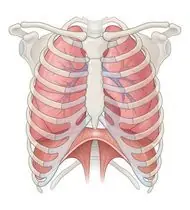
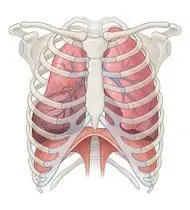
Thoracic Surgery (Lobectomy / Pneumonectomy) — Overview
Post-Thoracic Surgery Rehabilitation (following Lobectomy, Segmentectomy, Wedge Resection, or Pneumonectomy via Posterolateral Thoracotomy or Video-Assisted Thoracoscopic Surgery [VATS]) addresses the acute postoperative triad of 1) Restrictive Ventilatory Reduction & Basal Atelectasis (from general anesthesia, mucociliary depression, pain-induced splinting of the incised hemithorax, and diaphragmatic reflex inhibition), 2) Pleural Space / Chest Tube Drainage Management (evacuating air [apical tube] and fluid [basal tube] so the remaining lung lobes hyperinflate to fill the hemithorax!), and 3) Ipsilateral Shoulder Girdle Dysfunction & Thoracic Scoliosis (from division/retraction of the latissimus dorsi, serratus anterior, and intercostals). Early mobilization (Day 1 out of bed!), Incentive Spirometry, Localized Costal Expansion, and Wound-Splinted Huffing reduce postoperative pulmonary complications (atelectasis/pneumonia) by >50%!
Post-thoracic surgery rehabilitation (recovery after lung lobe removal [lobectomy] or lung surgery [VATS / thoracotomy]) helps your remaining healthy lung tissue expand to fill the chest space, clears mucus cleanly without hurting your stitches, and prevents the shoulder on the operated side from becoming stiff and frozen!
Primary Causes & Biomechanics
Key Points You Should Know
- •Incisional pain + intercostal nerve irritation causing antalgic splinting of the operated hemithorax, reducing tidal volume and sigh breaths by 40–60%
- •Crucial Positioning Difference (Lobectomy vs. Pneumonectomy!): After a Lobectomy, lying on the UNOPERATED side (Operated Lung UP) maximizes expansion of the remaining ipsilateral lobes; however, after a COMPLETE PNEUMONECTOMY (entire lung removed), lying completely flat on the unoperated side (Operated Side UP) for prolonged periods is CONTRAINDICATED in the early postoperative days because it risks bronchopleural fistula fluid spillage into the single remaining lung and mediastinal shift!
- •Division or retraction of the latissimus dorsi and serratus anterior causing ipsilateral frozen shoulder and C-shaped concavity toward the operated side if shoulder ROM is neglected
- •The Pillow-Hug Secret for Pain-Free Clearing ('Splinted Huffing'): After chest surgery, people are afraid to breathe deeply or cough because the ribs feel sore—which lets the bottom of the lung collapse (atelectasis). Whenever you practice your Triflo breathing or 'Huffing', hug a small, firm pillow or folded bath towel tightly against your surgical side! The pillow acts like an external splint that holds the ribs steady and cuts discomfort in half.
- •Don't Freeze Your Shoulder on the Operated Side! Because the incision is near the shoulder blade, it is tempting to hold that arm glued to your side. Moving your arm gently overhead every day (using a stick or your healthy hand to help) prevents a painful frozen shoulder!
- •Chest Tube Bottle Rule in the Hospital: When walking in the hospital hallway with a chest drain, always keep the drainage bottle/box BELOW the level of your chest/hips so fluid never flows backward toward your chest.
Assessment Methods
1. Goniometric ROM & Postural / Kinematic Analysis
Auscultation (breath sounds over remaining lobes, subcutaneous emphysema palpation), Chest Tube Under-Water Seal Assessment (swinging/tidaling vs. air-leak bubbling; NEVER lift the drainage bottle above chest level!), and Pulse Oximetry (SpO2).
2. Special Clinical Provocation & Neurological/Functional Tests
Segmental Chest Expansion Symmetry, Ipsilateral Shoulder Flexion/Abduction Goniometry, VAS Incisional Pain Score (at rest vs. during cough), and 6-Minute Walk Test.
3. Standardized Clinical Outcome Scales & Imaging Criteria
SpO2 (%), Incentive Spirometry Volume (mL), Ipsilateral Shoulder ROM (0–180°), and 6MWT.
1. Range of Motion & Posture Check
Your physiotherapist gently evaluates how comfortably and smoothly your thoracic cage (intercostal muscles, ribs, pleura), resected pulmonary parenchyma (Lobectomy or Pneumonectomy), and ipsilateral shoulder girdle moves and checks your overall posture.
2. Muscle Strength & Functional Movement Check
Your muscle balance, walking or reaching comfort, and specific gentle movement tests are evaluated without triggering sharp pain.
3. Typical Symptoms & Daily Impact Review
Incisional soreness along the side of the chest or ribcage (much milder after keyhole VATS than open thoracotomy), shallow breathing tendency, and protective leaning of the trunk toward the operated side.
Treatment Options & Phase-Based Protocol
✨ Enriched GIF Exercise & Precaution GuidePhase 1: Acute Symptom Modulation, Tissue Protection & Early Activation
- •Phase 1 Clinical Focus & Tissue Protection: Phase 1 — POD 1 Early Upright Mobilization, Triflo & Wound-Splinted Huffing Phase: Sit upright in an armchair and walk in the hallway on Post-Op Day 1 (keeping chest drainage bottles BELOW hip/chest level!), perform 10 slow deep breaths every hour with the Incentive Spirometer (Triflo: 3–5s end-inspiratory hold!), Localized Tactile Basal Costal Expansion, Wound-Splinted Huffing (hugging a folded pillow/towel firmly over the thoracotomy incision/chest tube site while doing an open-glottis 'Huff'!), and hourly ankle pumps.
- •Pain, Edema & Neuromuscular Modulation: Targeted physical modalities, relative load management, and early protected mobility of the thoracic cage (intercostal muscles, ribs, pleura), resected pulmonary parenchyma (Lobectomy or Pneumonectomy), and ipsilateral shoulder girdle without provoking mechanical or inflammatory irritation.
- •Proximal & Distal Kinetic Chain Maintenance: Maintain active mobility and circulation in adjacent joints while protecting the primary healing structures in Post-Thoracic Surgery (Lobectomy / Pneumonectomy) Rehabilitation.
Phase 2: Progressive Mobility, Motor Control & Targeted Strengthening
- •Phase 2 Progressive Mobilization & Motor Control: Phase 2 — Ipsilateral Shoulder ROM & Postural Symmetry Phase (Preventing Frozen Shoulder!): Starting on POD 1–2, perform active-assisted / wand-assisted shoulder flexion and abduction on the operated side (taking care not to pull on the chest tube skin suture!), scapular retraction, and mirror-guided upright trunk alignment (preventing leaning into the incision!).
- •Biomechanical Alignment & Co-Contraction: Restore balanced agonist-antagonist force couples, joint centration, and multi-planar neuromuscular control across the thoracic cage (intercostal muscles, ribs, pleura), resected pulmonary parenchyma (Lobectomy or Pneumonectomy), and ipsilateral shoulder girdle.
- •Myofascial Extensibility & Endurance: Address secondary compensatory tightness and build local muscular endurance within safe, symptom-free biomechanical parameters.
Phase 3: Functional Integration, Proprioception & Long-Term Prevention
- •Phase 3 Functional Integration & Long-Term Prevention: Phase 3 — Post-Discharge Pulmonary Expansion & Aerobic Reconditioning Phase (Weeks 2–8): Thoracic expansion with bilateral arm elevation, diaphragmatic & pursed-lip breathing, chair sit-to-stand, and daily progressive walking (building to 30–40 min/day).
- •Proprioceptive Balance & Dynamic Loading: Progress to task-specific closed-chain, balance, and functional movement patterns tailored to daily life, occupational, or athletic demands.
- •Self-Management & Relapse Prophylaxis: Establish lifelong ergonomic habits, home exercise maintenance, and early warning-sign awareness to prevent recurrence.
Step 1: Calming Pain, Protecting the Area & Gentle Starter Motion
- •The Pillow-Hug Secret for Pain-Free Clearing ('Splinted Huffing'): After chest surgery, people are afraid to breathe deeply or cough because the ribs feel sore—which lets the bottom of the lung collapse (atelectasis). Whenever you practice your Triflo breathing or 'Huffing', hug a small, firm pillow or folded bath towel tightly against your surgical side! The pillow acts like an external splint that holds the ribs steady and cuts discomfort in half.
- •Calm Protection & Gentle Start: During the initial stage of Post-Lung Surgery (Lobectomy / Pneumonectomy) Rehabilitation, avoid painful overloading and perform the gentle, pain-free starter movements shown below to support circulation and comfort.
- •Respecting Your Body's Signals: Every movement should stay within a comfortable, non-painful zone—never force through sharp or radiating pain.
Step 2: Restoring Flexibility & Building Supporting Muscle Strength
- •Don't Freeze Your Shoulder on the Operated Side! Because the incision is near the shoulder blade, it is tempting to hold that arm glued to your side. Moving your arm gently overhead every day (using a stick or your healthy hand to help) prevents a painful frozen shoulder!
- •Step-by-Step Flexibility & Support: As acute sensitivity settles, gradually build mobility and strengthen the supporting muscles around the joint at a steady, controlled pace.
- •Posture & Breathing Coordination: Keep your posture upright and breathe smoothly (never hold your breath!) during every repetition.
Step 3: Safe Daily Habits, Stamina & Preventing Recurrence
- •Chest Tube Bottle Rule in the Hospital: When walking in the hospital hallway with a chest drain, always keep the drainage bottle/box BELOW the level of your chest/hips so fluid never flows backward toward your chest.
- •Confident Return to Daily Life: Integrate your stronger muscles and improved balance into walking, stairs, work, and recreational activities.
- •Preventing Future Flare-Ups: Continue your core protective habits and key maintenance exercises even after symptoms resolve.
Animated (GIF) Therapeutic Exercise Guide
Animated clinical exercise protocol with biomechanical angles, target muscle groups, and dosage parameters (Click image to enlarge)
Step-by-step animated exercise demonstrations you can safely perform at home (Click image to enlarge)
 🔍 Enlarge
1. Supine Wand-Assisted (Cane) Active-Assisted Shoulder Elevation
1. Lying Cane/Stick-Assisted Two-Handed Arm Raise
In supine (scapula stabilized against the plinth and gravity eliminated in the final arc), the unaffected upper extremity guides a wand/stick to elevate the affected shoulder smoothly without deltoid-induced superior humeral shear. Specifically indicated in Post-Thoracic Surgery (Lobectomy / Pneumonectomy) Rehabilitation rehabilitation to optimize thoracic cage (intercostal muscles, ribs, pleura), resected pulmonary parenchyma (Lobectomy or Pneumonectomy), and ipsilateral shoulder girdle biomechanics and neuromuscular control.
Lie on your back holding a light stick or cane with both hands. Use your healthy arm to gently guide both arms up overhead as far as comfortable, hold for 3 seconds, and slowly lower. Perform smoothly within a comfortable, pain-free range to support your Post-Lung Surgery (Lobectomy / Pneumonectomy) Rehabilitation recovery.
 🔍 Enlarge
2. Scapulothoracic Retraction & Depression (Middle/Lower Trapezius & Rhomboids)
2. Shoulder Blade Squeeze (Postural Alignment)
Adduction and depression of the scapulae via the middle/lower trapezius and rhomboids while inhibiting upper trapezius overactivity. Corrects anterior scapular tilt, widens the subacromial outlet, and unloads the anterior thoracic column. Specifically indicated in Post-Thoracic Surgery (Lobectomy / Pneumonectomy) Rehabilitation rehabilitation to optimize thoracic cage (intercostal muscles, ribs, pleura), resected pulmonary parenchyma (Lobectomy or Pneumonectomy), and ipsilateral shoulder girdle biomechanics and neuromuscular control.
Sit or stand tall. Keep your shoulders relaxed away from your ears, gently draw your shoulder blades together and slightly downward toward your back pockets, hold for 5 seconds, and release. Perform smoothly within a comfortable, pain-free range to support your Post-Lung Surgery (Lobectomy / Pneumonectomy) Rehabilitation recovery.
 🔍 Enlarge
3. Rhythmic Active Ankle Dorsiflexion & Plantarflexion Pumping (Venous/Edema Pump)
3. Ankle Toe-Pulls and Pointing (Circulation & Swelling Pump)
Rhythmic alternating contraction of the tibialis anterior and gastrocnemius-soleus complex. Activates the deep venous calf pump to prevent deep vein thrombosis (DVT), clears distal edema, and maintains talocrural mobility. Specifically indicated in Post-Thoracic Surgery (Lobectomy / Pneumonectomy) Rehabilitation rehabilitation to optimize thoracic cage (intercostal muscles, ribs, pleura), resected pulmonary parenchyma (Lobectomy or Pneumonectomy), and ipsilateral shoulder girdle biomechanics and neuromuscular control.
While lying down or sitting with your legs supported, pull your toes and feet firmly upward toward your shins, hold for 3 seconds, then point them downward like pressing a gas pedal. Perform smoothly within a comfortable, pain-free range to support your Post-Lung Surgery (Lobectomy / Pneumonectomy) Rehabilitation recovery.
 🔍 Enlarge
4. Functional Closed-Kinetic-Chain Chair Transfer (Sit-to-Stand Biomechanics)
4. Controlled Chair Sit-to-Stand Transfer
Controlled transition from sitting to standing and eccentric lowering back to the chair with symmetrical weight distribution, anterior trunk inclination ('nose over toes'), and neutral frontal knee alignment. Specifically indicated in Post-Thoracic Surgery (Lobectomy / Pneumonectomy) Rehabilitation rehabilitation to optimize thoracic cage (intercostal muscles, ribs, pleura), resected pulmonary parenchyma (Lobectomy or Pneumonectomy), and ipsilateral shoulder girdle biomechanics and neuromuscular control.
Sit near the front of a sturdy chair with your feet hip-width apart. Lean slightly forward and push evenly through both heels to stand up tall, then slowly lower yourself back down over 3 seconds. Perform smoothly within a comfortable, pain-free range to support your Post-Lung Surgery (Lobectomy / Pneumonectomy) Rehabilitation recovery.
 🔍 Enlarge
5. Diaphragmatic & Pursed-Lip Breathing (PLB — Autonomic & Ventilatory Control)
5. Calm Belly Breathing with Pursed-Lip Exhale
Slow nasal inhalation expanding the lower ribcage and abdomen (while relaxing accessory neck/shoulder muscles), followed by prolonged expiration through pursed lips at a 1:2 ratio. Prevents dynamic airway collapse, improves basal ventilation, and reduces sympathetic tone. Specifically indicated in Post-Thoracic Surgery (Lobectomy / Pneumonectomy) Rehabilitation rehabilitation to optimize thoracic cage (intercostal muscles, ribs, pleura), resected pulmonary parenchyma (Lobectomy or Pneumonectomy), and ipsilateral shoulder girdle biomechanics and neuromuscular control.
Sit comfortably and place one hand on your chest and the other on your belly. Breathe in slowly through your nose for 2–3 seconds so your belly gently rises, then breathe out slowly for 4–6 seconds through pursed lips as if flickering a candle. Perform smoothly within a comfortable, pain-free range to support your Post-Lung Surgery (Lobectomy / Pneumonectomy) Rehabilitation recovery.
 🔍 Enlarge
6. Thoracic Expansion Exercise (TEE) with Bilateral Arm Elevation & 3s Inspiratory Hold
6. Chest-Opening Deep Breath with Arm Raise
Synchronizing deep nasal inspiration with bilateral shoulder flexion/abduction and a 3-second end-inspiratory hold before passive/pursed-lip expiration. Opens collateral ventilation channels to prevent basal atelectasis and maintains costovertebral compliance. Specifically indicated in Post-Thoracic Surgery (Lobectomy / Pneumonectomy) Rehabilitation rehabilitation to optimize thoracic cage (intercostal muscles, ribs, pleura), resected pulmonary parenchyma (Lobectomy or Pneumonectomy), and ipsilateral shoulder girdle biomechanics and neuromuscular control.
While sitting upright, breathe in deeply through your nose while opening your arms upward and outward to expand your ribcage. Hold the breath inside for 3 seconds, then exhale slowly while lowering your arms. Perform smoothly within a comfortable, pain-free range to support your Post-Lung Surgery (Lobectomy / Pneumonectomy) Rehabilitation recovery.
Movements to Avoid & Strict Precautions
1. Lifting the Chest Tube Drainage Bottle Above Chest/Waist Level or Kinking the Tube
1. NEVER lift your chest drainage bottle above hip/chest level when getting out of bed or walking!
2. Holding Your Operated Arm Glued to Your Side and Leaning Into the Incision (Causes Frozen Shoulder & Scoliosis!)
2. Keeping your operated arm pinned to your side or leaning crookedly toward the stitches
3. Lying Flat on the Unoperated Side in the First 2 Weeks After a Total Pneumonectomy (Whole Lung Removal)
3. After a total pneumonectomy, never lie completely flat on your remaining lung side early on
4. Lifting Heavy Objects (>3–5 kg) or Pushing/Pulling Heavy Loads in the First 4–6 Weeks
4. Lifting heavy groceries, suitcases, or vacuuming heavily during the first 4–6 weeks
Thoracic Surgery (Lobectomy / Pneumonectomy) Rehabilitation — Video Guide
Click directly on any video to open and watch in a window, or review details via 📋 Summary & Options.
Condition Overview Video (1 Video)
Summary of pathophysiology, biomechanics, and clinical presentation
What the condition is, why it develops, and its basic mechanism

What Is Thoracic Surgery (Lobectomy / Pneumonectomy)? Postoperative Respiratory Rehab
Post-Thoracic Surgery Rehabilitation (following Lobectomy, Segmentectomy, Wedge Resection, or Pneumonectomy via Posterolateral Thoracotomy or Video-Assisted Thoracoscopic Surgery [VATS]) addresses the acute postoperative triad of 1) Restrictive Ventilatory Reduction & Basal Atelectasis (from general anesthesia, mucociliary depression, pain-induced splinting of the incised hemithorax, and diaphragmatic reflex inhibition), 2) Pleural Space / Chest Tube Drainage Management (evacuating air [apical tube] and fluid [basal tube] so the remaining lung lobes hyperinflate to fill the hemithorax!), and 3) Ipsilateral Shoulder Girdle Dysfunction & Thoracic Scoliosis (from division/retraction of the latissimus dorsi, serratus anterior, and intercostals). Early mobilization (Day 1 out of bed!), Incentive Spirometry, Localized Costal Expansion, and Wound-Splinted Huffing reduce postoperative pulmonary complications (atelectasis/pneumonia) by >50%!
Post-thoracic surgery rehabilitation (recovery after lung lobe removal [lobectomy] or lung surgery [VATS / thoracotomy]) helps your remaining healthy lung tissue expand to fill the chest space, clears mucus cleanly without hurting your stitches, and prevents the shoulder on the operated side from becoming stiff and frozen!
Treatment and Exercise Videos
Phase-based physiotherapy protocols, mobilization, and therapeutic exercises
Step-by-step recovery and safe home exercise applications

Incentive Spirometry (Triflo) and Lung Expansion Exercises After Thoracic Surgery
Phase 1: Acute Symptom Modulation, Tissue Protection & Early Activation: Phase 1 Clinical Focus & Tissue Protection: Phase 1 — POD 1 Early Upright Mobilization, Triflo & Wound-Splinted Huffing Phase: Sit upright in an armchair and walk in the hallway on Post-Op Day 1 (keeping chest drainage bottles BELOW hip/chest level!), perform 10 slow deep breaths every hour with the Incentive Spirometer (Triflo: 3–5s end-inspiratory hold!), Localized Tactile Basal Costal Expansion, Wound-Splinted Huffing (hugging a folded pillow/towel firmly over the thoracotomy incision/chest tube site while doing an open-glottis 'Huff'!), and hourly ankle pumps.
Step 1: Calming Pain, Protecting the Area & Gentle Starter Motion: The Pillow-Hug Secret for Pain-Free Clearing ('Splinted Huffing'): After chest surgery, people are afraid to breathe deeply or cough because the ribs feel sore—which lets the bottom of the lung collapse (atelectasis). Whenever you practice your Triflo breathing or 'Huffing', hug a small, firm pillow or folded bath towel tightly against your surgical side! The pillow acts like an external splint that holds the ribs steady and cuts discomfort in half.
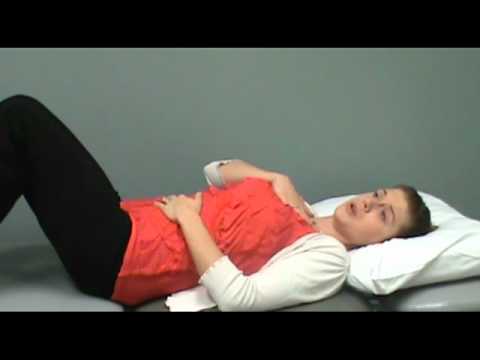
Diaphragmatic Breathing, Thoracic Cage Expansion, and Controlled Breathing Training
Phase 2: Progressive Mobility, Motor Control & Targeted Strengthening: Phase 2 Progressive Mobilization & Motor Control: Phase 2 — Ipsilateral Shoulder ROM & Postural Symmetry Phase (Preventing Frozen Shoulder!): Starting on POD 1–2, perform active-assisted / wand-assisted shoulder flexion and abduction on the operated side (taking care not to pull on the chest tube skin suture!), scapular retraction, and mirror-guided upright trunk alignment (preventing leaning into the incision!).
Step 2: Restoring Flexibility & Building Supporting Muscle Strength: Don't Freeze Your Shoulder on the Operated Side! Because the incision is near the shoulder blade, it is tempting to hold that arm glued to your side. Moving your arm gently overhead every day (using a stick or your healthy hand to help) prevents a painful frozen shoulder!
Clinical Assessment, Goniometry & Special Test Videos
Displayed only in Healthcare Professional mode (hidden in Patient mode)

Systematic Respiratory Physical Examination (Inspection, Palpation, Percussion, Auscultation)
Goniometric ROM & Postural / Kinematic Analysis: Auscultation (breath sounds over remaining lobes, subcutaneous emphysema palpation), Chest Tube Under-Water Seal Assessment (swinging/tidaling vs. air-leak bubbling; NEVER lift the drainage bottle above chest level!), and Pulse Oximetry (SpO2).

6-Minute Walk Test (6MWT) — Functional Exercise Capacity Assessment
Special Clinical Provocation & Neurological/Functional Tests: Segmental Chest Expansion Symmetry, Ipsilateral Shoulder Flexion/Abduction Goniometry, VAS Incisional Pain Score (at rest vs. during cough), and 6-Minute Walk Test.