Pulmonary Hypertension (PH)High Blood Pressure in Lung Arteries (Pulmonary Hypertension)
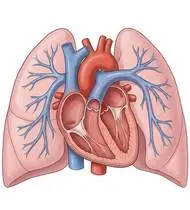
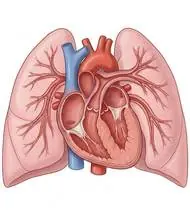
Pulmonary Hypertension (PH) — Overview
Pulmonary Hypertension (PH — WHO Groups 1–5, including Pulmonary Arterial Hypertension [PAH] and Chronic Thromboembolic PH [CTEPH]) is a severe hemodynamic condition defined by a mean Pulmonary Artery Pressure (mPAP) >20 mmHg at rest with elevated Pulmonary Vascular Resistance (PVR) due to pulmonary arteriolar vasoconstriction, medial hypertrophy, and plexiform remodeling. Because the thin-walled Right Ventricle (RV) must pump against high afterload, cardiac output cannot increase adequately during heavy exertion! GOLD STANDARD SAFETY RULES IN PH REHABILITATION: Specialized, closely monitored low-intensity aerobic and peripheral muscle rehabilitation is a Class I recommendation (ESC/ERS Guidelines) because it improves skeletal muscle oxygen extraction without raising pulmonary pressure—PROVIDED the patient STRICTLY AVOIDS: 1) The Valsalva Maneuver (breath-holding), 2) Overhead bilateral arm exercises above shoulder level, 3) SpO2 dropping <90% (hypoxia triggers immediate Hypoxic Pulmonary Vasoconstriction [Euler-Liljestrand reflex]!), and 4) Syncope/presyncope/dizziness!
Pulmonary hypertension (PH / high blood pressure in the lung arteries) is a condition in which the blood vessels carrying blood from the right side of the heart into the lungs become narrowed and stiff, making the right side of the heart work harder. While strenuous exercise used to be feared in the past, modern European Heart & Lung Guidelines prove that gentle, carefully paced breathing and single-leg exercises (at a light '3 out of 10' effort) make your leg muscles much more efficient so everyday walking feels easier—as long as you follow 4 strict safety rules!
Primary Causes & Biomechanics
Key Points You Should Know
- •Endothelial dysfunction (reduced nitric oxide/prostacyclin, elevated endothelin-1) causing pulmonary arteriolar remodeling and high right-ventricular afterload
- •Why Hypoxia Is Dangerous in PH (Euler-Liljestrand Reflex): Unlike systemic arteries (which dilate in low oxygen), pulmonary arteries CONSTRICT fiercely when alveolar oxygen drops (SpO2 <90%)—instantly spiking pulmonary artery pressure and straining the right heart!
- •Why Valsalva & Overhead Arm Work Are Forbidden: Breath-holding (Valsalva) collapses vena cava return and then surges right ventricular preload/afterload, risking acute syncope!
- •Safety Rule #1 — Count Out Loud on Every Rep (Zero Breath-Holding!): Holding your breath while straining (Valsalva maneuver) causes sudden pressure swings on the right side of the heart. Always count out loud ('1, 2, 3, 4') or breathe out through pursed lips whenever you move a leg or stand up!
- •Safety Rule #2 — Keep Your Hands Below Shoulder Level: Lifting both arms high overhead makes the heart work much harder. Do your shoulder-blade and posture exercises with your elbows relaxed down by your ribs.
- •Safety Rule #3 — Keep Oxygen ≥90% & Heart Rate Under 110–120 bpm: Low oxygen causes lung blood vessels to tighten up immediately! Always monitor your finger pulse oximeter, keep your effort gentle (able to talk easily), and stop immediately at the slightest hint of dizziness.
Assessment Methods
1. Goniometric ROM & Postural / Kinematic Analysis
WHO Functional Class (I to IV), 6-Minute Walk Test (6MWT — primary clinical endpoint in PH, with continuous SpO2 and Heart Rate monitoring!), and Borg Dyspnea Score (0–10).
2. Special Clinical Provocation & Neurological/Functional Tests
NT-proBNP / Echocardiographic Right Ventricular function (TAPSE, TRV) review, Orthostatic & Exercise Blood Pressure, and screening for right heart failure signs (jugular venous distension, hepatomegaly, peripheral ankle edema).
3. Standardized Clinical Outcome Scales & Imaging Criteria
WHO Functional Class (I–IV), 6MWT Distance (m), Borg RPE (target 3–4 / 10 light-to-moderate only!), SpO2 (strictly ≥90%!), and Heart Rate (strictly <110–120 bpm!).
1. Range of Motion & Posture Check
Your physiotherapist gently evaluates how comfortably and smoothly your pulmonary arterial vascular bed (elevated Pulmonary Vascular Resistance — PVR and mean Pulmonary Artery Pressure >20 mmHg) and right ventricle moves and checks your overall posture.
2. Muscle Strength & Functional Movement Check
Your muscle balance, walking or reaching comfort, and specific gentle movement tests are evaluated without triggering sharp pain.
3. Typical Symptoms & Daily Impact Review
Exertional Dyspnea (Shortness of Breath on Activity) out of proportion to routine lung spirometry, accompanied by rapid fatigue and weakness.
Treatment Options & Phase-Based Protocol
✨ Enriched GIF Exercise & Precaution GuidePhase 1: Acute Symptom Modulation, Tissue Protection & Early Activation
- •Phase 1 Clinical Focus & Tissue Protection: Phase 1 — Non-Valsalva Diaphragmatic Breathing & Gentle Seated Mobility Phase: Strict stable medical therapy required first! Perform relaxed diaphragmatic & pursed-lip breathing (counting out loud during every movement to guarantee ZERO breath-holding!), seated ankle pumps, and scapular retraction (keeping arms BELOW heart/shoulder level!).
- •Pain, Edema & Neuromuscular Modulation: Targeted physical modalities, relative load management, and early protected mobility of the pulmonary arterial vascular bed (elevated Pulmonary Vascular Resistance — PVR and mean Pulmonary Artery Pressure >20 mmHg) and right ventricle without provoking mechanical or inflammatory irritation.
- •Proximal & Distal Kinetic Chain Maintenance: Maintain active mobility and circulation in adjacent joints while protecting the primary healing structures in Pulmonary Hypertension.
Phase 2: Progressive Mobility, Motor Control & Targeted Strengthening
- •Phase 2 Progressive Mobilization & Motor Control: Phase 2 — Low-Intensity Interval Single-Limb Strengthening Phase: Train one limb at a time with low resistance (500g–1kg) and 1–2 min full rest breaks between sets so cardiac output demand never spikes! Perform unloaded supine heel slides, seated single-leg terminal knee extension (counting out loud!), and submaximal side-lying hip abduction.
- •Biomechanical Alignment & Co-Contraction: Restore balanced agonist-antagonist force couples, joint centration, and multi-planar neuromuscular control across the pulmonary arterial vascular bed (elevated Pulmonary Vascular Resistance — PVR and mean Pulmonary Artery Pressure >20 mmHg) and right ventricle.
- •Myofascial Extensibility & Endurance: Address secondary compensatory tightness and build local muscular endurance within safe, symptom-free biomechanical parameters.
Phase 3: Functional Integration, Proprioception & Long-Term Prevention
- •Phase 3 Functional Integration & Long-Term Prevention: Phase 3 — Monitored Level-Ground Walking / Cycling & Energy Conservation Phase: 10–25 min of flat level-ground walking or unloaded stationary cycling at Borg 3/10 (keeping Heart Rate <110–120 bpm and SpO2 ≥90% with supplemental O2 as needed!), and seated ADL energy conservation.
- •Proprioceptive Balance & Dynamic Loading: Progress to task-specific closed-chain, balance, and functional movement patterns tailored to daily life, occupational, or athletic demands.
- •Self-Management & Relapse Prophylaxis: Establish lifelong ergonomic habits, home exercise maintenance, and early warning-sign awareness to prevent recurrence.
Step 1: Calming Pain, Protecting the Area & Gentle Starter Motion
- •Safety Rule #1 — Count Out Loud on Every Rep (Zero Breath-Holding!): Holding your breath while straining (Valsalva maneuver) causes sudden pressure swings on the right side of the heart. Always count out loud ('1, 2, 3, 4') or breathe out through pursed lips whenever you move a leg or stand up!
- •Calm Protection & Gentle Start: During the initial stage of High Blood Pressure in Lung Arteries, avoid painful overloading and perform the gentle, pain-free starter movements shown below to support circulation and comfort.
- •Respecting Your Body's Signals: Every movement should stay within a comfortable, non-painful zone—never force through sharp or radiating pain.
Step 2: Restoring Flexibility & Building Supporting Muscle Strength
- •Safety Rule #2 — Keep Your Hands Below Shoulder Level: Lifting both arms high overhead makes the heart work much harder. Do your shoulder-blade and posture exercises with your elbows relaxed down by your ribs.
- •Step-by-Step Flexibility & Support: As acute sensitivity settles, gradually build mobility and strengthen the supporting muscles around the joint at a steady, controlled pace.
- •Posture & Breathing Coordination: Keep your posture upright and breathe smoothly (never hold your breath!) during every repetition.
Step 3: Safe Daily Habits, Stamina & Preventing Recurrence
- •Safety Rule #3 — Keep Oxygen ≥90% & Heart Rate Under 110–120 bpm: Low oxygen causes lung blood vessels to tighten up immediately! Always monitor your finger pulse oximeter, keep your effort gentle (able to talk easily), and stop immediately at the slightest hint of dizziness.
- •Confident Return to Daily Life: Integrate your stronger muscles and improved balance into walking, stairs, work, and recreational activities.
- •Preventing Future Flare-Ups: Continue your core protective habits and key maintenance exercises even after symptoms resolve.
Animated (GIF) Therapeutic Exercise Guide
Animated clinical exercise protocol with biomechanical angles, target muscle groups, and dosage parameters (Click image to enlarge)
Step-by-step animated exercise demonstrations you can safely perform at home (Click image to enlarge)
 🔍 Enlarge
1. Diaphragmatic & Pursed-Lip Breathing (PLB — Autonomic & Ventilatory Control)
1. Calm Belly Breathing with Pursed-Lip Exhale
Slow nasal inhalation expanding the lower ribcage and abdomen (while relaxing accessory neck/shoulder muscles), followed by prolonged expiration through pursed lips at a 1:2 ratio. Prevents dynamic airway collapse, improves basal ventilation, and reduces sympathetic tone. Specifically indicated in Pulmonary Hypertension rehabilitation to optimize pulmonary arterial vascular bed (elevated Pulmonary Vascular Resistance — PVR and mean Pulmonary Artery Pressure >20 mmHg) and right ventricle biomechanics and neuromuscular control.
Sit comfortably and place one hand on your chest and the other on your belly. Breathe in slowly through your nose for 2–3 seconds so your belly gently rises, then breathe out slowly for 4–6 seconds through pursed lips as if flickering a candle. Perform smoothly within a comfortable, pain-free range to support your High Blood Pressure in Lung Arteries recovery.
 🔍 Enlarge
2. Rhythmic Active Ankle Dorsiflexion & Plantarflexion Pumping (Venous/Edema Pump)
2. Ankle Toe-Pulls and Pointing (Circulation & Swelling Pump)
Rhythmic alternating contraction of the tibialis anterior and gastrocnemius-soleus complex. Activates the deep venous calf pump to prevent deep vein thrombosis (DVT), clears distal edema, and maintains talocrural mobility. Specifically indicated in Pulmonary Hypertension rehabilitation to optimize pulmonary arterial vascular bed (elevated Pulmonary Vascular Resistance — PVR and mean Pulmonary Artery Pressure >20 mmHg) and right ventricle biomechanics and neuromuscular control.
While lying down or sitting with your legs supported, pull your toes and feet firmly upward toward your shins, hold for 3 seconds, then point them downward like pressing a gas pedal. Perform smoothly within a comfortable, pain-free range to support your High Blood Pressure in Lung Arteries recovery.
 🔍 Enlarge
3. Seated Terminal Knee Extension (Open/Closed Chain VMO Focus)
3. Seated Knee Straightening & Hold
Concentric extension of the knee to the final 30°–0° terminal arc with isometric hold and ankle dorsiflexion. Restores terminal knee extension torque and stabilizes dynamic patellofemoral tracking. Specifically indicated in Pulmonary Hypertension rehabilitation to optimize pulmonary arterial vascular bed (elevated Pulmonary Vascular Resistance — PVR and mean Pulmonary Artery Pressure >20 mmHg) and right ventricle biomechanics and neuromuscular control.
Sit upright in a chair and slowly straighten your knee completely while pulling your toes toward you. Feel the front thigh muscle tighten, hold for 5 seconds, and slowly lower your foot. Perform smoothly within a comfortable, pain-free range to support your High Blood Pressure in Lung Arteries recovery.
 🔍 Enlarge
4. Towel-Supported Glenohumeral External Rotation (Infraspinatus & Teres Minor)
4. Outward Forearm Rotation with Rolled Towel Under Elbow
External rotation performed at 90° elbow flexion with a rolled towel placed between the elbow and trunk (20°–30° scaption). Enhances infraspinatus/teres minor recruitment while preventing superior humeral head migration and deltoid shear. Specifically indicated in Pulmonary Hypertension rehabilitation to optimize pulmonary arterial vascular bed (elevated Pulmonary Vascular Resistance — PVR and mean Pulmonary Artery Pressure >20 mmHg) and right ventricle biomechanics and neuromuscular control.
Place a small rolled towel between your elbow and your side with your elbow bent at 90 degrees. Keeping your elbow pressed gently against the towel, rotate your forearm outward, hold for 3 seconds, and return slowly. Perform smoothly within a comfortable, pain-free range to support your High Blood Pressure in Lung Arteries recovery.
 🔍 Enlarge
5. Scapulothoracic Retraction & Depression (Middle/Lower Trapezius & Rhomboids)
5. Shoulder Blade Squeeze (Postural Alignment)
Adduction and depression of the scapulae via the middle/lower trapezius and rhomboids while inhibiting upper trapezius overactivity. Corrects anterior scapular tilt, widens the subacromial outlet, and unloads the anterior thoracic column. Specifically indicated in Pulmonary Hypertension rehabilitation to optimize pulmonary arterial vascular bed (elevated Pulmonary Vascular Resistance — PVR and mean Pulmonary Artery Pressure >20 mmHg) and right ventricle biomechanics and neuromuscular control.
Sit or stand tall. Keep your shoulders relaxed away from your ears, gently draw your shoulder blades together and slightly downward toward your back pockets, hold for 5 seconds, and release. Perform smoothly within a comfortable, pain-free range to support your High Blood Pressure in Lung Arteries recovery.
 🔍 Enlarge
6. Functional Closed-Kinetic-Chain Chair Transfer (Sit-to-Stand Biomechanics)
6. Controlled Chair Sit-to-Stand Transfer
Controlled transition from sitting to standing and eccentric lowering back to the chair with symmetrical weight distribution, anterior trunk inclination ('nose over toes'), and neutral frontal knee alignment. Specifically indicated in Pulmonary Hypertension rehabilitation to optimize pulmonary arterial vascular bed (elevated Pulmonary Vascular Resistance — PVR and mean Pulmonary Artery Pressure >20 mmHg) and right ventricle biomechanics and neuromuscular control.
Sit near the front of a sturdy chair with your feet hip-width apart. Lean slightly forward and push evenly through both heels to stand up tall, then slowly lower yourself back down over 3 seconds. Perform smoothly within a comfortable, pain-free range to support your High Blood Pressure in Lung Arteries recovery.
Movements to Avoid & Strict Precautions
1. Holding Your Breath (Valsalva), Heavy Lifting, Planks, or Isometric Straining (Can Trigger Acute Syncope!)
1. NEVER hold your breath while moving, lifting, or using the bathroom, and never do planks or heavy lifting!
2. Raising Both Arms High Overhead Repeatedly or Carrying Heavy Groceries
2. Doing overhead arm exercises or carrying heavy bags
3. Exercising If Finger Oxygen (SpO2) Drops Below 90% or Heart Rate Exceeds 115–120 bpm
3. Continuing to walk if your pulse oximeter drops below 90% or your heart rate goes over 115–120 bpm
4. Hot Baths, Saunas, High Altitude (>1,500 m / 5,000 ft), or Unprescribed Flights Without Oxygen
4. Using hot tubs/saunas (drops blood pressure!) or traveling to high mountain altitudes without medical oxygen clearance
Pulmonary Hypertension (PH) — Video Guide
Click directly on any video to open and watch in a window, or review details via 📋 Summary & Options.
Condition Overview Video (1 Video)
Summary of pathophysiology, biomechanics, and clinical presentation
What the condition is, why it develops, and its basic mechanism
What Is Pulmonary Hypertension (High Blood Pressure in Lung Vessels)?
Pulmonary Hypertension (PH — WHO Groups 1–5, including Pulmonary Arterial Hypertension [PAH] and Chronic Thromboembolic PH [CTEPH]) is a severe hemodynamic condition defined by a mean Pulmonary Artery Pressure (mPAP) >20 mmHg at rest with elevated Pulmonary Vascular Resistance (PVR) due to pulmonary arteriolar vasoconstriction, medial hypertrophy, and plexiform remodeling. Because the thin-walled Right Ventricle (RV) must pump against high afterload, cardiac output cannot increase adequately during heavy exertion! GOLD STANDARD SAFETY RULES IN PH REHABILITATION: Specialized, closely monitored low-intensity aerobic and peripheral muscle rehabilitation is a Class I recommendation (ESC/ERS Guidelines) because it improves skeletal muscle oxygen extraction without raising pulmonary pressure—PROVIDED the patient STRICTLY AVOIDS: 1) The Valsalva Maneuver (breath-holding), 2) Overhead bilateral arm exercises above shoulder level, 3) SpO2 dropping <90% (hypoxia triggers immediate Hypoxic Pulmonary Vasoconstriction [Euler-Liljestrand reflex]!), and 4) Syncope/presyncope/dizziness!
Pulmonary hypertension (PH / high blood pressure in the lung arteries) is a condition in which the blood vessels carrying blood from the right side of the heart into the lungs become narrowed and stiff, making the right side of the heart work harder. While strenuous exercise used to be feared in the past, modern European Heart & Lung Guidelines prove that gentle, carefully paced breathing and single-leg exercises (at a light '3 out of 10' effort) make your leg muscles much more efficient so everyday walking feels easier—as long as you follow 4 strict safety rules!
Treatment and Exercise Videos
Phase-based physiotherapy protocols, mobilization, and therapeutic exercises
Step-by-step recovery and safe home exercise applications

Controlled Diaphragmatic and Breathing Exercises for Cardiopulmonary Relief
Phase 1: Acute Symptom Modulation, Tissue Protection & Early Activation: Phase 1 Clinical Focus & Tissue Protection: Phase 1 — Non-Valsalva Diaphragmatic Breathing & Gentle Seated Mobility Phase: Strict stable medical therapy required first! Perform relaxed diaphragmatic & pursed-lip breathing (counting out loud during every movement to guarantee ZERO breath-holding!), seated ankle pumps, and scapular retraction (keeping arms BELOW heart/shoulder level!).
Step 1: Calming Pain, Protecting the Area & Gentle Starter Motion: Safety Rule #1 — Count Out Loud on Every Rep (Zero Breath-Holding!): Holding your breath while straining (Valsalva maneuver) causes sudden pressure swings on the right side of the heart. Always count out loud ('1, 2, 3, 4') or breathe out through pursed lips whenever you move a leg or stand up!
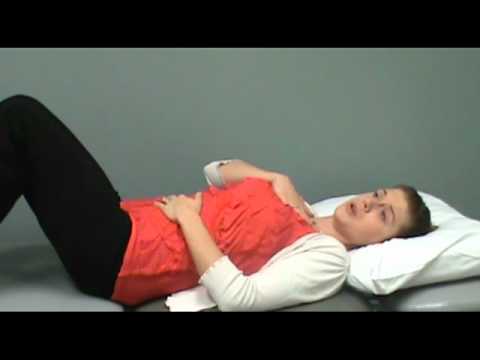
Diaphragmatic Breathing (Abdominal Breathing) Instruction and Clinical Application
Phase 2: Progressive Mobility, Motor Control & Targeted Strengthening: Phase 2 Progressive Mobilization & Motor Control: Phase 2 — Low-Intensity Interval Single-Limb Strengthening Phase: Train one limb at a time with low resistance (500g–1kg) and 1–2 min full rest breaks between sets so cardiac output demand never spikes! Perform unloaded supine heel slides, seated single-leg terminal knee extension (counting out loud!), and submaximal side-lying hip abduction.
Step 2: Restoring Flexibility & Building Supporting Muscle Strength: Safety Rule #2 — Keep Your Hands Below Shoulder Level: Lifting both arms high overhead makes the heart work much harder. Do your shoulder-blade and posture exercises with your elbows relaxed down by your ribs.
Clinical Assessment, Goniometry & Special Test Videos
Displayed only in Healthcare Professional mode (hidden in Patient mode)

Why and How Is the 6-Minute Walk Test (6MWT) Performed? Functional Capacity Assessment
Goniometric ROM & Postural / Kinematic Analysis: WHO Functional Class (I to IV), 6-Minute Walk Test (6MWT — primary clinical endpoint in PH, with continuous SpO2 and Heart Rate monitoring!), and Borg Dyspnea Score (0–10).

Cardiopulmonary Exercise Testing (CPET) and VO2max Capacity Evaluation
Special Clinical Provocation & Neurological/Functional Tests: NT-proBNP / Echocardiographic Right Ventricular function (TAPSE, TRV) review, Orthostatic & Exercise Blood Pressure, and screening for right heart failure signs (jugular venous distension, hepatomegaly, peripheral ankle edema).