Lymphedema RehabilitationLymphedema (Lymphatic Fluid Swelling in Arm/Leg) (Lymphedema Rehabilitation)
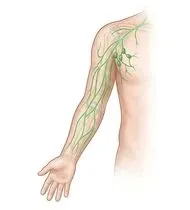
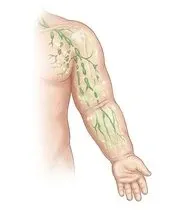
Lymphedema — Overview
Lymphedema is a chronic, progressive accumulation of protein-rich interstitial fluid resulting from impaired Lymphatic Transport Capacity—most commonly Secondary Lymphedema following axillary lymph node dissection / sentinel node biopsy and radiotherapy for breast cancer (upper-extremity lymphedema) or inguinal/pelvic lymphadenectomy for gynecological/urological/melanoma cancer (lower-extremity lymphedema). Unlike low-protein venous/cardiac edema, stagnant high-protein lymph fluid exerts oncotic pressure that draws more water into the interstitium and stimulates chronic fibroblast proliferation, adipose deposition, and brawny non-pitting fibrosis while impairing local T-cell immunity (high risk of acute Cellulitis / Erysipelas!). THE INTERNATIONAL GOLD STANDARD (ISL): 2-Phase Complex Decongestive Physiotherapy (CDT / KDF)—consisting of 1) Manual Lymphatic Drainage (MLD — redirecting lymph across water-shed anastomoses to healthy contralateral/inguinal nodes!), 2) Multi-Layer Short-Stretch Compression Bandaging / Compression Sleeve, 3) Meticulous Skin Care, and 4) Decongestive Muscle-Pump Exercises performed WITH compression on!
Lymphedema (lymphatic fluid swelling in the arm or leg) occurs when lymph nodes or vessels—most often under the arm after breast cancer treatment or in the groin after pelvic surgery—have been removed or irradiated, slowing down the drainage of protein-rich lymph fluid. The empowering truth is that Complex Decongestive Physiotherapy (CDT)—combining deep belly breathing, gentle lymphatic self-massage, wearing your compression sleeve, and rhythmic 'muscle-pump' exercises—redirects that fluid through healthy backup pathways and keeps your limb light, comfortable, and strong!
Primary Causes & Biomechanics
Key Points You Should Know
- •Surgical removal or radiation fibrosis of regional lymph nodes (axillary or inguinal) reducing lymphatic transport capacity below the normal lymphatic load
- •Why Decongestive Exercises MUST Be Performed Wearing the Compression Bandage or Sleeve: Skeletal muscle contraction expands the muscle belly; against a firm external compression bandage/sleeve, this creates high working pressure that pumps lymph through deep and superficial collectors—without external compression, fluid simply expands into the loose skin!
- •Debunking the Old 'Never Lift Anything' Myth (PAL Trial by Schmitz et al.): Landmark NEJM randomized trials proved that slowly progressive, supervised upper-body resistance exercise (wearing a fitted compression sleeve) DOES NOT cause or worsen breast-cancer lymphedema—in fact, it reduces lymphedema flare-ups by 50%!
- •Secret #1 — Why Every Exercise Starts With 10 Deep Belly Breaths: The main central drainage pipe for the entire body's lymph system (the thoracic duct and cisterna chyli) sits right against your diaphragm! Taking 10 slow, deep belly breaths acts like a suction pump that empties the central reservoir so fluid from your arm or leg has somewhere to drain!
- •Secret #2 — Always Wear Your Compression Sleeve or Bandage DURING Exercise: When your arm or leg muscles contract *inside* a snug compression sleeve or bandage, the sleeve acts like a firm wall that squeezes lymph fluid upward! Exercising *without* your sleeve lets fluid pool in the skin.
- •Secret #3 — Clear the 'Top of the Funnel' First (Proximal Before Distal): Just like clearing a traffic jam from the front car backward, always move your neck and shoulders first, then your elbow, and finally your wrist and fingers!
Assessment Methods
1. Goniometric ROM & Postural / Kinematic Analysis
Circumferential Tape Measurement at Standardized 4 cm Intervals (from the ulnar styloid to the axilla or malleolus to groin: a ≥2 cm difference or ≥200 mL / ≥10% limb volume increase confirms clinically significant lymphedema!), and ISL Clinical Staging (Stage 0 Latent -> Stage I Reversible Pitting -> Stage II Spontaneously Irreversible Fibrotic -> Stage III Lymphostatic Elephantiasis).
2. Special Clinical Provocation & Neurological/Functional Tests
Stemmer's Sign (inability to pinch and lift a fold of skin at the base of the 2nd toe or finger due to dermal lymphatic fibrosis—pathognomonic for lymphedema!), Pitting vs. Non-Pitting Fibrosis palpation, and Ipsilateral Shoulder Goniometry (screening for Axillary Web Syndrome / 'Cording' after breast surgery!).
3. Standardized Clinical Outcome Scales & Imaging Criteria
Limb Volume Difference (mL or % via truncated cone formula), ISL Stage (0–III), QuickDASH / Lymph-ICF, and Shoulder ROM.
1. Range of Motion & Posture Check
Your physiotherapist gently evaluates how comfortably and smoothly your lymphatic vessels, regional lymph nodes (axillary or inguinal), and interstitial subcutaneous tissue moves and checks your overall posture.
2. Muscle Strength & Functional Movement Check
Your muscle balance, walking or reaching comfort, and specific gentle movement tests are evaluated without triggering sharp pain.
3. Typical Symptoms & Daily Impact Review
Feeling of Heaviness, Fullness, Tightness, or Aching in the arm, hand, chest wall, or leg—often noticed before visible swelling appears (Stage 0–I) when rings, watches, or sleeves start feeling tight.
Treatment Options & Phase-Based Protocol
✨ Enriched GIF Exercise & Precaution GuidePhase 1: Acute Symptom Modulation, Tissue Protection & Early Activation
- •Phase 1 Clinical Focus & Tissue Protection: Phase 1 — Central Lymphatic Clearance (Deep Diaphragmatic Breathing) & Proximal-to-Distal Pumping Phase: ALWAYS start every session with 10 Deep Diaphragmatic Breaths! (Diaphragmatic excursion creates a vacuum suction pump on the Cisterna Chyli and Thoracic Duct in the abdomen/chest, emptying the main central lymph reservoir before moving limb fluid!), followed by Self-Manual Lymphatic Drainage (clearing the healthy neck/supraclavicular and opposite axillary/inguinal nodes FIRST, then sweeping fluid away from the affected quadrant!) and Scapular Retraction / Shoulder Circles.
- •Pain, Edema & Neuromuscular Modulation: Targeted physical modalities, relative load management, and early protected mobility of the lymphatic vessels, regional lymph nodes (axillary or inguinal), and interstitial subcutaneous tissue without provoking mechanical or inflammatory irritation.
- •Proximal & Distal Kinetic Chain Maintenance: Maintain active mobility and circulation in adjacent joints while protecting the primary healing structures in Lymphedema Rehabilitation.
Phase 2: Progressive Mobility, Motor Control & Targeted Strengthening
- •Phase 2 Progressive Mobilization & Motor Control: Phase 2 — Proximal-to-Distal Decongestive Muscle-Pump Exercises (WEARING Compression Bandage/Garment!): While wearing your multi-layer bandage or compression sleeve/stocking, perform slow, rhythmic movements in a strict PROXIMAL-TO-DISTAL -> DISTAL-TO-PROXIMAL sequence: Wand-Assisted Shoulder Elevation -> Elbow Flexion-Extension -> Forearm Supination-Pronation -> Wrist Flexion-Extension -> Six-Pack Tendon Gliding & Soft Sponge Squeeze (or Pelvic Bridges -> Heel Slides -> Ankle Pumps for leg lymphedema).
- •Biomechanical Alignment & Co-Contraction: Restore balanced agonist-antagonist force couples, joint centration, and multi-planar neuromuscular control across the lymphatic vessels, regional lymph nodes (axillary or inguinal), and interstitial subcutaneous tissue.
- •Myofascial Extensibility & Endurance: Address secondary compensatory tightness and build local muscular endurance within safe, symptom-free biomechanical parameters.
Phase 3: Functional Integration, Proprioception & Long-Term Prevention
- •Phase 3 Functional Integration & Long-Term Prevention: Phase 3 — Maintenance Compression Garment, Skin Care & Graduated Resistance Phase: Daily Flat-Knit / Circular-Knit Compression Sleeve/Stocking wear, neutral-pH moisturizing skin care, swimming/hydrotherapy (water exerts natural graduated hydrostatic pressure!), and graduated light resistance training.
- •Proprioceptive Balance & Dynamic Loading: Progress to task-specific closed-chain, balance, and functional movement patterns tailored to daily life, occupational, or athletic demands.
- •Self-Management & Relapse Prophylaxis: Establish lifelong ergonomic habits, home exercise maintenance, and early warning-sign awareness to prevent recurrence.
Step 1: Calming Pain, Protecting the Area & Gentle Starter Motion
- •Secret #1 — Why Every Exercise Starts With 10 Deep Belly Breaths: The main central drainage pipe for the entire body's lymph system (the thoracic duct and cisterna chyli) sits right against your diaphragm! Taking 10 slow, deep belly breaths acts like a suction pump that empties the central reservoir so fluid from your arm or leg has somewhere to drain!
- •Calm Protection & Gentle Start: During the initial stage of Lymphedema (Lymphatic Fluid Swelling in Arm/Leg), avoid painful overloading and perform the gentle, pain-free starter movements shown below to support circulation and comfort.
- •Respecting Your Body's Signals: Every movement should stay within a comfortable, non-painful zone—never force through sharp or radiating pain.
Step 2: Restoring Flexibility & Building Supporting Muscle Strength
- •Secret #2 — Always Wear Your Compression Sleeve or Bandage DURING Exercise: When your arm or leg muscles contract *inside* a snug compression sleeve or bandage, the sleeve acts like a firm wall that squeezes lymph fluid upward! Exercising *without* your sleeve lets fluid pool in the skin.
- •Step-by-Step Flexibility & Support: As acute sensitivity settles, gradually build mobility and strengthen the supporting muscles around the joint at a steady, controlled pace.
- •Posture & Breathing Coordination: Keep your posture upright and breathe smoothly (never hold your breath!) during every repetition.
Step 3: Safe Daily Habits, Stamina & Preventing Recurrence
- •Secret #3 — Clear the 'Top of the Funnel' First (Proximal Before Distal): Just like clearing a traffic jam from the front car backward, always move your neck and shoulders first, then your elbow, and finally your wrist and fingers!
- •Confident Return to Daily Life: Integrate your stronger muscles and improved balance into walking, stairs, work, and recreational activities.
- •Preventing Future Flare-Ups: Continue your core protective habits and key maintenance exercises even after symptoms resolve.
Animated (GIF) Therapeutic Exercise Guide
Animated clinical exercise protocol with biomechanical angles, target muscle groups, and dosage parameters (Click image to enlarge)
Step-by-step animated exercise demonstrations you can safely perform at home (Click image to enlarge)
 🔍 Enlarge
1. Diaphragmatic & Pursed-Lip Breathing (PLB — Autonomic & Ventilatory Control)
1. Calm Belly Breathing with Pursed-Lip Exhale
Slow nasal inhalation expanding the lower ribcage and abdomen (while relaxing accessory neck/shoulder muscles), followed by prolonged expiration through pursed lips at a 1:2 ratio. Prevents dynamic airway collapse, improves basal ventilation, and reduces sympathetic tone. Specifically indicated in Lymphedema Rehabilitation rehabilitation to optimize lymphatic vessels, regional lymph nodes (axillary or inguinal), and interstitial subcutaneous tissue biomechanics and neuromuscular control.
Sit comfortably and place one hand on your chest and the other on your belly. Breathe in slowly through your nose for 2–3 seconds so your belly gently rises, then breathe out slowly for 4–6 seconds through pursed lips as if flickering a candle. Perform smoothly within a comfortable, pain-free range to support your Lymphedema (Lymphatic Fluid Swelling in Arm/Leg) recovery.
 🔍 Enlarge
2. Thoracic Expansion Exercise (TEE) with Bilateral Arm Elevation & 3s Inspiratory Hold
2. Chest-Opening Deep Breath with Arm Raise
Synchronizing deep nasal inspiration with bilateral shoulder flexion/abduction and a 3-second end-inspiratory hold before passive/pursed-lip expiration. Opens collateral ventilation channels to prevent basal atelectasis and maintains costovertebral compliance. Specifically indicated in Lymphedema Rehabilitation rehabilitation to optimize lymphatic vessels, regional lymph nodes (axillary or inguinal), and interstitial subcutaneous tissue biomechanics and neuromuscular control.
While sitting upright, breathe in deeply through your nose while opening your arms upward and outward to expand your ribcage. Hold the breath inside for 3 seconds, then exhale slowly while lowering your arms. Perform smoothly within a comfortable, pain-free range to support your Lymphedema (Lymphatic Fluid Swelling in Arm/Leg) recovery.
 🔍 Enlarge
3. Isolated Humeroulnar Active/Active-Assisted Flexion and Extension ROM
3. Full Elbow Bending and Straightening
Controlled full-arc elbow flexion and extension with the humerus stabilized in neutral alignment. Prevents anterior capsular contracture (extension loss) and restores biceps/triceps reciprocal excursion. Specifically indicated in Lymphedema Rehabilitation rehabilitation to optimize lymphatic vessels, regional lymph nodes (axillary or inguinal), and interstitial subcutaneous tissue biomechanics and neuromuscular control.
Keep your upper arm comfortably close to your body. Slowly bend your elbow to bring your hand toward your shoulder, hold for 3 seconds, then slowly straighten your elbow as far as comfortable. Perform smoothly within a comfortable, pain-free range to support your Lymphedema (Lymphatic Fluid Swelling in Arm/Leg) recovery.
 🔍 Enlarge
4. Six-Pack Differential Flexor Tendon Gliding (FDS & FDP Excursion)
4. Step-by-Step Finger Tendon Gliding (Hook, Straight & Full Fist)
Sequential progression through Straight Hand, Tabletop (intrinsic-plus), Hook Fist (maximum FDS/FDP differential glide), Full Fist, and Straight Fist positions. Prevents peritendinous adhesions within the carpal tunnel and fibro-osseous digital sheaths. Specifically indicated in Lymphedema Rehabilitation rehabilitation to optimize lymphatic vessels, regional lymph nodes (axillary or inguinal), and interstitial subcutaneous tissue biomechanics and neuromuscular control.
Start with your fingers straight, then bend at the knuckles (tabletop), curl just the fingertips (hook fist), make a gentle full fist, and open wide again—holding each position for 2–3 seconds. Perform smoothly within a comfortable, pain-free range to support your Lymphedema (Lymphatic Fluid Swelling in Arm/Leg) recovery.
 🔍 Enlarge
5. Supine Wand-Assisted (Cane) Active-Assisted Shoulder Elevation
5. Lying Cane/Stick-Assisted Two-Handed Arm Raise
In supine (scapula stabilized against the plinth and gravity eliminated in the final arc), the unaffected upper extremity guides a wand/stick to elevate the affected shoulder smoothly without deltoid-induced superior humeral shear. Specifically indicated in Lymphedema Rehabilitation rehabilitation to optimize lymphatic vessels, regional lymph nodes (axillary or inguinal), and interstitial subcutaneous tissue biomechanics and neuromuscular control.
Lie on your back holding a light stick or cane with both hands. Use your healthy arm to gently guide both arms up overhead as far as comfortable, hold for 3 seconds, and slowly lower. Perform smoothly within a comfortable, pain-free range to support your Lymphedema (Lymphatic Fluid Swelling in Arm/Leg) recovery.
 🔍 Enlarge
6. Progressive Isotonic Grip & Pinch Strengthening with Extensor Co-Contraction
6. Soft Therapy Ball / Putty Squeeze
Graded isometric squeeze of therapeutic putty or a soft ball with the wrist held in 15°–20° functional extension. Rebuilds extrinsic digital flexor strength alongside synergistic wrist extensor stabilization. Specifically indicated in Lymphedema Rehabilitation rehabilitation to optimize lymphatic vessels, regional lymph nodes (axillary or inguinal), and interstitial subcutaneous tissue biomechanics and neuromuscular control.
Hold a soft therapy ball or sponge in your palm while keeping your wrist straight. Squeeze gently without triggering sharp pain, hold for 5 seconds, and slowly relax your fingers. Perform smoothly within a comfortable, pain-free range to support your Lymphedema (Lymphatic Fluid Swelling in Arm/Leg) recovery.
Movements to Avoid & Strict Precautions
1. Having Blood Draws, IV Lines, Injections, or Tight Blood-Pressure Cuffs on the At-Risk Arm (Whenever Medically Possible!)
1. Avoid blood draws, injections, acupuncture, or tight blood-pressure cuffs on your at-risk arm whenever possible—use the other arm!
2. Saunas, Turkish Baths (Hammam), Hot Tubs, Sunburn, or Deep-Heat Packs on the Affected Limb (Extreme Heat Floods the Limb With Lymph!)
2. Using saunas, steam rooms, hot tubs, or getting sunburned on the affected arm/leg (heat dilates blood vessels and doubles lymph production!)
3. Exercising or Flying on an Airplane WITHOUT Wearing Your Fitted Compression Sleeve/Stocking
3. Doing workouts or taking long flights without wearing your compression sleeve
4. Wearing Tight Rings, Watches, Elastic Bras/Socks That Dig In ('Tourniquet Effect'!), or Gardening/Manicures Without Gloves
4. Wearing tight jewelry/bands that leave a groove in the skin, cutting cuticles, or gardening without protective gloves (tiny skin pricks can trigger cellulitis!)
Lymphedema Rehabilitation — Video Guide
Click directly on any video to open and watch in a window, or review details via 📋 Summary & Options.
Condition Overview Video (1 Video)
Summary of pathophysiology, biomechanics, and clinical presentation
What the condition is, why it develops, and its basic mechanism

What Is Lymphedema? Causes and Complex Decongestive Physiotherapy (CDT)
Lymphedema is a chronic, progressive accumulation of protein-rich interstitial fluid resulting from impaired Lymphatic Transport Capacity—most commonly Secondary Lymphedema following axillary lymph node dissection / sentinel node biopsy and radiotherapy for breast cancer (upper-extremity lymphedema) or inguinal/pelvic lymphadenectomy for gynecological/urological/melanoma cancer (lower-extremity lymphedema). Unlike low-protein venous/cardiac edema, stagnant high-protein lymph fluid exerts oncotic pressure that draws more water into the interstitium and stimulates chronic fibroblast proliferation, adipose deposition, and brawny non-pitting fibrosis while impairing local T-cell immunity (high risk of acute Cellulitis / Erysipelas!). THE INTERNATIONAL GOLD STANDARD (ISL): 2-Phase Complex Decongestive Physiotherapy (CDT / KDF)—consisting of 1) Manual Lymphatic Drainage (MLD — redirecting lymph across water-shed anastomoses to healthy contralateral/inguinal nodes!), 2) Multi-Layer Short-Stretch Compression Bandaging / Compression Sleeve, 3) Meticulous Skin Care, and 4) Decongestive Muscle-Pump Exercises performed WITH compression on!
Lymphedema (lymphatic fluid swelling in the arm or leg) occurs when lymph nodes or vessels—most often under the arm after breast cancer treatment or in the groin after pelvic surgery—have been removed or irradiated, slowing down the drainage of protein-rich lymph fluid. The empowering truth is that Complex Decongestive Physiotherapy (CDT)—combining deep belly breathing, gentle lymphatic self-massage, wearing your compression sleeve, and rhythmic 'muscle-pump' exercises—redirects that fluid through healthy backup pathways and keeps your limb light, comfortable, and strong!
Treatment and Exercise Videos
Phase-based physiotherapy protocols, mobilization, and therapeutic exercises
Step-by-step recovery and safe home exercise applications
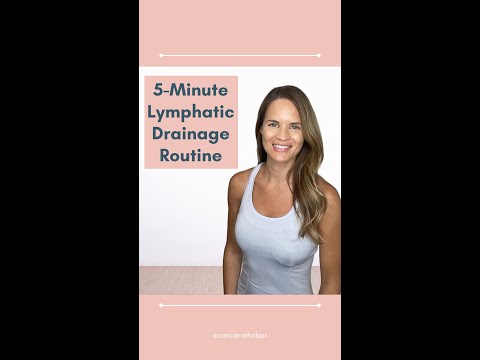
Manual Lymphatic Drainage (Self-Massage) and Decongestive Exercises in Lymphedema
Phase 1: Acute Symptom Modulation, Tissue Protection & Early Activation: Phase 1 Clinical Focus & Tissue Protection: Phase 1 — Central Lymphatic Clearance (Deep Diaphragmatic Breathing) & Proximal-to-Distal Pumping Phase: ALWAYS start every session with 10 Deep Diaphragmatic Breaths! (Diaphragmatic excursion creates a vacuum suction pump on the Cisterna Chyli and Thoracic Duct in the abdomen/chest, emptying the main central lymph reservoir before moving limb fluid!), followed by Self-Manual Lymphatic Drainage (clearing the healthy neck/supraclavicular and opposite axillary/inguinal nodes FIRST, then sweeping fluid away from the affected quadrant!) and Scapular Retraction / Shoulder Circles.
Step 1: Calming Pain, Protecting the Area & Gentle Starter Motion: Secret #1 — Why Every Exercise Starts With 10 Deep Belly Breaths: The main central drainage pipe for the entire body's lymph system (the thoracic duct and cisterna chyli) sits right against your diaphragm! Taking 10 slow, deep belly breaths acts like a suction pump that empties the central reservoir so fluid from your arm or leg has somewhere to drain!

Practical Lymphatic Drainage and Muscle Pumping Exercises for Arm Lymphedema
Phase 2: Progressive Mobility, Motor Control & Targeted Strengthening: Phase 2 Progressive Mobilization & Motor Control: Phase 2 — Proximal-to-Distal Decongestive Muscle-Pump Exercises (WEARING Compression Bandage/Garment!): While wearing your multi-layer bandage or compression sleeve/stocking, perform slow, rhythmic movements in a strict PROXIMAL-TO-DISTAL -> DISTAL-TO-PROXIMAL sequence: Wand-Assisted Shoulder Elevation -> Elbow Flexion-Extension -> Forearm Supination-Pronation -> Wrist Flexion-Extension -> Six-Pack Tendon Gliding & Soft Sponge Squeeze (or Pelvic Bridges -> Heel Slides -> Ankle Pumps for leg lymphedema).
Step 2: Restoring Flexibility & Building Supporting Muscle Strength: Secret #2 — Always Wear Your Compression Sleeve or Bandage DURING Exercise: When your arm or leg muscles contract *inside* a snug compression sleeve or bandage, the sleeve acts like a firm wall that squeezes lymph fluid upward! Exercising *without* your sleeve lets fluid pool in the skin.
Clinical Assessment, Goniometry & Special Test Videos
Displayed only in Healthcare Professional mode (hidden in Patient mode)
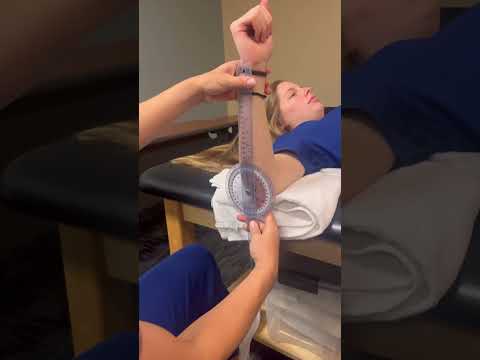
Upper Extremity Goniometric ROM and Circumferential/Volumetric Assessment Principles
Goniometric ROM & Postural / Kinematic Analysis: Circumferential Tape Measurement at Standardized 4 cm Intervals (from the ulnar styloid to the axilla or malleolus to groin: a ≥2 cm difference or ≥200 mL / ≥10% limb volume increase confirms clinically significant lymphedema!), and ISL Clinical Staging (Stage 0 Latent -> Stage I Reversible Pitting -> Stage II Spontaneously Irreversible Fibrotic -> Stage III Lymphostatic Elephantiasis).