Chronic BronchitisPersistent Productive Bronchitis (Chronic Bronchitis)
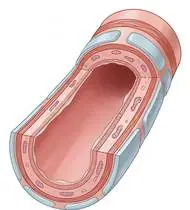
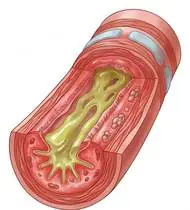
Chronic Bronchitis — Overview
Chronic Bronchitis is clinically defined as a chronic productive cough (sputum production) on most days for at least 3 months per year in at least 2 consecutive years (after excluding other causes such as tuberculosis or bronchiectasis). Pathologically driven by chronic exposure to cigarette smoke or occupational irritants, it is characterized by submucosal gland hypertrophy (increased Reid Index >0.5), goblet cell hyperplasia, loss of ciliated epithelial cells, and mucosal edema/bronchospasm—leading to chronic mucus hypersecretion, luminal narrowing, airway plugging, V/Q mismatch, and recurrent acute infective exacerbations. Physiotherapy focuses on daily bronchial hygiene (ACBT, Huffing, OPEP), Pursed-Lip Breathing, and aerobic exercise.
Chronic bronchitis (persistent productive bronchitis) is a long-term inflammation of the lining of your lung's main air tubes (bronchi) in which the mucus glands enlarge and produce extra phlegm while the tiny sweeping hairs (cilia) slow down—causing a daily morning cough with phlegm for at least 3 months of the year. Stopping smoke/irritant exposure, drinking plenty of water, and using the 10-minute 'Deep Breath + Huff' technique every morning clears your airways cleanly so you can breathe freely all day!
Primary Causes & Biomechanics
Key Points You Should Know
- •Chronic tobacco smoke, biomass fuel, or industrial dust/fume exposure triggering goblet cell metaplasia and excess mucin production
- •Destruction and paralysis of bronchial cilia (smoking 1 cigarette paralyzes bronchial cilia for 4–6 hours!), causing mucus pooling especially overnight
- •Luminal narrowing from mucus + mucosal wall thickening increasing expiratory airway resistance
- •Why 'Smoker's Cough' Happens in the Morning (And How to Clear It in 10 Minutes): Because the tiny sweeping hairs in the bronchi are slowed down, phlegm settles in the airways overnight. Instead of coughing hard for an hour every morning, sit upright, drink a glass of warm water, and do 3 slow deep chest-expanding breaths (holding each for 3 seconds) followed by a gentle open-mouth 'HUFF'—this lifts the phlegm right out without straining your chest!
- •What Happens to Your Cilia When You Quit Smoking: Within just 48 to 72 hours of stopping smoking, the tiny sweeping hairs (cilia) in your airways wake back up and start sweeping mucus out on their own!
- •Water Is the Best Natural Mucus Thinner: Drinking 8–10 glasses of water a day keeps bronchial mucus thin and slippery.
Assessment Methods
1. Goniometric ROM & Postural / Kinematic Analysis
Spirometry (FEV1, FVC, FEV1/FVC — assessing progression from non-obstructive simple chronic bronchitis to obstructive COPD!), sputum volume/purulence, and auscultation (coarse early-inspiratory crackles and expiratory rhonchi that clear with coughing).
2. Special Clinical Provocation & Neurological/Functional Tests
6-Minute Walk Test (6MWT), mMRC Dyspnea Scale, CAT score, and thoracic expansion measurement.
3. Standardized Clinical Outcome Scales & Imaging Criteria
CAT Score, Sputum Volume/Color, FEV1/FVC, and 6MWT.
1. Range of Motion & Posture Check
Your physiotherapist gently evaluates how comfortably and smoothly your tracheobronchial tree (hypertrophied submucosal mucus glands, goblet cell hyperplasia, and impaired ciliary escalator) moves and checks your overall posture.
2. Muscle Strength & Functional Movement Check
Your muscle balance, walking or reaching comfort, and specific gentle movement tests are evaluated without triggering sharp pain.
3. Typical Symptoms & Daily Impact Review
Chronic Morning Productive Cough lasting ≥3 months per year for ≥2 consecutive years, producing clear/white mucoid sputum (which turns yellow/green during winter chest infections).
Treatment Options & Phase-Based Protocol
✨ Enriched GIF Exercise & Precaution GuidePhase 1: Acute Symptom Modulation, Tissue Protection & Early Activation
- •Phase 1 Clinical Focus & Tissue Protection: Phase 1 — Morning & Evening Bronchial Hygiene (ACBT & Huffing) Phase: Hydration (2–2.5 L/day water) + Active Cycle of Breathing Techniques (ACBT: relaxed diaphragmatic breathing control -> 3–4 deep Thoracic Expansion Breaths with a 3-second hold -> 2–3 open-glottis 'Huffs' [like fogging a mirror]) + Oscillatory PEP (Flutter/Acapella) to clear overnight mucus pooling in 10–15 minutes without exhausting coughing fits!
- •Pain, Edema & Neuromuscular Modulation: Targeted physical modalities, relative load management, and early protected mobility of the tracheobronchial tree (hypertrophied submucosal mucus glands, goblet cell hyperplasia, and impaired ciliary escalator) without provoking mechanical or inflammatory irritation.
- •Proximal & Distal Kinetic Chain Maintenance: Maintain active mobility and circulation in adjacent joints while protecting the primary healing structures in Chronic Bronchitis.
Phase 2: Progressive Mobility, Motor Control & Targeted Strengthening
- •Phase 2 Progressive Mobilization & Motor Control: Phase 2 — Pursed-Lip Breathing & Thoracic Cage Mobility Phase: Pursed-Lip Breathing (PLB 1:2 ratio) during exertion, Thoracic Expansion Exercises with bilateral arm elevation, and scapular retraction.
- •Biomechanical Alignment & Co-Contraction: Restore balanced agonist-antagonist force couples, joint centration, and multi-planar neuromuscular control across the tracheobronchial tree (hypertrophied submucosal mucus glands, goblet cell hyperplasia, and impaired ciliary escalator).
- •Myofascial Extensibility & Endurance: Address secondary compensatory tightness and build local muscular endurance within safe, symptom-free biomechanical parameters.
Phase 3: Functional Integration, Proprioception & Long-Term Prevention
- •Phase 3 Functional Integration & Long-Term Prevention: Phase 3 — Smoking Cessation Support & Aerobic/Resistance Conditioning Phase: 30–40 min of brisk walking or stationary cycling 5 days/week (ventilatory shear airflow naturally mobilizes mucus!), plus lower-limb strengthening (chair sit-to-stand, wall mini-squats, heel raises).
- •Proprioceptive Balance & Dynamic Loading: Progress to task-specific closed-chain, balance, and functional movement patterns tailored to daily life, occupational, or athletic demands.
- •Self-Management & Relapse Prophylaxis: Establish lifelong ergonomic habits, home exercise maintenance, and early warning-sign awareness to prevent recurrence.
Step 1: Calming Pain, Protecting the Area & Gentle Starter Motion
- •Why 'Smoker's Cough' Happens in the Morning (And How to Clear It in 10 Minutes): Because the tiny sweeping hairs in the bronchi are slowed down, phlegm settles in the airways overnight. Instead of coughing hard for an hour every morning, sit upright, drink a glass of warm water, and do 3 slow deep chest-expanding breaths (holding each for 3 seconds) followed by a gentle open-mouth 'HUFF'—this lifts the phlegm right out without straining your chest!
- •Calm Protection & Gentle Start: During the initial stage of Persistent Productive Bronchitis, avoid painful overloading and perform the gentle, pain-free starter movements shown below to support circulation and comfort.
- •Respecting Your Body's Signals: Every movement should stay within a comfortable, non-painful zone—never force through sharp or radiating pain.
Step 2: Restoring Flexibility & Building Supporting Muscle Strength
- •What Happens to Your Cilia When You Quit Smoking: Within just 48 to 72 hours of stopping smoking, the tiny sweeping hairs (cilia) in your airways wake back up and start sweeping mucus out on their own!
- •Step-by-Step Flexibility & Support: As acute sensitivity settles, gradually build mobility and strengthen the supporting muscles around the joint at a steady, controlled pace.
- •Posture & Breathing Coordination: Keep your posture upright and breathe smoothly (never hold your breath!) during every repetition.
Step 3: Safe Daily Habits, Stamina & Preventing Recurrence
- •Water Is the Best Natural Mucus Thinner: Drinking 8–10 glasses of water a day keeps bronchial mucus thin and slippery.
- •Confident Return to Daily Life: Integrate your stronger muscles and improved balance into walking, stairs, work, and recreational activities.
- •Preventing Future Flare-Ups: Continue your core protective habits and key maintenance exercises even after symptoms resolve.
Animated (GIF) Therapeutic Exercise Guide
Animated clinical exercise protocol with biomechanical angles, target muscle groups, and dosage parameters (Click image to enlarge)
Step-by-step animated exercise demonstrations you can safely perform at home (Click image to enlarge)
 🔍 Enlarge
1. Diaphragmatic & Pursed-Lip Breathing (PLB — Autonomic & Ventilatory Control)
1. Calm Belly Breathing with Pursed-Lip Exhale
Slow nasal inhalation expanding the lower ribcage and abdomen (while relaxing accessory neck/shoulder muscles), followed by prolonged expiration through pursed lips at a 1:2 ratio. Prevents dynamic airway collapse, improves basal ventilation, and reduces sympathetic tone. Specifically indicated in Chronic Bronchitis rehabilitation to optimize tracheobronchial tree (hypertrophied submucosal mucus glands, goblet cell hyperplasia, and impaired ciliary escalator) biomechanics and neuromuscular control.
Sit comfortably and place one hand on your chest and the other on your belly. Breathe in slowly through your nose for 2–3 seconds so your belly gently rises, then breathe out slowly for 4–6 seconds through pursed lips as if flickering a candle. Perform smoothly within a comfortable, pain-free range to support your Persistent Productive Bronchitis recovery.
 🔍 Enlarge
2. Supine Wand-Assisted (Cane) Active-Assisted Shoulder Elevation
2. Lying Cane/Stick-Assisted Two-Handed Arm Raise
In supine (scapula stabilized against the plinth and gravity eliminated in the final arc), the unaffected upper extremity guides a wand/stick to elevate the affected shoulder smoothly without deltoid-induced superior humeral shear. Specifically indicated in Chronic Bronchitis rehabilitation to optimize tracheobronchial tree (hypertrophied submucosal mucus glands, goblet cell hyperplasia, and impaired ciliary escalator) biomechanics and neuromuscular control.
Lie on your back holding a light stick or cane with both hands. Use your healthy arm to gently guide both arms up overhead as far as comfortable, hold for 3 seconds, and slowly lower. Perform smoothly within a comfortable, pain-free range to support your Persistent Productive Bronchitis recovery.
 🔍 Enlarge
3. Seated Terminal Knee Extension (Open/Closed Chain VMO Focus)
3. Seated Knee Straightening & Hold
Concentric extension of the knee to the final 30°–0° terminal arc with isometric hold and ankle dorsiflexion. Restores terminal knee extension torque and stabilizes dynamic patellofemoral tracking. Specifically indicated in Chronic Bronchitis rehabilitation to optimize tracheobronchial tree (hypertrophied submucosal mucus glands, goblet cell hyperplasia, and impaired ciliary escalator) biomechanics and neuromuscular control.
Sit upright in a chair and slowly straighten your knee completely while pulling your toes toward you. Feel the front thigh muscle tighten, hold for 5 seconds, and slowly lower your foot. Perform smoothly within a comfortable, pain-free range to support your Persistent Productive Bronchitis recovery.
 🔍 Enlarge
4. Functional Closed-Kinetic-Chain Chair Transfer (Sit-to-Stand Biomechanics)
4. Controlled Chair Sit-to-Stand Transfer
Controlled transition from sitting to standing and eccentric lowering back to the chair with symmetrical weight distribution, anterior trunk inclination ('nose over toes'), and neutral frontal knee alignment. Specifically indicated in Chronic Bronchitis rehabilitation to optimize tracheobronchial tree (hypertrophied submucosal mucus glands, goblet cell hyperplasia, and impaired ciliary escalator) biomechanics and neuromuscular control.
Sit near the front of a sturdy chair with your feet hip-width apart. Lean slightly forward and push evenly through both heels to stand up tall, then slowly lower yourself back down over 3 seconds. Perform smoothly within a comfortable, pain-free range to support your Persistent Productive Bronchitis recovery.
 🔍 Enlarge
5. Thoracic Expansion Exercise (TEE) with Bilateral Arm Elevation & 3s Inspiratory Hold
5. Chest-Opening Deep Breath with Arm Raise
Synchronizing deep nasal inspiration with bilateral shoulder flexion/abduction and a 3-second end-inspiratory hold before passive/pursed-lip expiration. Opens collateral ventilation channels to prevent basal atelectasis and maintains costovertebral compliance. Specifically indicated in Chronic Bronchitis rehabilitation to optimize tracheobronchial tree (hypertrophied submucosal mucus glands, goblet cell hyperplasia, and impaired ciliary escalator) biomechanics and neuromuscular control.
While sitting upright, breathe in deeply through your nose while opening your arms upward and outward to expand your ribcage. Hold the breath inside for 3 seconds, then exhale slowly while lowering your arms. Perform smoothly within a comfortable, pain-free range to support your Persistent Productive Bronchitis recovery.
 🔍 Enlarge
6. Scapulothoracic Retraction & Depression (Middle/Lower Trapezius & Rhomboids)
6. Shoulder Blade Squeeze (Postural Alignment)
Adduction and depression of the scapulae via the middle/lower trapezius and rhomboids while inhibiting upper trapezius overactivity. Corrects anterior scapular tilt, widens the subacromial outlet, and unloads the anterior thoracic column. Specifically indicated in Chronic Bronchitis rehabilitation to optimize tracheobronchial tree (hypertrophied submucosal mucus glands, goblet cell hyperplasia, and impaired ciliary escalator) biomechanics and neuromuscular control.
Sit or stand tall. Keep your shoulders relaxed away from your ears, gently draw your shoulder blades together and slightly downward toward your back pockets, hold for 5 seconds, and release. Perform smoothly within a comfortable, pain-free range to support your Persistent Productive Bronchitis recovery.
Movements to Avoid & Strict Precautions
1. Continued Smoking, Vaping, or Exposure to Secondhand Smoke / Coal-Wood Smoke (Destroys Cilia & Drives COPD Progression!)
1. Smoking, vaping, or sitting in smoky/dusty rooms
2. Violent, Red-Faced Barking Coughing Fits With a Closed Throat (Collapses Airways & Exhausts You!)
2. Coughing violently with a strained throat instead of using the open-mouth 'Huffing' technique
3. Using Over-the-Counter Cough Suppressants That Trap Sputum in the Bronchi
3. Taking cough-suppressant syrups that prevent you from clearing phlegm
4. Cold, Dry Morning Air Inhalation Without a Scarf/Mask (Triggers Bronchospasm!)
4. Breathing icy morning air through your mouth without a scarf over your nose and mouth
Chronic Bronchitis — Video Guide
Click directly on any video to open and watch in a window, or review details via 📋 Summary & Options.
Condition Overview Video (1 Video)
Summary of pathophysiology, biomechanics, and clinical presentation
What the condition is, why it develops, and its basic mechanism

What Is Chronic Bronchitis? Causes, Symptoms, and Treatment Methods
Chronic Bronchitis is clinically defined as a chronic productive cough (sputum production) on most days for at least 3 months per year in at least 2 consecutive years (after excluding other causes such as tuberculosis or bronchiectasis). Pathologically driven by chronic exposure to cigarette smoke or occupational irritants, it is characterized by submucosal gland hypertrophy (increased Reid Index >0.5), goblet cell hyperplasia, loss of ciliated epithelial cells, and mucosal edema/bronchospasm—leading to chronic mucus hypersecretion, luminal narrowing, airway plugging, V/Q mismatch, and recurrent acute infective exacerbations. Physiotherapy focuses on daily bronchial hygiene (ACBT, Huffing, OPEP), Pursed-Lip Breathing, and aerobic exercise.
Chronic bronchitis (persistent productive bronchitis) is a long-term inflammation of the lining of your lung's main air tubes (bronchi) in which the mucus glands enlarge and produce extra phlegm while the tiny sweeping hairs (cilia) slow down—causing a daily morning cough with phlegm for at least 3 months of the year. Stopping smoke/irritant exposure, drinking plenty of water, and using the 10-minute 'Deep Breath + Huff' technique every morning clears your airways cleanly so you can breathe freely all day!
Treatment and Exercise Videos
Phase-based physiotherapy protocols, mobilization, and therapeutic exercises
Step-by-step recovery and safe home exercise applications

Breathing and Thoracic Cage Exercises in COPD and Chronic Lung Diseases
Phase 1: Acute Symptom Modulation, Tissue Protection & Early Activation: Phase 1 Clinical Focus & Tissue Protection: Phase 1 — Morning & Evening Bronchial Hygiene (ACBT & Huffing) Phase: Hydration (2–2.5 L/day water) + Active Cycle of Breathing Techniques (ACBT: relaxed diaphragmatic breathing control -> 3–4 deep Thoracic Expansion Breaths with a 3-second hold -> 2–3 open-glottis 'Huffs' [like fogging a mirror]) + Oscillatory PEP (Flutter/Acapella) to clear overnight mucus pooling in 10–15 minutes without exhausting coughing fits!
Step 1: Calming Pain, Protecting the Area & Gentle Starter Motion: Why 'Smoker's Cough' Happens in the Morning (And How to Clear It in 10 Minutes): Because the tiny sweeping hairs in the bronchi are slowed down, phlegm settles in the airways overnight. Instead of coughing hard for an hour every morning, sit upright, drink a glass of warm water, and do 3 slow deep chest-expanding breaths (holding each for 3 seconds) followed by a gentle open-mouth 'HUFF'—this lifts the phlegm right out without straining your chest!

Postural Drainage, Percussion, and Vibration — Airway Clearance Techniques
Phase 2: Progressive Mobility, Motor Control & Targeted Strengthening: Phase 2 Progressive Mobilization & Motor Control: Phase 2 — Pursed-Lip Breathing & Thoracic Cage Mobility Phase: Pursed-Lip Breathing (PLB 1:2 ratio) during exertion, Thoracic Expansion Exercises with bilateral arm elevation, and scapular retraction.
Step 2: Restoring Flexibility & Building Supporting Muscle Strength: What Happens to Your Cilia When You Quit Smoking: Within just 48 to 72 hours of stopping smoking, the tiny sweeping hairs (cilia) in your airways wake back up and start sweeping mucus out on their own!

How to Perform Pursed-Lip Breathing (PLB) Technique
Phase 3: Functional Integration, Proprioception & Long-Term Prevention: Phase 3 Functional Integration & Long-Term Prevention: Phase 3 — Smoking Cessation Support & Aerobic/Resistance Conditioning Phase: 30–40 min of brisk walking or stationary cycling 5 days/week (ventilatory shear airflow naturally mobilizes mucus!), plus lower-limb strengthening (chair sit-to-stand, wall mini-squats, heel raises).
Step 3: Safe Daily Habits, Stamina & Preventing Recurrence: Water Is the Best Natural Mucus Thinner: Drinking 8–10 glasses of water a day keeps bronchial mucus thin and slippery.
Clinical Assessment, Goniometry & Special Test Videos
Displayed only in Healthcare Professional mode (hidden in Patient mode)

Systematic Respiratory Physical Examination (Inspection, Palpation, Percussion, Auscultation)
Goniometric ROM & Postural / Kinematic Analysis: Spirometry (FEV1, FVC, FEV1/FVC — assessing progression from non-obstructive simple chronic bronchitis to obstructive COPD!), sputum volume/purulence, and auscultation (coarse early-inspiratory crackles and expiratory rhonchi that clear with coughing).

Why and How Is the 6-Minute Walk Test (6MWT) Performed? Functional Capacity Assessment
Special Clinical Provocation & Neurological/Functional Tests: 6-Minute Walk Test (6MWT), mMRC Dyspnea Scale, CAT score, and thoracic expansion measurement.